Understand the legal boundary for online play and how game features, free demos, RTP and volatility shape what a spin can reveal.

For someone in Australia, a real-money pokie offered over the internet sits on the wrong side of a clear legal boundary. The Interactive Gambling Act 2001 prohibits operators from supplying online pokie machine games to people living in Australia. The restriction applies to the service being offered, not merely to a particular game title or website design.
There is no Australian licence that an online casino can obtain to offer real-money pokies to Australian residents. An offshore licence does not change that position: it is not an Australian authorisation to provide the service here. The same federal framework treats online casino-style games such as slots, poker, blackjack and roulette as prohibited interactive gambling services when they are supplied to customers in Australia. Advertising those online casino services to Australians is also prohibited.
That distinction matters because a website can look orderly without being lawful for this market. Registration screens, game menus, payment pages and professional branding describe how a business presents itself; they do not create permission under Australian law. From the other side of the counter, I learned that the commercial language often makes the service sound ordinary. The legal question is narrower: is an operator providing a real-money online pokie to a person in Australia? If so, the operator is offering a prohibited service.
Choosing a pokie machine in Australia starts with finding a casino that suits your preferences and checking its available terms. This list offers a concise reference to the known details for each operator.
Neospin
Neospin is listed with a Curacao Gaming Control Board licence, OGL/2023/176/0095, held by Hollycorn N.V.
Ricky Casino
Ricky Casino lists crypto payouts in under an hour and PayID payouts in 1–3 business days. Its minimum deposit is A$20, or A$30 to qualify for the bonus.
Roby Casino
Roby Casino is listed with a Curacao eGaming licence held by Roby Games Ltd.
Uptown Pokies
Uptown Pokies is listed as operating since 2017 under a Curacao licence. Its minimum deposit is A$20.
7Bit Casino
7Bit Casino is listed with a Curacao licence and is operated by Dama N.V.
SpinsUp
SpinsUp is listed with a Curacao Gaming Control Board licence, OGL/2023/174/0082, held by Dama N.V.
Lucky Dreams
Lucky Dreams lists a Curacao licence and a A$20 minimum deposit via POLi.
LuckyVibe
LuckyVibe is listed with a Curacao Gaming Control Board licence, OGL/2023/176/0095, held by Hollycorn N.V.
Golden Pokies
Golden Pokies is listed with a Curacao licence; no further operator details are provided.
Bizzo Casino
Bizzo Casino is listed with a Curacao Gaming Control Board licence, with TechSolutions Group N.V. named as the operator.
The Act targets operators, not the Australian resident who plays with an offshore service. An individual is not committing an offence under the Interactive Gambling Act 2001 simply by playing real-money online pokies with such an operator. That is not the same as saying the service is authorised, protected or locally regulated. The absence of player liability does not turn an offshore website into a lawful Australian casino.
The Australian Communications and Media Authority, or ACMA, oversees compliance with the federal interactive gambling rules and takes enforcement action under the Act. Its work is directed at prohibited services and their promotion. This is an operator-facing framework, rather than a system in which an Australian online casino licence is issued and then checked against local conditions.
One enforcement tool involves access restrictions. ACMA can ask Australian internet service providers to block websites that provide prohibited interactive gambling services or advertise them in Australia. A block is a practical measure aimed at limiting access; it is not a licence decision, nor does the appearance or disappearance of a particular site determine whether the underlying service is permitted.
The agency’s published enforcement record gives a sense of the scale of that activity. Since November 2019, ACMA has blocked more than 1,455 illegal gambling and affiliate websites after enforcement action. The count includes affiliate sites as well as gambling sites, so it should not be read as a tally of online casinos alone.
There is also a disagreement in published counts of services that have withdrawn from the Australian market after ACMA began enforcing the rules in 2017: one figure is more than 210, while another is more than 190. Both describe withdrawals since enforcement began; the totals conflict, so neither should be presented as an uncontested count. The broader point is that enforcement has included services leaving the market, alongside website blocking.
For bodies corporate that breach the Act, the maximum daily penalty is $1.8 million. For an individual who violates it, the maximum is $360,000 per day. These are statutory maximums, not a description of what happens in every case. The framework makes clear, however, that the prohibition is not simply a warning label attached to an otherwise approved product.
A search result or a working website does not establish that an online pokie is legally available in Australia. Offshore operators may continue to present games to Australian users, but their presence does not amount to local approval. Nor does a claim that a business is licensed somewhere else override the Australian restriction on supplying these games to people here.
The same applies to software that imitates a pokie machine. If no money is staked and no real-money gambling service is being provided, the situation is different from an operator taking real-money bets online. But calling a service a simulator or using familiar machine imagery does not settle its status by itself; what matters for this legal boundary is whether the operator is providing prohibited real-money online gambling to someone in Australia.
I would keep the distinction simple: the law places the obligation on the operator not to offer the service, while the resident is not made an offender merely for playing with an offshore operator. That does not promise access, a remedy or local oversight if a dispute arises. Legal permission and a website’s willingness to accept a customer are separate things. A polished interface is not a licence.
A pokie’s cabinet and title can make two games look similar, but the practical differences appear on the screen: which symbols pay, how prizes are arranged, and which lines count. I learned to check those details before judging a machine by its artwork. A familiar theme tells little about how a game is set up.
The paytable is the machine’s working menu of prizes. It shows which symbol combinations qualify and what each pays at the selected stake. The same symbol can matter differently from one title to another, so a quick glance at the reels is not enough to establish what counts as a win. The information is there to be checked. Bright graphics are not a substitute.
Paylines add another layer. A line is a route across the reels on which a qualifying combination may land. Some pokie titles use a fixed set of lines; others allow the number of active lines to vary. That changes what the machine counts and, where the game lets a player select lines, how the setup can be adjusted. A screen showing several symbols together does not necessarily mean they form a paying combination. The line pattern decides.
I used to assume that more visible lines meant a better machine. That is not a reliable way to compare them. The paytable and line rules have to be read together: one describes the combinations and prizes, the other identifies the patterns that qualify. The choice is about the game’s structure, not a promise of better results.
The stake is part of that structure. At Crown Perth, the minimum bet on a machine typically falls somewhere between $0.20 and $2.00 per spin, with the particular machine determining where it sits in that range. That spread matters when moving between cabinets: a game that looks familiar may not offer the same entry point as the one beside it.
The lowest selectable stake is only one part of the decision. A player still needs to understand how the machine’s bet settings relate to its lines and paytable. Where the number of active paylines can change, the displayed setup should be checked before a spin; where lines are fixed, the paytable remains the key reference for what combinations count. The interface can make these controls look straightforward, but a few seconds spent reading them is more useful than guessing from the title.
At a physical machine, the paytable and game information are normally available through the on-screen instructions or controls. I treat those screens as operating instructions, not small print to skip. They explain the game’s own terms. Two machines in the same bank can have different symbols, line patterns and prize arrangements, even when their visual style feels close.
This is also why “best” is a slippery label when applied to a pokie machine. There is no single visible feature that settles the question for every player. Someone may prefer a simpler line layout; another may want to compare the prize table or find a stake that fits a set playing budget. The machine itself does not reveal a universal ranking. It reveals its rules.
A progressive pokie machine can add a jackpot display to the screen, but the presence of a large figure does not explain the rest of the game’s setup. The paytable and line information still need to be read on their own terms. Jackpot branding catches the eye. The rules do the work.
The same caution applies when a title is familiar. A repeated name or theme does not remove the need to check the specific machine’s controls and prize information. In a casino, the cabinet in front of the player is the relevant one—not an assumption carried over from another version or another location.
For me, the useful comparison is plain: check the paytable, understand whether paylines are fixed or variable, and note the minimum stake before play begins. Those details describe what the machine asks and how it recognises combinations. They do not turn a spin into a predictable outcome. Setup first. Impression later.
A free demo is useful for one narrow job: showing how a pokie presents itself before money is involved. It can reveal the screen layout, the symbols on the reels, where the paytable and game rules sit, and how a feature is introduced. That is enough to decide whether the game is understandable and appealing. It is not a rehearsal of what a paid session will produce.
I have seen players treat a run of demo spins as evidence that a game is “warming up” or that a bonus is close. It is not. Online pokie outcomes are generated by a random number generator, and every spin is independent of the one before it. A sequence of demo results does not set up, predict or explain the next result. Demo outcomes are not indicative of real-money outcomes. Different stakes do not turn a practice session into a forecast.
The distinction matters because the demo makes the experience feel familiar. Familiarity can be useful: the player is less likely to be working out the controls while also making decisions. But familiarity is not an edge. The same screen can show a long run of ordinary results in one session and a different pattern in another, without either run telling anything about what comes next.
A free pokie session can help with practical questions that do not require wagering. Are the symbols easy to read on a phone? Is the rules panel clear? Does the game explain its feature in a way that makes sense, or does the animation move too quickly to follow? Does the sound become distracting? These are fair things to assess before choosing whether to spend time on a game.
The demo can also make the game’s visual language easier to understand. A title built around ancient temples, farm animals or a familiar adventure theme may use symbols and animations that are easy to recognise, but a theme is presentation, not evidence of how the game will behave. Pokie themes can make a title memorable; they cannot make its outcomes more predictable.
A player can watch the reels stop, see how winning combinations are displayed and learn where to find the game information. That is observation, not training in a winning method. The software may make each stage look smooth and intuitive, but an attractive interface does not change the independence of spins.
Free play cannot establish a reliable “pokie machine strategy” for beating a game. Changing the speed of spins, stopping at a preferred moment or repeating a pattern may make the session feel more controlled, but none of those actions changes the random outcome. The interface responds to a click; it does not reveal a hidden timing system.
Nor should a demo balance be read as a cash balance in disguise. It is there to let the game run without a real wager. A lucky practice session does not show what a paid session will return, and a poor one does not mean the game owes a better result later. Both conclusions mistake a short sequence for a signal.
Some people use “free pokie” to mean a demonstration game; others may mean a physical machine offered for sale. Those are different things. A browser or app demo is software for trying the game’s presentation, not a purchasable cabinet or a promise that the same experience is available in every setting. The important point is to identify what is actually being offered before drawing conclusions from it.
I use demos as a usability check, then stop there. They help answer whether the rules are readable and whether the game is enjoyable to watch. They do not prove that a game is generous, identify a best time to play, or provide a preview of future results.
Useful practice. Not a forecast.
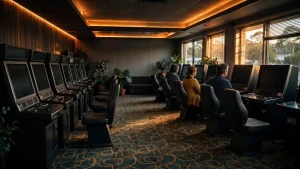
A casino floor and an online casino are not two versions of the same legal option in Western Australia. Crown Perth is the only legal land-based casino in Perth; there is no legal online casino market in the state. That distinction matters when comparing a physical pokie machine with websites that present themselves as Australian casinos. The venue is a local, inspectable place. An online page using Australian imagery does not become a local casino by looking familiar.
Crown Perth has more than 2,500 gaming machines, so the floor is a large collection rather than a short list of standout titles. The number says something about scale, not about which machine pays best. It also does not mean there is a published, machine-by-machine guide to payouts. Crown Perth does not provide a list of each machine’s RTP, and a broad figure for the floor cannot identify the setting on a particular unit.
The venue’s published information puts most machines in an RTP range of 87% to 92%. That is useful as general context, but not as a way to select a “highest paying” pokie. The range covers most, not every machine, and Crown Perth does not identify each machine’s figure in a public RTP list. From the other side of the counter, that distinction is easy to miss: a range can sound like a comparison tool when it is not one.
There is a more direct disclosure on the machine itself. Every legal pokie in Western Australia must show its rules, paylines and prize table. Those details describe how that machine is set up and what combinations qualify for prizes. They are more specific to the game in front of a player than a general statement about the casino floor. But a displayed prize table is not a promise about what a session will return.
“Best” is often used as if one machine could be named for everyone. On a casino floor, that label hides the criteria. One person may mean a game with a particular layout; another may mean a larger possible prize, or simply a machine they recognise. Without a machine-specific RTP disclosure, the venue’s general range cannot settle that argument. A familiar title is not evidence that it has a higher payout percentage.
The practical difference from a pokie machine simulator is also the setting: a simulator is not the casino floor, while a legal land-based machine operates under Western Australia’s rules and displays its own game information. A simulator can make a title easier to inspect, but it cannot stand in for the physical machine’s disclosures or establish its payout setting. The floor is the place to read the rules for the specific unit.
That is the useful, concrete distinction at Crown Perth. The casino offers a substantial machine floor and publishes broad RTP information, while the machine’s own display supplies its rules, paylines and prize table. Neither a large floor nor a general RTP range turns into a ranking of machines. Local disclosure, not a “best” label, is the meaningful starting point.
A free-spin feature inside a pokie is part of the game’s bonus round. Promotional free spins are different: they are offered as bonus funds under an operator’s terms, rather than being a no-wager demo. The distinction matters because a result shown during free play is not a cash balance, while promotional winnings can be subject to rules before withdrawal.
A game may award free spins after a qualifying combination lands. During the round, the spins can produce winnings, but those winnings may remain classified as bonus funds rather than immediately withdrawable cash. A player can see a balance increase without having met the conditions for cashout. The displayed amount is not the whole story.
Wagering Requirements
Calculate the requirement
Multiply the bonus amount by the wagering multiplier (e.g., $100 bonus × 30x requirement).
Determine total bets
Identify the total amount that must be wagered before cashout is possible (e.g., $3,000 in bets).
Check withdrawal limits
Review the terms for any caps on the amount that can be withdrawn even after wagering is complete.
The terms determine what has to happen first. A wagering requirement specifies how much must be bet before bonus winnings become eligible for withdrawal. A specialist review illustrates the arithmetic with a $100 bonus carrying a 30x requirement: $3,000 in bets must be placed before cashout. That is an example from a review, not a universal rule. The operator’s terms set the applicable requirement, and other conditions may restrict which games count or cap the amount that can be withdrawn.
This is where “free” does heavy lifting in the advertising. The spins may not require a separate stake, but the resulting funds can still be tied to wagering requirements and cashout limits. A limit can mean that winnings above a stated threshold are not payable, even after wagering is complete. Terms decide. Not the banner.
The game mechanic and the promotion also operate on separate tracks. A pokie’s own bonus round defines how free spins are triggered and played; a promotional offer defines how bonus funds are credited and what must be done before they can be withdrawn. Confusing the two makes the offer look simpler than it is. The game can award a prize, yet the promotion can still govern access to that prize.
There is also a difference between trying a game in demo mode and accepting promotional funds. Demo play carries no real-money stake and cannot predict real-money outcomes. A bonus offer, by contrast, concerns funds attached to play and conditions attached to withdrawal. Neither should be read as a promise of cash.
In Australia, real-money online pokie services are prohibited for operators to provide to people living here. The mechanics of a bonus do not change that legal position. For any offer encountered offshore, its wording may explain the operator’s conditions, but it does not turn the offer into a locally authorised service. The practical point is plain: a bonus balance and withdrawable money are not necessarily the same thing.
RTP is a long-run measure, not a forecast for a particular visit. It describes the share of all money wagered on a pokie that is returned to players across a very large number of spins. That aggregate says little about how one session will unfold: the return is not divided evenly between players or spins, and a high RTP does not ensure short-term wins.
A specialist review reports an RTP of 96.5% for Gates of Olympus and 96.48% for Sweet Bonanza. Those figures describe the versions covered by that review; they should not be treated as a universal setting for every casino offering either game. Providers may make different RTP settings available to operators, so the version at a particular venue can differ from the one described elsewhere. The displayed game information is the relevant check.
Volatility describes the pattern of payouts, not whether a game is more likely to produce a profit overall. Lower-volatility pokies tend to return smaller wins more often. Higher-volatility games pay less frequently, but a win can be larger. Neither pattern changes the basic uncertainty of a spin. A machine with frequent small returns can still lose money over a session; a game with larger potential wins can produce a long stretch without one.
This is where the idea of a “best” pokie to win becomes misleading. RTP and volatility can help explain a game’s statistical profile, but they cannot identify a machine that will pay out on demand. I have seen players treat a run of losses as evidence that a win must be due. It is not. Each spin is independent, and previous results have no influence on the next outcome.
That independence also applies to the sounds and animations. A dramatic effect can make a near miss or a small return feel significant, but it does not reveal what the next spin will do. The presentation is part of the game; it is not a signal about its odds.
For practical play, the more useful question is what kind of payout pattern fits a fixed entertainment budget. Someone who prefers smaller, more frequent wins may find lower volatility less abrupt. Someone comfortable with less frequent payouts may prefer higher volatility, while accepting that the session can vary widely. Neither preference makes a game a reliable way to win.
Set a loss limit before playing and stop when it is reached. RTP is a long-term average, not a short-term guarantee; a session can finish well below or above the stated figure. The mathematics describes a large pool of spins. One spin tells almost nothing.
A pokie can appear in a browser or app in two very different forms. Demo mode lets a game run without wagering real money; real-money play involves depositing funds and staking them on spins. The screen may look identical, but the financial and practical stakes are not.
A demo is useful for seeing how a game is laid out and how its features appear. It is not a rehearsal that predicts what will happen with money at stake. Demo results do not indicate real-money outcomes, and a run of wins or losses in free play says nothing reliable about later spins. I have seen players treat a demo session as evidence that a game is “ready to pay”. It is not. It is only a way to inspect the software.
The legal distinction on the player’s side is narrower than many warnings suggest. Under the Interactive Gambling Act 2001, an Australian resident who plays real-money pokies online with an offshore operator is not committing an offence. That does not make the service locally approved or give the player the protections that would come with a local regulatory framework. The operator’s position and the player’s liability are separate questions.
That separation matters when something goes wrong. An offshore site may take a deposit and show a balance, but a displayed balance is not the same as a readily enforceable right to payment. If winnings are withheld or an account is closed, effective legal recourse may be difficult to obtain. The absence of player liability does not remove that risk. No local remedy.
“Real-money” is sometimes presented as though it were simply a more serious version of a demo. In practice, it changes the relationship to the game: money is exposed, and the terms set by the offshore service become central. An app does not alter that distinction. Nor does a familiar game title establish that the version is locally regulated.
I would keep the decision in two parts: whether a game can be tried without wagering, and whether staking money with an offshore service is an acceptable risk. The first can help with familiarity; it cannot validate the second. Demo play is not evidence of likely returns, and a legal distinction for the player is not a promise of protection if a dispute arises.
A mobile app changes how an offshore gambling site is accessed; it does not change the legal position of real-money online pokies in Australia. Some services are presented through a mobile-friendly website, while others may offer an app. The label “best pokie app” is not a safety test: an app can make deposits and play easier to reach without giving an Australian player local regulatory protection. Offshore operators may also leave players without effective legal recourse if a withdrawal is withheld.
Payment options vary by operator and can change. A specialist review of Australian-facing gambling services reports Visa, Mastercard, bank transfers, Bitcoin and Ethereum among the deposit methods offered. That is a description of reported options, not a guarantee that every method is available or suitable. A card logo alone does not establish whether a transaction is treated as a debit or credit payment; credit card payments must not be used for online gambling services.
Payment rails also shape the withdrawal process. A deposit can appear straightforward, while a cashout may pass through checks or remain marked as pending. During that interval, some casinos may encourage a player to cancel the withdrawal and return the balance to play. That prompt is not a neutral convenience: cancelling can put money intended for withdrawal back at risk. Pending withdrawals may last 24–72 hours, and the balance should not be treated as safely paid out until it reaches the relevant account.
I have seen the distinction matter in practice: the deposit button is designed to reduce friction, while a withdrawal introduces a decision point. “Instant” describes the sales pitch, not necessarily the entire path of funds. Keep records of the request and its status, and do not interpret a pending balance as money already received. A jackpot does not alter that process; the prize still has to move through the operator’s withdrawal procedure.
Technical terms such as a pokie machine API refer to software connections that allow services to exchange information. They do not establish that an app or operator is authorised to provide real-money pokies in Australia, nor do they guarantee a payout. The practical cost of using an app is not only the amount deposited: access can make it easier to keep playing while a withdrawal remains unresolved. Mobile convenience. Financial uncertainty.
A familiar title does not always describe a single machine operating in isolation. Games such as Lightning Link, Dragon Link and Cash Express can be connected across multiple machines or casinos. That network lets contributions feed a progressive jackpot shared across the linked games. The name on the screen identifies the game, but the jackpot structure depends on the wider network behind it.
That distinction matters when a title appears on several machines. The machines may be linked to the same prize pool; they are not necessarily separate chances at separate jackpots. The progressive prize can grow across the network, while the game itself remains part of the experience on each individual machine. A large jackpot headline is therefore a feature of the linked format, not a promise about what a particular spin will return.
“New” can be a slippery label in pokie listings. A new release, a new version of an existing title and a familiar game newly installed on a machine are different things. Names such as Buffalo or Chilli may be recognisable, but a title alone does not establish how a particular version is configured. The naming is the easy part.
Feature-buy options change the route into a bonus round. Instead of waiting for the feature to trigger through ordinary play, the player pays an extra amount to enter it directly. A specialist review describes feature-buy prices in the range of 50 to 100 times the base bet; that is a reported pricing range, not a universal setting for every game or venue. The purchase can therefore be far larger than the spin that would otherwise be played.
The wording can make the feature sound like a shortcut. It is a shortcut to the bonus, not to a win. The bonus outcome remains uncertain, and paying the premium does not turn the feature into a guaranteed return. On machines where no buy option is offered, the bonus must be reached through the game’s ordinary mechanics.
From the floor, the practical difference is plain: linked titles pool jackpot activity across a network, while feature buys charge for immediate access to a game feature. Different mechanics. Same uncertainty.
An RTP figure in an advertisement may describe a version of a pokie that is not the one configured by the operator. Some providers make several RTP settings available for the same game, so the title alone does not establish which setting is in use. The practical check is the RTP shown for the specific version offered, rather than a figure attached to the game in general.
RTP is a long-run measure: it estimates the share of total wagers returned across an enormous number of spins. It says nothing reliable about what a short session will return. A high figure is not a promise of a win, and a particular run can differ sharply from the long-term average. That distinction is easy to lose when a percentage is presented as a selling point.
I have seen the number do the work of reassurance. It looks precise; its timeframe is not intuitive. Keep both in view.
Practical pokie machine tips are less about finding a magic setting and more about controlling the decision around play. Check the game’s displayed RTP for the version at hand, and set a loss limit before starting. Treat that limit as a stopping point, not a target to recover. RTP does not make a loss recoverable, nor does a favourable-looking figure change the randomness of individual spins.
A sensible check is brief: confirm the specific setting, understand that the percentage applies over a vast volume of play, then decide in advance what amount can be lost. If the game information does not make its setting clear, the advertised figure should not be assumed to apply. No percentage removes uncertainty.
No Australian licence allows operators to offer real-money online pokies to Australian residents. Playing with an offshore operator is not itself an offence for the player, but the service is not authorised in Australia.
No strategy can predict or control the outcome: each spin is random and independent of previous spins. Past results do not influence what happens next.
Real-money online casino games, including pokies, cannot legally be supplied to people in Australia by operators. The prohibition applies even when the operator holds an offshore licence.
At Crown Perth, minimum bets typically range from $0.20 to $2.00 per spin, depending on the machine.