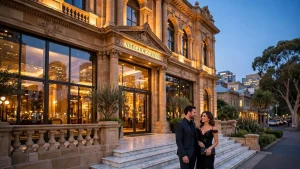
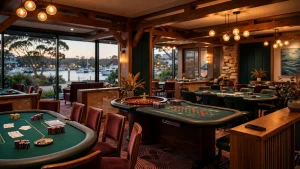
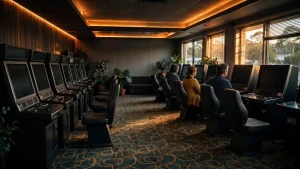
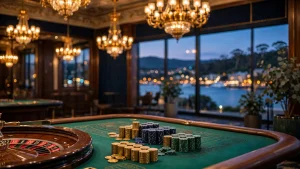
A practical guide to distinguishing on-site accommodation from nearby hotels and checking services, dining and facilities before a visit.
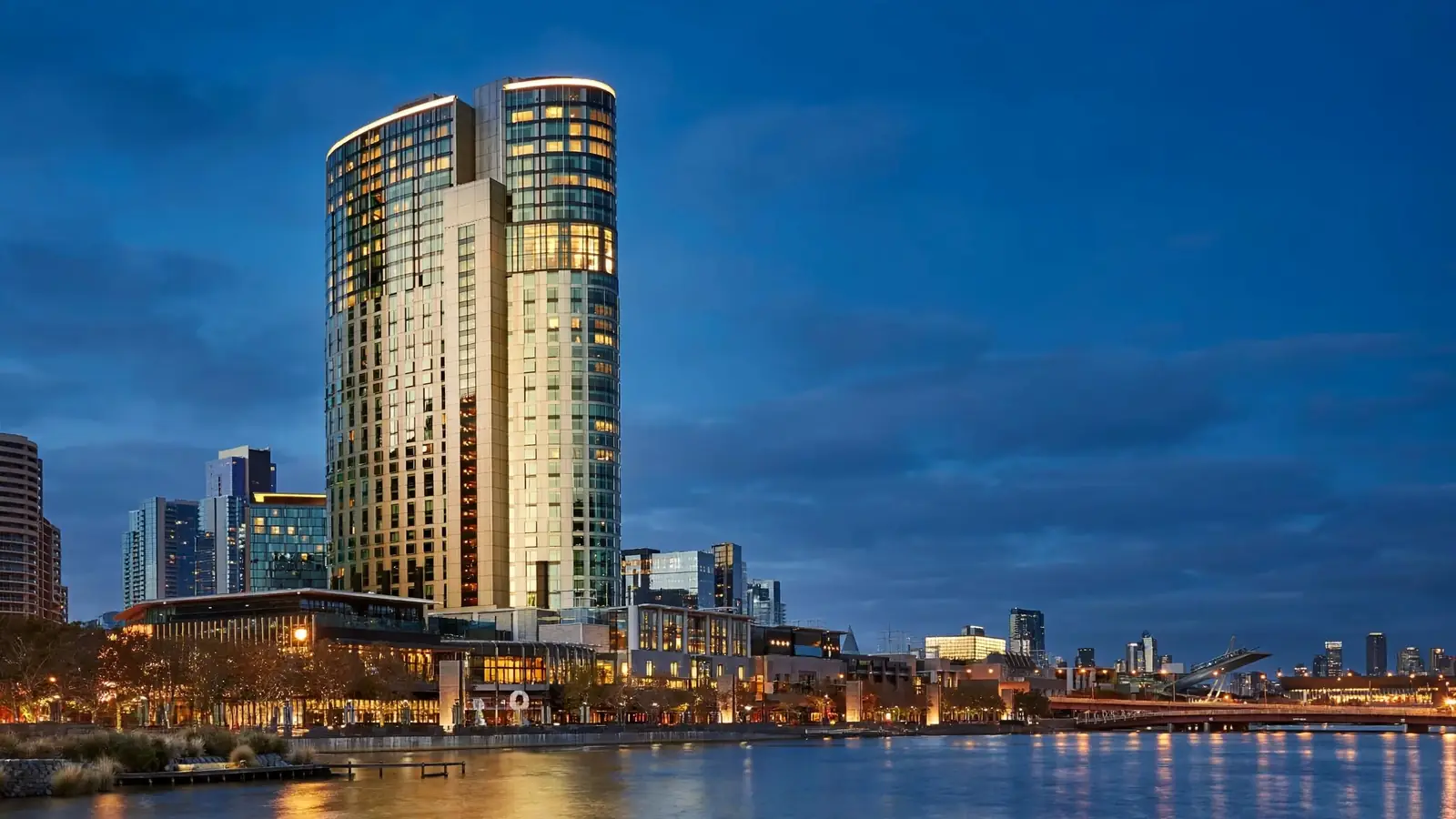
A Melbourne casino hotel search can mean two different things: a room within the casino property, or a hotel elsewhere in the city chosen for its proximity to the venue. The distinction matters because the address alone does not establish who provides the room, what the booking includes, or whether the stay is connected to the casino at all.
When I assess an on-site stay, I separate the room from the reason for visiting. A hotel reservation is accommodation; it does not, by itself, confirm access to casino areas, dining, entertainment or any other service. Those details sit under separate terms and should be checked with the property before booking. “Stay and play” is a promotional phrase, not a complete description of what has been paid for.
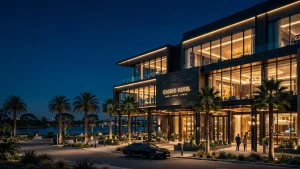
A room booked through the casino hotel is different from a room at a nearby independent hotel, even if both appear in the same accommodation search. The on-site option may place the guest within the same property as the casino, but the booking still needs to be read as a hotel reservation. The confirmation should identify the accommodation provider, the room type, the dates, the price and any conditions attached to the stay.
Choosing a casino in Melbourne for 2026 means checking the details that matter to you before signing up. This list offers a concise reference to the available operator information.
Neospin
Neospin is listed with a Curacao Gaming Control Board licence, OGL/2023/176/0095, held by Hollycorn N.V.
Ricky Casino
Ricky Casino lists crypto payouts in under an hour and PayID payouts in 1–3 business days. The minimum deposit is A$20, or A$30 to qualify for the bonus.
Roby Casino
Roby Casino is licensed by Curacao eGaming, with Roby Games Ltd named as the licensee.
Uptown Pokies
Uptown Pokies operates under a Curacao licence and has been operating since 2017. Its minimum deposit is A$20.
7Bit Casino
7Bit Casino operates under a Curacao licence, with Dama N.V. named as its operator.
SpinsUp
SpinsUp is listed with a Curacao Gaming Control Board licence, OGL/2023/174/0082, held by Dama N.V.
Lucky Dreams
Lucky Dreams lists a Curacao licence and a A$20 minimum deposit when using POLi.
LuckyVibe
LuckyVibe is listed with a Curacao Gaming Control Board licence, OGL/2023/176/0095, held by Hollycorn N.V.
Golden Pokies
Golden Pokies is listed with a Curacao licence. No further operator details are provided here.
Bizzo Casino
Bizzo Casino operates under a Curacao Gaming Control Board licence, with TechSolutions Group N.V. named in the licence information.
I would not treat a casino’s name in a booking headline as proof that every element is bundled together. A rate might cover a room only, while another offer may describe additional inclusions. The wording of the particular offer is what matters. Look for what is expressly included and what is charged separately; broad labels can conceal that difference.
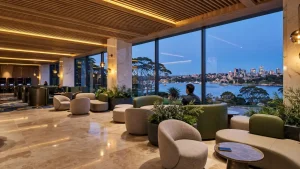
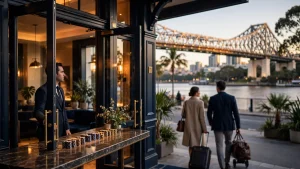
A request for “Melbourne casino hotel rooms” is therefore best resolved by checking the room description and terms, rather than inferring features from photographs or the venue’s casino status. Images show presentation, not the precise room allocated. If a particular feature is essential, it needs to be confirmed against the booking itself.
A search for casino hotel deals can bring together offers with different cancellation rules, payment conditions and inclusions. Comparing only the headline price strips out the terms that determine whether the rate suits the planned stay. I check whether the price is for the full stay, whether taxes or other charges are identified, and when a reservation can be changed or cancelled. If those points are unclear, the rate is not yet comparable.
“Special” is a sales label. The practical question is what the offer changes: the price, the cancellation terms, or the services included. A lower displayed rate can be less useful if its conditions do not fit the trip. The confirmation and the property’s own booking details should agree.
The same care applies to room requests. A preferred view, bed arrangement or accessibility feature should not be assumed from a general room name. Booking systems often distinguish between a request and a guaranteed feature. The distinction is small on screen and significant at check-in.
Hotel check-in and check-out arrangements are separate from casino operating hours. A room reservation does not establish when the casino is open, and casino opening hours do not determine when a room can be accessed. These are separate operational questions, so each should be confirmed with the relevant part of the property before travel.
I also avoid treating an overnight booking as a substitute for checking the stay’s dates and arrival arrangements. A late arrival, an early departure or a change in plans can affect how useful a room booking is, even when the property is on-site. The confirmation is the working document; the marketing page is not.
For a casino hotel in Melbourne, the useful comparison is not simply “inside” versus “nearby”. It is the room’s actual location, the terms attached to that booking and the services explicitly included. Keep those points separate, and an on-site stay is easier to assess without mistaking proximity for a package.
A search for poker at a Melbourne casino can mean several different things: a live poker room, a scheduled tournament, or simply a general question about gambling on the property. Those are not interchangeable. Poker is a card game played against other participants or the house, depending on the format; Electronic Gaming Machines (EGMs), often called pokies in Australia, are separate products. Confusing the two leads to the wrong expectations about what a room offers and how a visit is organised.
I have seen venue language blur those distinctions because “gaming” is a useful umbrella term in promotions. It is less useful when planning a particular activity. A poker-room listing does not establish that a tournament is running, that registration is open, or that a seat is available. Tournament schedules and entry conditions are operational details, not permanent features. They need to be checked against the venue’s current information before travelling.
The same applies to requests for casino rooms. That phrase might refer to poker tables, hotel accommodation, or a general area inside the property. A room associated with poker is not a hotel room, and a hotel booking does not confirm access to a poker game. The wording may look obvious on a venue map; in practice, the distinction matters.
For a Melbourne casino poker tournament, the useful details are the format, registration status, start time, entry terms and any requirements that apply to participants. None should be inferred from an old listing or a general description of the venue. A tournament can be a scheduled event rather than a walk-in table, and a poker room can have conditions that differ from ordinary casino-floor access. Specifics first. Assumptions last.
NSW club information is sometimes brought into discussions of Melbourne casino gambling, but it is a different jurisdiction and a different kind of venue. Club Liverpool is notable in NSW for having more operational poker machines than any other club in that state. That comparison concerns machines at clubs; it says nothing about the number of poker tables, tournaments or rooms at a Melbourne casino.
The distinction is more than terminology. NSW has rules for poker-machine gambling that include a minimum age of 18 and mandatory pre-commitment, under which players set a loss limit before starting. Those are NSW-specific controls for machine play. They should not be presented as Melbourne casino poker-room rules or used to describe a tournament in Victoria.
I would treat any claim that imports a NSW club statistic into a Melbourne poker discussion as a category error. A machine count cannot measure poker capacity. Nor does a statewide rule about poker machines establish the entry terms for a live card game elsewhere. Different activity, different setting.
Searches that combine a sports bar with a casino poker room can also point to separate parts of a visit. A bar is not evidence of a poker event, and a tournament listing does not confirm bar service or opening times. Likewise, “open today” or “open now” needs a current venue check: general casino access and the availability of a particular poker game are not necessarily the same thing. I would verify the specific room or event rather than rely on a broad open-status label.
That is the practical limit of the comparison. NSW club machine facts can explain NSW club gambling; they cannot fill gaps in Melbourne poker-room schedules. For a Melbourne visit, the dependable questions are about the live game itself: whether it is operating, whether a tournament is scheduled, and what conditions apply to joining.
Parking and online access are different parts of a Melbourne casino visit, but search results can blur them together. A physical venue is a place to travel to; an online casino is a gambling service accessed over the internet. The rules for the two are not interchangeable.
For a visit by car, parking is a detail to confirm directly with the venue before setting out. The same applies to valet parking: a search result or old listing is not enough to establish that the service is currently available, where it operates, or what conditions apply. “Free parking” is particularly easy to misread. It may refer to a specific arrangement rather than every visitor or every visit. I would check the current terms, entry points and any restrictions with the venue, then keep that information separate from assumptions based on a nearby business or an earlier visit.
That small distinction matters. Parking access can shape the practical plan, but it says nothing about whether bingo, dining or gambling services are available at a particular time. Those are separate venue details, each with its own terms. Confirm each one independently.
“Online casino” has a more consequential distinction. Under the Interactive Gambling Act 2001, operators cannot provide real-money online casino games, including pokies and table games, to people located in Australia. An Australian-run online casino offering those services to local players would be acting unlawfully. All gambling sites operating in Australia need an ILGA licence to be lawful providers; that does not make online casino games lawful for an Australian operator to offer.
Offshore platforms sit outside Australian regulation. It is technically not illegal for an Australian player to use one, but that does not make the platform a lawful Australian provider or give the player the protections of Australian regulation. This is a grey area in practical terms, not a local online alternative to visiting a casino in Melbourne. I have seen the word “legal” used as if it settled the whole question. It does not. Operator rules and player status are different issues.
Geographic restrictions can also affect access. A site or game may be unavailable from an Australian location, and trying to disguise that location with a VPN can breach the operator’s terms and lead to account suspension. It is not a reliable workaround. A physical casino visit and online gambling access should not be treated as interchangeable choices.
If gambling is part of an in-person visit, the same basic safeguards apply: set a session budget that fits the available bankroll, do not chase losses, and do not raise bets in an attempt to win money back. Gambling is not a way to cover rent or groceries. That hope is an illusion.
The choice between staying at the casino and booking somewhere nearby is less about a headline rate than the shape of the visit. An on-site stay puts the accommodation and venue under one roof or within the same property. A nearby booking separates the two, which can mean more choice in where to stay but adds a journey to the evening’s plan. Neither arrangement is automatically better; the useful comparison is how much movement, coordination and uncertainty each one creates.
For a broader accommodation search around the Melbourne casino, start with the property’s precise location and the route from a candidate stay, rather than relying on labels such as “nearby”. A listing may describe itself as close while still requiring a trip that matters late at night, in poor weather or with luggage. Map distance is a starting point, not a promise about the route or travel time. Access, transport availability and the return journey all belong in the comparison.
I have seen the word “convenient” do a lot of work in accommodation copy. In practice, it can mean anything from direct access to a short trip that still needs planning. Separate the claim from the arrangement: is the room part of the casino property, or is it an independent place in the surrounding area? Then check how the booking handles arrival, cancellation and any charges before treating the displayed price as the full cost. Small print matters.
Melbourne casino accommodation deals and casino promotions should also be read as separate propositions. A room offer may have conditions attached to its booking dates or cancellation terms; a casino promotion may concern something else entirely. The word “deal” does not establish that the accommodation is cheaper overall, nor that a gambling offer applies to a stay. Compare like with like and keep the room decision independent of any incentive to gamble.
The same discipline applies when the practical question shifts to the casino’s location, gaming machines or poker machines. Those are different details from where to sleep. A search for somewhere close by does not establish what is available at the venue, and room proximity does not confirm gaming access, operating conditions or entry requirements. Those points need to be checked with the venue separately, rather than inferred from an accommodation listing.
Opening times and trading hours are another distinct check. A place to stay may be bookable when a particular venue service is not operating, and a venue’s hours do not determine a nearby property’s check-in arrangements. Confirm each detail with the organisation responsible for it. That avoids building an itinerary around assumptions carried over from a booking page.
Parking near the casino can affect the choice too, but it should be treated as a separate logistics question, not as proof that a nearby stay includes parking or that a room rate covers it. Check the accommodation’s own terms and the venue’s current information before deciding whether driving makes the arrangement simpler.
The clearest comparison is therefore not “on-site versus close” in the abstract. It is one booking with fewer transitions against a separate stay whose location and terms have been checked. Read the conditions. Then decide.
A contact listing is useful only if it answers the practical question behind the call. For a visit to Crown Melbourne, the relevant details may be whether a particular bar is operating, whether a table game is available, or which entrance is most useful. Those are venue-specific matters, not facts to infer from a map pin or an old directory entry. I treat a listed phone number as a route to confirmation, not as proof that every advertised service is currently available.
The same applies to a map. A venue map can help distinguish entrances and internal destinations, while a general street map is better for planning the journey. Neither establishes current access arrangements. Car-park location, entry points and any restrictions are worth confirming through the venue’s own current information before setting out; those details can matter more than a broad label such as “near the casino”.
Searches for a Melbourne casino bar or baccarat often imply that a specific venue, service or game is waiting at a particular time. That assumption is where the wording can mislead. A bar’s name in a directory does not establish its current trading status, and a general casino description does not confirm that baccarat—or craps—is offered in the form or location someone expects. I would check directly with the venue for the current bar and table-game details rather than rely on a copied listing.
There is a difference between a physical venue and an online casino. The Interactive Gambling Act 2001 restricts operators based in Australia from providing online casino games such as pokies, blackjack and roulette to people in the country. That restriction concerns online services; it should not be confused with asking a physical venue about its facilities. Sports betting remains widely accessible and legal in Australia, but that does not make online casino games lawful for Australian operators to provide.
“Available” is a slippery word. In practice, it may refer to a game type, a particular table, or an operating session; without confirmation, it tells little.
For a contact number, use the venue’s own current contact channels rather than an unverified directory result. A call can establish whether the enquiry belongs with the venue, and whether the information being sought is current. If a question concerns a bar, baccarat, craps, access or the venue map, stating that specific subject is more useful than asking for a general summary of the property.
Concert-related searches can also lead to stale listings or details for an event rather than the venue’s general facilities. The contact team can clarify where event information is maintained, but a contact page alone does not confirm a concert schedule or entry arrangement. Keep the enquiry narrow. It reduces the chance of mistaking a broad promotional description for a current operational detail.
I have seen how easily a confident listing becomes a promise in the reader’s mind. A quick confirmation is less polished than an advert, but more dependable.
Breakfast and buffet searches point to a possible dining visit; employment searches are about the business as a workplace. They may share the same venue name, but they call for different checks. I would not treat a hotel-style label such as “resort” as proof that breakfast is included, that a buffet operates, or that dining is bundled with a room or casino visit. Each is a separate claim to confirm.
For a Melbourne casino breakfast, the useful details are practical: whether service is offered on the intended date, what dining format is available, and whether access depends on a booking or another condition. “Buffet breakfast” describes a particular format, not a general promise of breakfast service. A buffet may be seasonal, limited to certain guests, or absent altogether; the wording in a search result does not establish which applies. Check the venue’s current information before planning around it.
The same caution applies to a casino buffet. A buffet, a breakfast service and a restaurant are not interchangeable descriptions. I have seen broad labels do more work than the detail beneath them: a page can suggest a full resort experience without settling what is open or included. Look for a current, venue-issued description of the service and its conditions. If that detail is not available, it is safer to make no assumption than to build an itinerary around an advertised-sounding phrase.
“Casino rewards” is another term that can mean different things across venues. It does not, on its own, establish that a particular programme is active, who can join, or what benefits apply to dining or accommodation. Those conditions matter more than the label. Any offer should be read for eligibility and exclusions rather than treated as a standing entitlement. The marketing name is not the rulebook.
People looking for casino jobs in Melbourne need a different kind of evidence: a current vacancy, a clear position description and the employer’s application process. A general careers page or a third-party listing does not prove that a particular job is open now. Nor does the phrase “jobs at the casino” indicate the range of roles, employment conditions or required experience. Those details have to come from the specific listing.
I would read a job advertisement as a set of conditions, not as a picture of workplace culture. Check who the employer is, what the role actually involves, and whether the listing gives a direct route to apply. If the description is vague or its status is unclear, confirm it through the venue’s own careers information before sharing personal details. The venue’s reputation is not a substitute for a precise job offer.
A breakfast booking and a job application should never be conflated simply because both relate to the same property. One is a service to verify for a planned visit; the other is an employment opportunity to assess on its own terms. “Resort” and “careers” are headings, not evidence. Details first.
Opening hours are not a detail to infer from the word “casino”. A property can contain different businesses and spaces, each with its own operating schedule; an event may also have separate entry arrangements from the wider venue. I have seen how a broad headline can make those distinctions disappear. The practical check is the current information for the specific area or event, rather than an assumption that every part of the property follows one timetable.
That matters when a search is really about whether the Melbourne casino is open, has reopened, or is operating normally after a change. “Open” can refer to the venue generally, a particular attraction, or access to a scheduled event. A reopening notice may apply to one facility or date range rather than the whole property. The wording deserves a close read. Headlines compress; conditions do not.
For a visit planned around a performance or public event, confirm the event date, entry details, start time and any access conditions through the venue’s current official information. A listing can describe what is scheduled without establishing that every surrounding facility is available at the same time. If the event is postponed or its arrangements change, an older listing may remain visible elsewhere. Check for a current update before making plans. No schedule should be treated as permanent.
“Entertainment” is also a wide label. It might mean a ticketed performance, an event in a venue space, or simply the broader atmosphere associated with a casino visit. Those are different propositions. I would not treat a general entertainment page as proof of a particular show, regular programme or admission arrangement. Specifics matter; the label does not fill them in.
The same discipline applies to development news. A search for changes to the Melbourne casino can surface plans, commentary or older reports, but those do not by themselves establish what has been completed, when a change took effect, or how it affects public access. A proposed development is not an operating feature. A reported reopening is not a reliable timetable unless it identifies the relevant space and current status. Dates age quickly.
For a review of the venue, separate what can be checked before arrival from what depends on the day. Published event details and current opening information can help establish the plan; they cannot promise that every space, performance or service will be available throughout a visit. I have found that the useful question is not whether a property is simply “open”, but which part is operating and what the intended visit requires.
Avoid relying on a copied listing when a newer venue notice is available. If there is no current confirmation for the event or area in question, leaving that detail unresolved is better than treating an old schedule as fact. For a casino visit, the distinction is straightforward. Verify the occasion, not the assumption.
A restaurant search can mean two different things: a meal inside the casino complex, or a restaurant elsewhere in the surrounding area. The distinction matters. “Near the casino” describes proximity, not ownership, access arrangements or a shared booking system. A venue in the precinct may be entirely separate from the casino, with its own entrance, operator and conditions.
I treat dining as a separate reason for going, rather than as an automatic part of a gambling visit. That keeps the practical questions clear: which restaurant is intended, where its entrance is, whether a reservation is needed, and what applies to entry. A casino’s name in a restaurant listing does not, by itself, settle those details. Check the venue’s current information before making plans; names, services and arrangements can change.
The same applies to menus. A listing may describe a style of food, but that is not a substitute for the restaurant’s own menu or its current dietary information. Where an allergy or other dietary requirement affects the choice, confirmation from the restaurant is more useful than relying on an old listing or a general description. Costs also belong to the individual restaurant, not to the idea of dining at a casino. “Fine dining” is a positioning phrase, not a reliable account of price or what a meal includes.
In my experience, the small operational details are often what separate a smooth meal from a frustrating one. A booking confirmation should identify the right venue and time; a map or venue directory should make clear whether the restaurant is inside the complex or nearby. If a group is meeting there, everyone needs the same location. A restaurant in the broader Melbourne casino area may not be reachable through the same entrance or subject to the same access arrangements as one within the casino itself.
It is also worth keeping the meal plan independent of the gaming plan. Dining does not require gambling, and a restaurant visit should not be treated as evidence that a particular gaming area, service or facility will be available. The casino setting can influence the atmosphere, but the restaurant remains a distinct business experience with its own terms.
For a Melbourne casino restaurant, the useful comparison is therefore not a vague contest between “best” venues. It is a practical check of location, menu, booking process, dietary suitability and the conditions that apply on the intended date. The same method works when comparing restaurants inside the complex with independent options nearby. Confirm the particulars with the restaurant itself. Then plan the meal on its own merits.
A search for a casino spa in Melbourne can suggest that a wellness facility is part of the venue, but the search wording is not evidence that one exists. I treat spa access as a separate service to confirm with the property: check whether treatments are currently offered, whether appointments are required, and whether access is limited to hotel guests or available to other visitors. Those details can change independently of casino operations. “On-site” is not the same as “available to everyone.”
Confirm whether treatments are currently offered, if appointments are required, and if access is restricted to hotel guests or open to all visitors, as "on-site" does not guarantee availability to everyone.
The same distinction matters for a day-spa visit. A listing may refer to a nearby business, a hotel service or an older facility description rather than a current casino amenity. Before making plans around a treatment, confirm the operator’s name and location directly with the venue. If the information is unclear, the practical answer is to avoid building the day around an assumption. No guesswork.
For the address, use the casino’s own current location information rather than relying only on a map result or an old directory entry. Large properties can have several entrances and separate drop-off points, so a street address alone may not identify the right arrival point. The intended destination—hotel, casino entrance, event space or another part of the complex—can affect which route is useful. Confirm the relevant entrance and directions before setting out, especially when a booking or appointment is involved.
Dress-code information is another detail worth checking close to the visit. A general impression of what people wear is not a rule, and requirements can differ by area or occasion. The venue’s current guidance is the appropriate reference for entry expectations; assumptions based on a bar, restaurant or casino floor may not apply elsewhere. If an event is part of the visit, its organiser may also set separate conditions.
Searches about bars and gaming can be handled in the same practical way: establish which part of the property is meant, then confirm its current access details with the venue. A casino’s presence does not establish that every service is operating at the same time or under identical entry conditions. The detail matters.
Careers information belongs to a different purpose from planning a visit. Job listings should be checked through the venue’s official employment channel, where current roles and application instructions can be distinguished from third-party summaries. A general careers page is not proof that a particular vacancy remains open.
I separate the questions before making a plan: what service is actually offered, where it is located, and what conditions apply to entry. That is more reliable than reading an amenity into a search result.
Food and pool searches can suggest a connected resort, but the words alone do not establish what facilities are available at Crown Melbourne. I separate the two assumptions before making plans: a food court is a particular kind of shared dining area, while a pool is a leisure facility. Neither follows automatically from the presence of a casino or hotel.
“Food court” also means something narrower than food options in general. It usually describes a shared area with multiple casual outlets, rather than a single restaurant or a collection of dining venues spread through a property. That distinction matters when the plan depends on quick, informal service in one place. A general reference to casino dining would not, by itself, confirm a food court.
The same discipline applies to a pool. A hotel may be associated with a casino without pool access being part of every stay, and a pool may have separate entry conditions or availability. I would not treat a pool as included merely because accommodation and gaming share an address. The detail to confirm is not just whether a pool exists, but whether it is open to the intended visitor and under what terms.
For both facilities, a current venue listing or direct confirmation is more useful than an old photo, a third-party summary or a broad property description. Confirm the exact facility, its location within the complex, access arrangements and operating status before building an itinerary around it. If the answer is unclear, plan without relying on that amenity.
This is a small distinction with practical consequences. A restaurant is not a food court; a hotel connection is not proof of pool access. Separate the facility from the assumption.