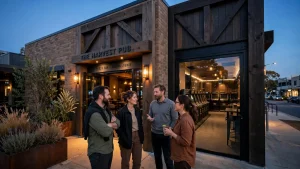
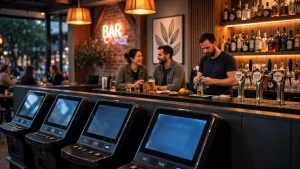
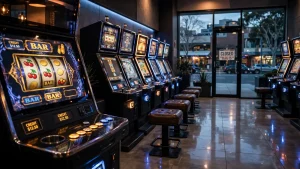
Venue trading hours and general listings may not show whether a gaming room is accessible, so verify details with the venue.
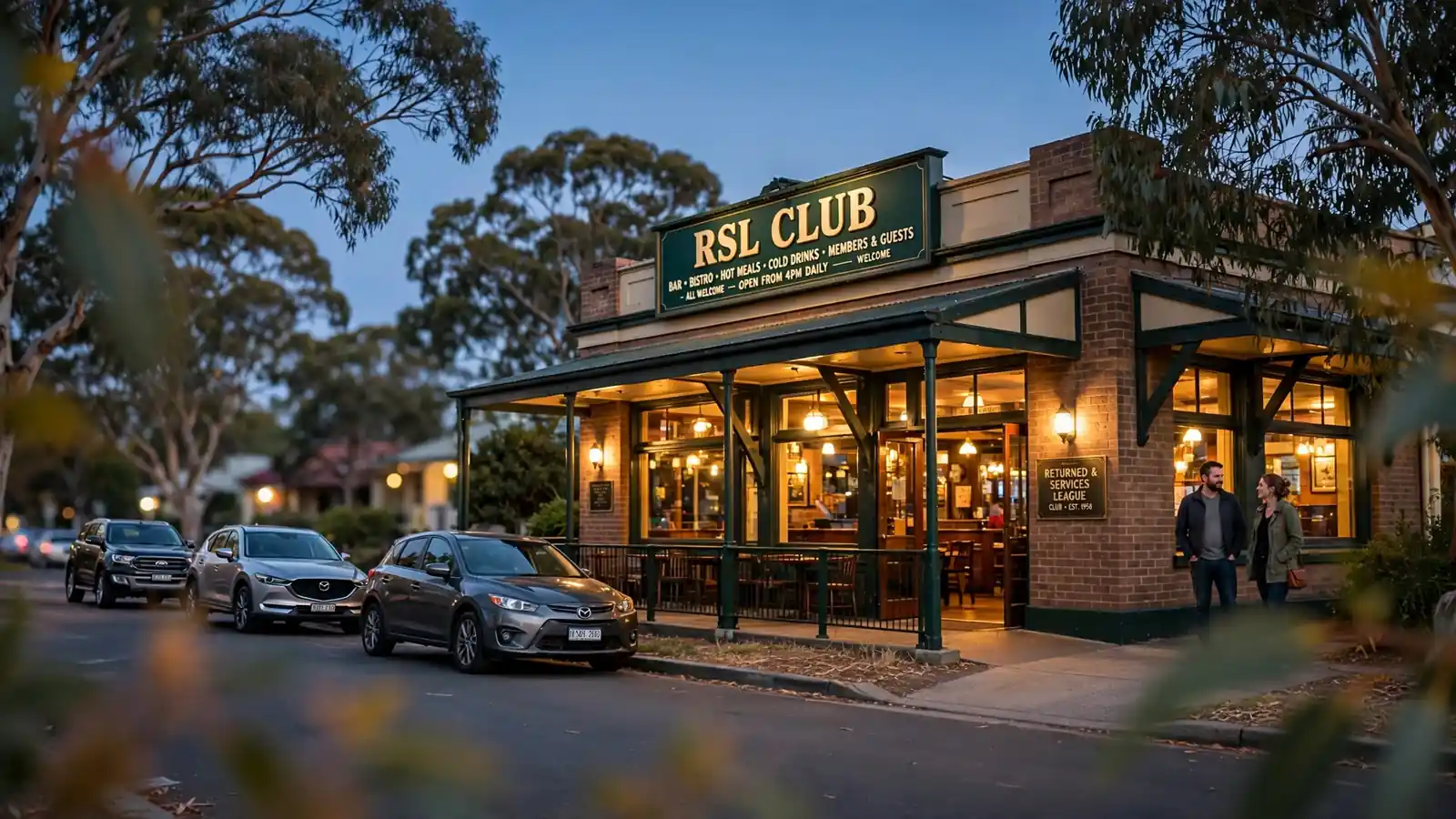
An “open now” result is a starting point, not confirmation that a particular gaming room is operating. In NSW, access depends on the individual venue and the conditions it applies at that time. A broad result may reflect a venue’s general trading status, an outdated listing or information about a different part of the premises. It does not, by itself, establish that the room with pokies is open to visitors.
I have seen how easily those distinctions disappear in a short online label. “Open” can look definitive, while the detail behind it may be narrow: a venue may be trading, but a particular area may not be accessible; a listing may show regular hours without confirming a change for that day. The label is convenient. The qualification is what matters.
For a specific visit, the useful question is whether the relevant venue’s gaming area is accessible at the intended time. A map listing or general directory can help identify a place, but it should not be treated as a live operating notice unless it clearly says so and comes from the venue itself. Third-party listings can lag behind changes or combine details about different services under one opening status.
Choosing an online pokies site for New South Wales in 2026 calls for a careful look at the details available for each operator. Use this list as a starting point and check the current terms and local requirements before signing up.
Neospin
Neospin is listed with a Curaçao Gaming Control Board licence, OGL/2023/176/0095, held by Hollycorn N.V. That licence is the key detail available for assessing the operator.
Ricky Casino
Ricky Casino lists crypto payouts in under an hour and PayID payouts in 1–3 business days. The minimum deposit is A$20, or A$30 to qualify for the bonus.
Roby Casino
Roby Casino is listed as licensed by Curaçao eGaming, with Roby Games Ltd named as the operator. This licensing detail is the main available point of reference.
Uptown Pokies
Uptown Pokies is listed as operating since 2017 under a Curaçao licence. Its minimum deposit is A$20.
7Bit Casino
7Bit Casino is listed as Curaçao-licensed and operated by Dama N.V. These are the available identifying details for the operator.
SpinsUp
SpinsUp is listed with Curaçao Gaming Control Board licence OGL/2023/174/0082, held by Dama N.V. The licence and operator identity are the key details available.
Lucky Dreams
Lucky Dreams lists a Curaçao licence and a minimum deposit of A$20 via POLi. Those details provide the available points of reference for this entry.
LuckyVibe
LuckyVibe is listed with Curaçao Gaming Control Board licence OGL/2023/176/0095, held by Hollycorn N.V. The licence information is the main available detail for this operator.
Golden Pokies
Golden Pokies is listed with a Curaçao licence. No further operator details are available here, so the licence is the only specific point to consider.
Bizzo Casino
Bizzo Casino is listed with a Curaçao Gaming Control Board licence, with TechSolutions Group N.V. named in connection with it. The licence and company name are the available identifying details.
The most direct check is a current notice or contact channel controlled by the venue. If its published information is unclear, a call can resolve whether the premises—and the area being sought—are open. That extra step may feel unnecessary when a search result displays a green “open” label. It is still the distinction between a general status and a confirmed answer.
This applies whether the search is for pokies open in NSW early in the day, later in the evening or at another particular time. Search results do not establish that every venue follows the same schedule, nor that a venue’s hours remain unchanged. There is no single statewide opening time that can be inferred from the phrase “NSW pokies open now.” The answer is venue-specific.
An opening-status panel is usually designed to answer a simple question about a business listing. It may not explain which services are available, whether an entrance or room has separate access conditions, or whether the displayed hours have been confirmed for the current day. Even when the venue is open, that does not automatically prove that every part of it is operating.
I treat online status as a prompt to check, not as a guarantee. Look for a dated update or a statement that specifically covers the area in question. If the information only says that the venue is open, it answers only that much. If hours are listed without a recent confirmation, the listing may still be useful, but uncertainty remains.
The same caution applies to searches framed around an early start or a late finish. A result for a particular time does not establish access at that time unless the venue’s own current information supports it. Search wording can make the result appear more precise than the information behind it. Precision in the query is not proof of precision in the answer.
Opening information should not be mistaken for a statement about a venue’s machines or what they pay. A venue being open says nothing about the performance or outcome of any game. Those are different questions, and a trading-hours label cannot answer them.
That matters because search pages often place several kinds of information close together: opening status, venue descriptions, user comments and promotional claims. They can appear to form one reliable picture, even when each item comes from a different source and was updated at a different time. I separate them. For access, the relevant evidence is current information from the specific venue about the specific area.
If that confirmation cannot be found, the honest answer is that access has not been confirmed. It is better to leave the status uncertain than to convert a general listing into a promise. “Open now” is a useful clue. It is not the same as knowing that a particular room is operating.
“Best” is not a property a pokie can prove for every player. It may refer to a game’s theme, pace, bonus structure or published return-to-player figure, but those are different comparison points. None turns a title into a reliable way to win. When I compare games, I separate what can be read from the rules and paytable from what a player might hope to get from a particular session.
The first mechanism to understand is the Random Number Generator, or RNG. Every online pokie uses one to determine its results. Each spin is independent: the RNG does not keep a score of earlier outcomes, and a run of losses does not make a win due. The same applies in reverse. A recent win does not make the next spin less likely to pay. A sequence can look meaningful to a person watching it, but that appearance does not change how the next result is generated.
That matters when a game is described as “hot” or “due”. Those labels may make a title sound as if its recent history offers a clue. It does not. Past spins do not influence future ones. A short session can produce an outcome far above or below a game’s long-run theoretical return, without proving that the game has changed or that the next result can be predicted.
RTP, or return to player, is another figure often used to define the “best paying pokies” in NSW. It is a theoretical measure of the share of wagered money a game pays back across a very large number of spins. It is not a promise about an individual session, and it does not state what a particular player will receive. The scale matters: a long-run measure cannot be read as a schedule for short-term results.
A higher published RTP can be a useful point of comparison when figures are available on the same basis. It is not a ranking of likely personal wins. Two players can encounter very different results on the same title, and neither outcome disproves the theoretical measure. The figure describes a broad statistical expectation, not a payout target that a game must meet during a visit.
Game design is a separate question. Titles such as Dragon Link, Gonzo’s Quest and Starburst can serve as examples of different named pokies, but their names alone do not establish which is better, pays more or is available at a particular NSW venue. The title and artwork are not evidence of a favourable outcome. A comparison should focus on the information actually provided for a game, rather than treating popularity or familiarity as a substitute for odds.
Paytables and rules can explain how a game is structured: what symbols count, what combinations pay, and how any stated feature is triggered. Those details help describe the mechanics. They do not remove randomness or make a result predictable. If a feature sounds especially attractive in promotional wording, the practical question is what the rules say it does—not whether the wording implies a better chance of winning overall.
There is a useful distinction between “best to play” and “best paying”. The first can be a matter of preference: theme, clarity of rules or the feel of the play. The second suggests a measurable advantage, and only comparable, clearly stated information can support that comparison. Even then, RTP remains theoretical. A game cannot promise that its long-run return will appear in one person’s results.
I have seen how easily a neat figure becomes a sales line. The figure may be accurate as a theoretical measure while still being misunderstood as a personal forecast. That is the gap between description and promise. The RNG decides each spin; RTP describes a long-run expectation. Neither tells a player what the next spin will do.
“Online pokies” can describe two very different things: a service provided by an Australian operator, or a site run offshore. The distinction matters more than the wording on a homepage. Under the Interactive Gambling Act 2001, operators must not provide real-money online casino games, including pokies, to people in Australia. An offshore licence does not turn that service into an Australian-regulated one.
Australian players are not subject to a fine or criminal prosecution simply for using an offshore site, but that is not the same as having local consumer protection. Offshore platforms sit outside Australian gambling regulation. If a payment is delayed, an account is closed or a dispute arises, the options for resolving it may be limited. If an operator becomes insolvent, winnings may not be protected.
That gap is easy to miss when a site presents familiar currency, local imagery or a polished account page. Those details do not establish that the operator is authorised to serve people in Australia. Nor does an offshore licence provide the protections associated with Australian oversight. A jurisdiction’s licence governs the operator under that jurisdiction’s rules, not under Australian law.
Online casinos and game providers can use a player’s IP address to estimate their location and restrict access by country. When a game is blocked for an Australian IP address, it may not appear in the lobby; a region restriction can also prevent a game from loading. Access can therefore differ by location, even when a title appears on a site’s general catalogue.
A VPN can make an internet connection appear to come from another country while the person remains in Australia. That does not change the person’s physical location or the Australian legal framework. A specialist review has described VPN use as a way some players attempt to get around regional restrictions, but access and enforcement can change. More importantly, using a VPN to reach a region-blocked pokies site breaches the site’s terms of service and may result in account suspension. Any balance or withdrawal dispute could then become harder to resolve.
The practical point is simple. A game’s presence in a general catalogue does not establish that it is accessible from NSW, and changing a digital location does not create Australian authorisation. No shortcut.
Promotional language such as “no deposit” or “best paying” describes a sales claim, not a guarantee of access, value or a particular return. Bonus terms can attach wagering requirements, maximum cashout limits, or conditions under which winnings are voided. The relevant rules are the ones attached to the offer and account—not the headline banner.
Withdrawal conditions deserve the same scrutiny. Some operators cap weekly withdrawals at AU$4,000, a condition that could affect a jackpot winner. Other restrictions may apply, and the process for challenging a decision can be limited when the operator is offshore. A displayed balance is not the same as money secured under Australian protections.
“High limit” and “maximum bet” labels also say little about whether a service is lawful for someone in Australia or what protections apply. They are not a substitute for checking the legal position and the terms governing an account. NSW does not have an Australian-regulated real-money online casino service for residents to choose from; offshore sites remain outside that local framework.
This is where the advertising gloss falls away. A foreign licence, a bonus offer or a game visible elsewhere does not resolve the central issue: Australian law prohibits operators from providing real-money online casino games to people physically in Australia, while offshore services are not regulated under Australian law.
A map pin answers one question: where a venue is listed. It does not establish that the venue has Electronic Gaming Machines (EGMs), that its gaming area is accessible to the public, or that it is the right kind of place for the intended stop. I learned to treat “near” as a starting point, not a recommendation. The practical task is to confirm the venue itself before changing a route around it.
Airport searches can be especially imprecise. A result may refer to a suburb, a transport hub or a broad area rather than a venue inside the airport. “Pokies at the airport” and “pokies near the airport” are different claims. A listing within a wider airport district does not mean machines are in the terminal, or even that the venue is on the airport site. Check the actual street address and the venue’s own information, then contact the venue if the distinction matters. A search result is not proof of location.
The same discipline applies to a CBD destination. A city-centre label covers a large area, and map distance can be misleading when roads, pedestrian access or transport connections matter. Pin the intended destination first; compare candidate venue addresses against that point, rather than relying on a broad “near the CBD” description. That is a routing check, not a ranking of central venues. A prominent listing can still be a poor fit for a particular journey.
For a “near me” result, location settings may be approximate or outdated. Check that the map is centred on the correct place, inspect the address rather than the pin alone, and use the venue’s official contact details to confirm that the listing is current. I have seen how a tidy map card can make an assumption look settled. It is not settled until the venue confirms the relevant detail.
Cross-border searches need the same care. Someone travelling between NSW and Victoria may see results from either side of the state line, while a phrase such as “northern NSW” can cover a broad region. A state name in a listing is not enough to establish which side of a boundary a venue occupies. Confirm the full address and state before planning a stop; do not infer a venue’s location from a regional label or a search result’s wording.
Venue Verification
Identify Destination
Determine the actual destination, such as a specific airport terminal or CBD point.
Compare Addresses
Check the full street address of the venue against the destination rather than relying on a map pin.
Direct Confirmation
Contact the venue directly to verify that the gaming area is operating and accessible.
Keep the checks separate. Location tells where a venue is; it does not establish when it is operating, which belongs to a venue-specific check. Nor does a nearby pin confirm a particular machine or game. The answer should come from the venue, not from a map’s category label. That small distinction prevents a location estimate from turning into a promise.
For airport, CBD and border-area journeys, the reliable sequence is plain: identify the actual destination, compare full addresses, and verify the relevant venue detail directly. “Close by” is a map judgement. “There is a suitable venue at this address” is a claim that needs confirmation. No guesswork.
A venue’s size and the experience it offers are different measures. When comparing clubs across NSW, the clearest point of distinction available is the number of operational poker machines: Club Liverpool leads NSW clubs on that measure. It is a specific comparison of machine count, not a finding that it is the best pokies venue for every visitor.
I have seen how easily a number becomes a sales line. “Largest” sounds like a verdict, but it says nothing by itself about the atmosphere, service, accessibility or suitability of a venue. Nor does a larger machine floor mean a better chance of winning. Those are separate questions, and machine count cannot answer them.
For someone weighing up NSW pokies venues, it helps to separate what can be established from what is preference. The Club Liverpool distinction is concrete: it has more operational poker machines than any other club in the state. Beyond that, a useful comparison depends on practical needs—such as whether the venue is convenient to reach, what facilities it offers and whether its environment feels comfortable. Those details should be checked with the venue rather than inferred from a ranking or a machine count.
Entry checks matter too. In NSW, a person must be at least eighteen to gamble on poker machines. Venues check identification to confirm that patrons meet the age requirement; carrying valid ID avoids uncertainty at the point of entry or before gambling. The age rule is not a formality. If eligibility cannot be established, access to poker machine gambling may be refused.
That is the practical distinction between a venue’s promotional language and its operating responsibilities. A club can describe its facilities in broad terms, but age verification is a basic control around who may use its gaming area. A claim about a venue’s size does not replace that check, and no one should assume that appearance or familiarity is proof of age.
The label “best pokies venue” therefore needs a defined meaning. If the criterion is operational machine numbers among NSW clubs, Club Liverpool is the standout. If the criterion is personal comfort or convenience, the answer depends on the individual and on details that a machine count cannot supply. I would treat those as separate decisions, not let one impressive statistic stand in for the whole venue.
A sensible venue comparison stays grounded: distinguish machine capacity from quality, confirm practical details directly, and expect identification checks before poker machine gambling. That gives the comparison a clear basis without turning a single measurable feature into an unsupported promise.
A “24-hour” label can look definitive, but it does not establish that a particular venue is open around the clock or that its gaming area is accessible throughout that period. The distinction matters: a listing may describe a venue generally, while access to Electronic Gaming Machines (EGMs) depends on the venue’s actual arrangements.
I have seen how easily a short label becomes a stronger promise in people’s minds. “Open all day” sounds like a confirmed service. It may instead be an old directory entry, a broad description, or information that does not explain which parts of a venue are available. A search result is a lead, not confirmation.
The useful check is venue-specific and current. Look for an official notice that clearly refers to gaming-area access, not just the building or a related service. If the wording is unclear, contact the venue and ask whether the gaming area is operating at the intended time. A general statement about the premises does not answer that question.
There is no dependable statewide rule that turns a 24-hour search result into proof of access. NSW pokies hours must be established venue by venue. Opening details can change, and a result that remains visible online may not reflect a current arrangement. The wording needs to be precise; “open” and “gaming available” are not interchangeable.
This is particularly important when a trip depends on late-night access. Checking the date and the exact area covered by a venue’s published information reduces the chance of relying on a listing that answers a different question. If the venue cannot confirm the gaming area’s availability, the honest conclusion is that access remains uncertain—not that the search result guarantees it.
Keep the claim narrow. A venue might describe itself as operating continuously, but that alone does not establish uninterrupted access to every facility. Nor does a listing for a venue confirm that its machines can be used at every hour. The point is not to infer a schedule from a label; it is to confirm the specific service being sought.
I treat “24-hour pokies” as a claim requiring direct confirmation, not as a statewide operating standard. Verify the venue, the gaming area and the relevant time. No shortcut.
A NSW-wide statement is not a local directory. Knowing that pokies operate at clubs across the state does not establish which venues in Parkes have them, how many machines they have, or which titles are on offer. Those details need to be confirmed venue by venue; without that, naming a Parkes location would turn an assumption into a recommendation.
I have seen how easily a broad label such as “best pokies NSW” can blur important distinctions. It may refer to a game’s features, a venue’s machine offering or simply a list assembled from state-level information. None of those meanings, on its own, confirms what is available in Parkes. A machine name appearing in a general discussion of NSW pokies is not proof that it is installed at a local venue.
There is one useful statewide comparison, but it should not be mistaken for a Parkes finding: Club Liverpool is reported to have more operational poker machines than any other club in NSW. That identifies a state-level leader, not a ranking of Parkes venues. It also says nothing about the selection at an individual club elsewhere.
The same caution applies when comparing Parkes with Port Macquarie. A result about one town cannot establish what is available in the other, and a general NSW listing cannot bridge that gap. Location-specific claims need a location-specific basis.
In practice, the meaningful distinction is between a confirmed venue offering and a title or club mentioned only in broad material. A local list is useful only when its entries can be tied to actual venues and current information. Otherwise, it may sound precise while leaving the central question unanswered.
That is the limit of a responsible Parkes-specific account: statewide facts can provide context, but they cannot be converted into a local venue list or a promise that a particular pokie is present. No guesswork.
A title search and a venue search answer different questions. A game may be familiar from other casinos or online catalogues, but that does not establish that Crown Sydney offers it, that it is available on a particular visit, or that it is installed in a particular gaming area. I keep those claims separate: a provider’s catalogue is not a venue inventory.
The same caution applies to claims about the “best pokies room”. That phrase can sound like a measured comparison, but without a stated basis it is only a label. A useful comparison would need to identify what is being compared and how it was checked. A room’s reputation, a game’s popularity elsewhere, or a page listing well-known titles cannot establish which games are on Crown’s floor.
“Maximum cash payout” also needs a precise meaning. It might refer to a machine’s stated prize, the way a particular win is paid, or a venue’s handling of a payout. Those are not interchangeable. A headline about a maximum does not, by itself, identify the game, establish its current availability, or explain the conditions attached to a specific win. No figure should be inferred from the venue name alone.
Online access adds another layer. Game availability can depend on a player’s location as well as the provider and the platform. A casino or software provider may restrict access where its licensing jurisdiction requires it. A specialist review has also reported that a game can fail to load because of regional blocking; that is a possible explanation for an access problem, not proof that a title is offered by Crown. A lobby, catalogue or loading error cannot verify a physical venue’s machines.
I learned to distrust clean-looking lists when the underlying distinction is missing. A name on a screen is not a floor check. A game page is not a promise of local access. And a claimed payout ceiling needs context before it can be compared.
For Crown NSW pokies, the reliable approach is to treat each game or payout statement as unconfirmed unless Crown’s own current information identifies it and explains the relevant terms. This avoids turning a general game comparison into an unsupported claim about Crown. It also avoids implying that online casino games are lawfully offered to people in Australia: the Interactive Gambling Act 2001 prohibits operators from providing real-money online casino games to customers physically located here.
Specific claims matter. So does the boundary.
No, a provider's catalogue is not a venue inventory and does not establish if a game is installed at a specific location.
It can refer to a machine's prize, how a win is paid, or venue handling, and requires context from the venue's own information.
No, the Interactive Gambling Act 2001 prohibits operators from providing real-money online casino games to customers physically located in Australia.
A search for pokies in a CBD club can make location sound like the main decision. In practice, a central address does not establish which games are on the floor, whether a particular room is accessible, or whether a venue suits someone’s plans. “Best” is not a useful label without a defined measure. I have seen venue descriptions turn proximity into a recommendation; that is marketing, not evidence of a better outcome.
For club play in NSW, the more concrete safeguard is mandatory pre-commitment. Players set a loss limit before they begin. It puts a boundary in place ahead of the decisions that can become harder to make once play is underway. A limit is a control, not a forecast of what a session will cost, and it does not change how a machine works.
I treat a session budget as money already set aside for entertainment, based on the bankroll available after essentials. It should not include rent or grocery money, and gambling is not a way to solve pressure on household finances. That hope is an illusion. If the budget is reached, stop; do not raise bets to try to recover losses. Chasing losses tends to turn one decision into a sequence of larger ones.
Self-exclusion is a separate consideration for anyone who wants a firmer break from club gambling. The practical step is to ask the relevant club or a gambling-support service what process applies and what it covers, rather than assuming one arrangement applies everywhere. I would treat that conversation as part of planning, not as a reaction that has to wait until a session has gone badly.
CBD clubs may differ in their facilities and procedures, so a broad city-centre label cannot tell a person what safeguards a particular venue can explain. The useful distinction is between a venue’s promotional description and the controls available before play. Pre-commitment sets a loss boundary; a personal budget defines what entertainment money is available; and stopping when either boundary is reached keeps the decision from being rewritten in the moment.
No machine or central location makes those safeguards unnecessary. The limit comes first.
A Newcastle venue’s presence in a directory does not establish that it offers cashless gaming, or that a particular Electronic Gaming Machine (EGM) is available there. Those are separate details, and neither follows from a general description of a club or gaming room. I would treat claims about local cashless options as something to confirm with the venue, rather than infer from a listing or from NSW-wide policy.
The distinction matters. Cashless gaming describes how play is funded or handled; it does not, by itself, say what machines a venue has or whether a cashless arrangement is operating there. NSW also has mandatory pre-commitment systems, under which a player sets a loss limit before playing. That is a statewide safeguard, not proof that Newcastle venues use a particular cashless system. Different mechanisms. Different claims.
The same caution applies to descriptions of the “best” pokies in Newcastle. A venue label or a mention of a popular game cannot establish what is installed locally. Availability can depend on the individual venue and its current machines. A useful check is specific: ask the venue whether it offers cashless gaming, what the arrangement covers, and whether the machine or feature being discussed is actually available. General promotional wording is not a substitute for those answers.
I have seen how easily a broad label gets repeated as if it were a confirmed feature. It may describe a policy, a planned change or a general category, rather than a service operating at a particular club. Keep those meanings separate before making a decision.
Pre-commitment is not a reason to treat a loss limit as a target. Set a session budget that fits the bankroll, do not raise bets to recover losses, and stop when the budget is reached. Chasing losses can turn a planned session into a larger one. No recovery strategy.