Casino hotel labels do not establish what a booking includes; the offer’s terms are needed to assess rooms, services and conditions.
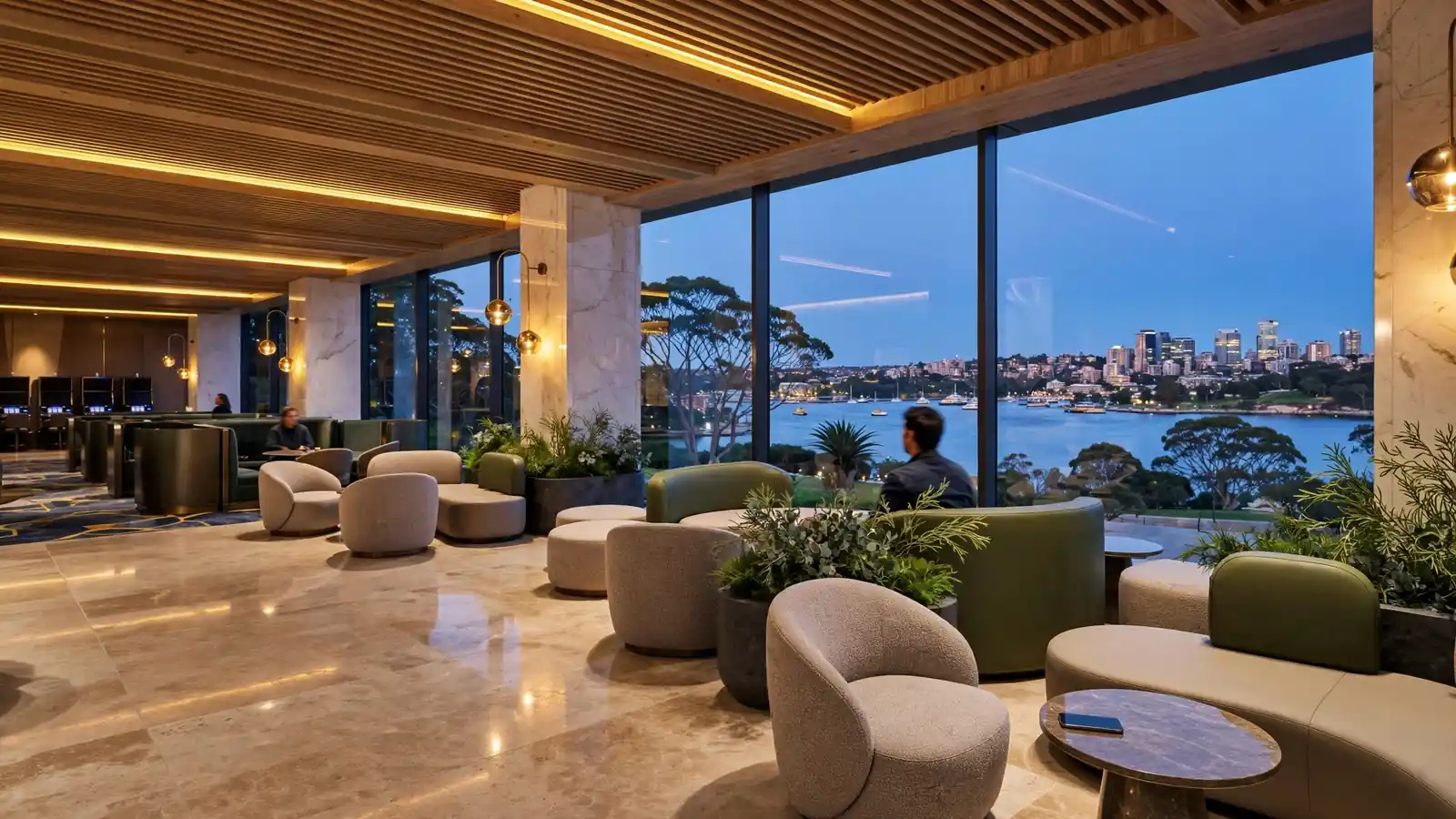
A casino hotel sounds like a straightforward package: a room attached to, or associated with, a casino. In practice, the phrase can cover different arrangements, and the label alone does not settle what is included. A hotel may be operated by a casino company, marketed alongside a casino, or simply appear in the same travel search. Those are not interchangeable offers.
That distinction matters when comparing a Sydney casino hotel with a standard hotel stay. The words “casino hotel” do not, by themselves, establish that a room is on casino premises, that a casino visit is part of the booking, or that any particular service comes with the room. I would read the actual offer as a set of terms, not as a promise inferred from its headline.
A casino hotel deal is meaningful only when its conditions are clear. The label might suggest a special rate or a bundled stay, but it does not tell a guest what the price covers, whether the offer applies to particular dates, or what booking rules attach to it. Without those terms in front of them, a traveller cannot compare the deal fairly with an ordinary hotel booking.
Choosing a casino in Sydney for 2026 calls for a careful look at the information available about each operator. Use these notes as a starting point when considering which option suits your needs.
Neospin
Neospin is listed with a Curacao Gaming Control Board licence, OGL/2023/176/0095, held by Hollycorn N.V.
Ricky Casino
Ricky Casino lists crypto payouts in under an hour and PayID payouts in 1–3 business days. The minimum deposit is A$20, or A$30 to qualify for the bonus.
Roby Casino
Roby Casino is listed as licensed by Curacao eGaming, with Roby Games Ltd as the operator.
Uptown Pokies
Uptown Pokies is licensed in Curacao and has operated since 2017. Its minimum deposit is A$20.
7Bit Casino
7Bit Casino is licensed in Curacao and operated by Dama N.V.
SpinsUp
SpinsUp is listed with a Curacao Gaming Control Board licence, OGL/2023/174/0082, held by Dama N.V.
Lucky Dreams
Lucky Dreams is licensed in Curacao and has a A$20 minimum deposit via POLi.
LuckyVibe
LuckyVibe is listed with a Curacao Gaming Control Board licence, OGL/2023/176/0095, held by Hollycorn N.V.
Golden Pokies
Golden Pokies is listed as licensed in Curacao.
Bizzo Casino
Bizzo Casino is listed with a Curacao Gaming Control Board licence, with TechSolutions Group N.V. as the operator.
The same caution applies to room descriptions. “Casino hotel rooms” can sound like a defined category, but the phrase does not establish a room type, view, layout, or standard of service. Those details belong to the property’s own description and the selected booking conditions. A polished image or an attractive package name is not a substitute for that wording.
I have seen how the word “exclusive” does its work in hospitality marketing: it creates an impression of special access before the conditions are examined. The useful question is not how distinctive the label sounds, but what the written offer actually includes. If an advertised benefit is not described in the booking terms, it should not be treated as part of the stay.
A hotel and casino appearing together in promotional material may be related, but that does not automatically make every casino service part of a hotel reservation. Nor does a hotel booking itself establish admission, a gaming benefit, or any other casino-related entitlement. The relationship between the accommodation and the venue has to be stated, rather than inferred from branding or proximity.
This is also why broad searches for casino hotels in Sydney can produce results that are difficult to compare. One listing may refer to a hotel operated by a casino business; another may describe accommodation marketed near a casino; a third may use casino imagery without explaining any formal connection. The category is not a guarantee of a common package.
For a guest, the practical distinction is simple: a room reservation confirms only what its own confirmation and conditions say. Anything beyond that needs to be specified separately. That is less glamorous than a bundled promise. It is also more reliable.
 Casino in Tasmania: hotel, poker and online rulesThis guide separates casino hotels from online gambling and explains what the Interactive Gambling Act restricts for Australian-run operators.
 Hobart Casino: What Its Services Can ConfirmSeparate what available information can establish about poker from unverified claims about rooms, parking, dining and other casino services.
The phrase “stay and play” can sound like one joined experience, but promotional language does not define the contract. A room, a casino visit and any extras may be separate products with separate conditions. Before treating a promotion as a complete stay, the written description needs to make the connection explicit.
This does not mean a casino-linked stay cannot be appealing. It means the appeal should rest on confirmed details, rather than on assumptions carried by the word “casino.” In my experience, the gap between the headline and the actual terms is where expectations are made—or quietly narrowed. Read the terms first. Then decide what the offer is worth.
The same standard applies to any hotel presented as part of a Sydney casino experience: identify who provides the room, what the reservation covers, and which advertised benefits are expressly included. If those points are unclear, the safe conclusion is not that the offer contains a hidden extra. It is that the extra has not been promised.
Poker-machine rules in New South Wales are part of the practical side of a venue visit, not a detail to leave until a machine is in front of someone. The legal age for gambling on poker machines in the state is 18. Anyone under that age must not gamble on them. Venues are expected to check identification where age needs to be established, and a person who cannot demonstrate they meet the age requirement can be refused access to gambling. Ignoring the rule is not a harmless workaround; underage gambling can carry legal consequences.
From the venue’s perspective, an identification check is a control, not a courtesy. Staff need a reliable basis for allowing access, and a claimed age is not enough where proof is required. For visitors, the sensible assumption is that identification may be requested before gambling. That applies regardless of whether the visit is framed as a night out, a stop at a sports bar or an attempt to find poker at a Sydney casino. A sports bar and a poker room are not interchangeable terms, and neither phrase changes the age rule.
The word “poker” can also point to different activities. In NSW, the rule discussed here concerns poker machines, often called Electronic Gaming Machines (EGMs). It should not be read as a statement about a casino poker room, a live poker tournament or a tournament timetable. Those are separate offerings with their own venue-specific arrangements. A search for rooms at a casino may mean accommodation, while a poker room means something else entirely. The shared word creates confusion; it does not establish that a particular facility or event is available.
NSW also requires a pre-commitment step for poker-machine play. The player sets a loss limit before starting. In operational terms, that means the limit is established in advance rather than improvised after play has begun. It is a boundary-setting measure, not a prediction of how a session will go and not a promise that losses will stop at a particular point in every circumstance. The useful distinction is simple: the decision is made before play, when it can still be considered apart from the momentum of a session.
That design matters. Once play is underway, small decisions can begin to feel routine; a pre-set limit puts one decision ahead of that sequence. It does not turn gambling into a way to recover money, and increasing bets to chase losses cuts against the purpose of setting a boundary. A session budget should be based on money available for entertainment, not funds needed for essentials. No recovery plan.
One NSW club fact is sometimes confused with claims about Sydney casinos: Club Liverpool is the club in the state with more operating poker machines than any other club. That comparison is specifically among clubs in NSW. It does not establish the machine count at a casino, identify a poker room, or describe a tournament offering. A machine-count distinction attached to a club should stay attached to that club.
Questions about whether a venue is open today or “open now” are separate from these state rules. Operating hours do not change the age threshold or pre-commitment requirement. For poker-machine gambling in NSW, the essential points are firm: the minimum age is 18, identification may be checked, and a loss limit is set before play begins.
A breakfast buffet is a particular offer, not a safe assumption that follows from the words “casino” or “resort”. The label can suggest a convenient start to a stay, but it does not establish that breakfast is served, that it is buffet-style, or that it is included with a room or other purchase. Those are separate conditions, and each needs to be stated by the venue.
I learned to read hospitality wording literally. “Breakfast available” does not necessarily mean a buffet; “buffet” does not say what is served or when; and “included” only has meaning alongside the booking conditions that define who qualifies. Without those terms, a Sydney casino breakfast remains an expectation rather than a confirmed part of a visit. No menu or price should be inferred from the search phrase alone. Small print matters.
The same distinction applies to a casino buffet. The phrase might refer to a standalone meal, a hotel package, or an offer with eligibility conditions. It does not establish opening days, seating arrangements, food selection or whether advance booking is needed. Those details can change, so an old description or a general destination label is not a substitute for current venue information. A buffet is a specific service. It is not shorthand for every meal option on site.
“Casino resort” can also do more work in advertising than it does in a booking confirmation. It may describe a broad hospitality concept, but the term alone does not confirm which services are operating or what is bundled together. I separate the name attached to a property from the deliverables attached to a reservation. The latter are the decision-making details. Without them, there is no sound basis for assuming a resort-style breakfast or a buffet as part of a stay.
Rewards require the same discipline. A rewards programme may sound like a direct benefit, but the word itself says nothing about who can join, what activity earns recognition, how benefits are redeemed, or whether any benefit applies to dining or accommodation. Nor does it establish that a particular Sydney casino has a programme. The useful information is in the current programme rules, not the promotional label. Terms first. Then value.
There is a practical difference between a benefit being advertised and a benefit being usable for a particular booking or meal. Eligibility, exclusions and expiry conditions can determine that difference. If those terms are not available, a rewards claim should not be treated as a discount, a complimentary breakfast or a guaranteed upgrade. I would not put a value on a benefit until its conditions are clear. Otherwise, the number exists only in the imagination.
Employment searches sit alongside these hospitality searches, but they answer a different question. A phrase about jobs at a Sydney casino does not establish that vacancies are open, what roles exist, or how applications are handled. Those details belong to a current recruitment notice from the relevant employer. A venue’s hospitality image is not evidence of a particular job opportunity. Separate issue.
For planning, the sound approach is to treat breakfast, buffet access and rewards as distinct items, each requiring its own current terms. A booking confirmation can establish what has actually been purchased; a broad description cannot fill in the gaps. That is less exciting than a package headline. It is also more reliable.
A search for an online casino in Sydney can make a digital service look like the natural extension of a local venue. The legal position is different. Under the Interactive Gambling Act 2001, an operator based in Australia cannot provide real-money online casino games to people in Australia. That restriction covers pokies as well as table games such as blackjack and roulette. A page offering those games is not made lawful simply by using Sydney in its description.
The distinction is between a locally regulated venue and an offshore website. Australian gambling services that may lawfully operate here must hold the relevant state or territory authorisation; in New South Wales, that means oversight through the local regulatory framework. It does not create a route for an Australian operator to offer online casino games. The rule follows the service and where it is provided, not the wording on its landing page.
Offshore platforms sit in a different position. Australian players are not generally criminalised merely for using such a platform, but the platform is not regulated under Australian law. That gap matters when something goes wrong: local protections and dispute routes may not apply in the same way, and a player may have limited practical recourse if an overseas operator refuses a withdrawal or becomes insolvent. “Available” is not the same as protected.
From the other side of the counter, I learned to read access claims carefully. A site loading on a screen proves only that the page loaded. It does not establish that the operator is authorised to provide online casino games in Australia, that the offer is locally supervised, or that winnings will be protected. A Sydney label is marketing, not a licence.
Websites can also restrict access by location. IP-based checks can identify an apparent country and block games or services for users in excluded regions; a blocked game may not appear in the lobby or may fail to load. These controls can change, so an old account of which games were visible is not proof of present access.
A VPN can make a connection appear to come from another country, but using one to reach region-blocked pokies conflicts with a site’s terms and may result in account suspension. It does not convert an offshore service into a locally regulated one. The appearance changes. The legal status does not.
This is why searches combining Sydney with online casino play, bingo or dining should not be read as proof that those services are offered lawfully by a Sydney venue. A physical casino and an online casino are not interchangeable products. Nor does a familiar brand name settle whether a particular digital service can lawfully take Australian customers.
I would treat any claim of Australian online casino access as a prompt to check what the operator actually offers and where it is authorised, not as reassurance in itself. Offshore sites may accept Australian visitors, but that practical possibility does not make them Australian-regulated providers. The distinction is easy to blur in advertising. It is not a small one.
Finding accommodation near a Sydney casino is a separate decision from booking a room as part of a casino stay. A hotel may be close enough to suit one itinerary and inconvenient for another; the label “nearby” does not settle the practical questions of route, transport, parking or total cost. I have seen how easily a location phrase can do more work in an advertisement than it does for a guest.
A useful comparison starts with the exact property address and the casino entrance or destination being used. Map distance alone can be misleading: the route taken on foot may differ from the road route, and travel time depends on transport and conditions. Those details should be checked against the accommodation listing and current mapping information before a booking is treated as convenient.
The same care applies to “Sydney casino accommodation deals.” A promotional label is not a description of the booking terms. The meaningful details are the dates covered, room type, cancellation conditions, inclusions and any restrictions on when the offer can be used. A package should not be assumed to include casino access, parking, meals or transport unless its terms say so.
Price comparisons also need to use the same basis. The displayed room rate may not represent the full amount payable once taxes, fees or parking are considered. Availability can change between viewing an offer and completing a booking, so a price seen earlier is not necessarily a price secured. I would treat a deal as real only after the final booking page sets out the total and the conditions in writing. No headline is a contract.
“Casino promotions” can refer to more than one thing. A hotel promotion, a venue offer and a gambling-related incentive are not interchangeable. The wording should identify who is offering the promotion and what must be done to receive it. Broad language such as “exclusive” does not establish an accommodation benefit by itself.
The location question matters for another reason: a casino venue is not automatically a hotel, and accommodation in the surrounding area is not automatically connected to the venue. A booking made independently should be assessed as a hotel booking, with its own operator, terms and customer support. That distinction avoids treating proximity as a partnership.
Parking deserves its own check rather than being inferred from a nearby address. A property may have parking arrangements, or it may not; the relevant details are where parking is available, whether it is included, and what conditions apply. The same principle holds for transport links: verify the route and service information for the intended dates instead of relying on a general claim of convenience.
I would keep the decision simple: confirm the address, compare the full booking terms, and check any claimed connection or inclusion directly with the business offering it. A short walk, a special rate or a bundled benefit should be treated as a specific promise only when its conditions spell it out. Proximity is not a package.
Contact details are the first practical check, not a formality. A phone number copied from an old directory can belong to a different department or no longer connect at all. I treat a venue’s own current website or official social channel as the starting point, then confirm that the contact route is suitable for the question. A general switchboard, if one is published, may not handle parking, table-game or event enquiries directly.
The same caution applies to maps. A pin can identify a broad site without showing the entrance intended for visitors, vehicle access or the correct drop-off point. Before setting a route, the useful details are the venue’s current address and any directions it publishes for arriving by car. A map is a navigation aid, not proof that a particular entrance or car park is available.
Parking deserves its own check. Search results can mix public facilities, nearby commercial parking and venue-related information. Those are not interchangeable. I would look for a current statement from the venue or the relevant parking operator before relying on access, entry arrangements or availability. No guesswork. A convenient-looking map pin does not settle the question.
Contact details, maps, and bar listings should be checked through the venue's current website or official social channels to ensure information is up to date.
A bar listing is similarly specific. The word “bar” can refer to different spaces and service arrangements, and a listing alone does not establish that a venue is open or operating as expected on a particular visit. Confirm the relevant bar through an official channel, especially when the visit depends on a particular setting or service. I avoid treating an old photograph, review or directory entry as a current promise.
Concert information needs a separate check because an event announcement can be time-sensitive. A venue name attached to a past performance does not establish a current programme, ticket availability or entry arrangements. The dependable sequence is to confirm the event with the venue or its authorised ticketing source, then check any event-specific conditions before travelling. Promotional language tends to foreground the act. The practical details sit elsewhere.
The same distinction matters for baccarat and craps. A casino search result containing a game name is not confirmation that the game is offered at a particular venue, in a particular format, or on the day in question. I would ask the venue directly rather than infer table availability from general casino descriptions. A game label is not a schedule.
When making contact, a concise enquiry helps: identify the detail needed—parking, a bar, a concert, or a table game—and ask which official page or department can confirm it. Keep the reply or current listing available while making plans. If the answer is unclear, treat it as unresolved rather than filling the gap with assumptions.
That approach is less glamorous than a polished itinerary, but it avoids a familiar mistake: confusing a result that sounds specific with a confirmed arrangement. Contact first. Then travel.
Opening hours are operational information, not a permanent feature of a venue. A listing may describe a usual schedule while a particular area, activity or event follows different arrangements. I treat “open” as a question that needs a current, venue-specific answer: a general claim about a casino’s operation does not establish that every facility is running at the time in question.
The same distinction matters when a venue is described as reopening. That word can refer to a broader operation, a particular space or a return after a temporary closure. It does not, by itself, confirm which activities are available or whether an event is taking place. The date and scope matter. Otherwise, “reopening” is just a headline.
Entertainment and event information needs the same care. A programme can change, and a past listing is not evidence of a future performance. I would look for an announcement tied to the specific venue and date, then check whether it describes a confirmed event rather than a general entertainment offer. If no current programme is available, the responsible answer is that the schedule remains unconfirmed—not to fill the gap with assumptions about live music, shows or seasonal events.
This also keeps a review in proportion. A Sydney casino review may describe one person’s experience at a particular time; it cannot establish today’s opening hours or the status of a later event. Useful reviews separate observation from expectation. “Busy” or “lively” says little about what is operating now. Promotional language says even less.
Development and employment searches concern different questions. A proposed project, construction update or recruitment notice may indicate activity around a venue, but it does not prove that the casino is open to visitors or that entertainment is running. Those details need their own confirmation. Different evidence. Different answer.
A menu listing can also be mistaken for a sign that the wider venue is open. It may relate to a particular service or date, rather than the casino’s overall operating status. Dining details are best checked separately; they do not substitute for confirmation of hours or entertainment.
For anyone assessing the best casino in Sydney in 2026, the practical standard is straightforward: treat hours, event listings and entertainment as time-sensitive, and confirm the specific detail with the venue before making plans. I would not infer a current schedule from old reviews, development news, job advertisements or a generic description. If an announcement lacks a date or does not identify what is operating, it leaves the central question unanswered. Verify the programme itself. No guesswork.
An address is not a minor detail in a venue visit. It determines which entrance to use, how to plan the trip and whether a listing refers to the casino itself or another business nearby. I would not treat a search result, map pin or old directory entry as confirmation of a current venue address. Check the operator’s own current visitor information before setting out, and make sure the location refers to the casino rather than a hotel, office or neighbouring property. Small distinction. Wrong destination.
The same care applies to dress expectations. A general claim that a Sydney casino has a particular dress code can sound definitive while leaving the important part unstated: rules may depend on the venue, area or occasion. Without a current policy from the operator, there is no sound basis for promising that a particular outfit will be accepted or refused. Check the entry guidance for the specific venue and area being visited, rather than relying on an old review or a broad description of what casinos “typically” allow. “Smart casual” is not useful if the venue has not defined what it means.
Spa searches need similar restraint. A casino’s association with accommodation or leisure does not establish that a spa operates on-site, that it is open to casual visitors, or that access is included with any stay. Those are separate conditions, and none should be inferred from a venue name or promotional image. Confirm the spa’s existence, location and access terms directly before building a visit around it. Otherwise, the plan rests on an assumption.
Career listings and gaming information are different kinds of enquiries, too. A vacancy page belongs to the operator’s current recruitment process; it should not be treated as evidence about visitor facilities or entry rules. Likewise, a general reference to casino games does not confirm which games are available at a particular venue. The practical details must be checked in the relevant operator information, not assembled from unrelated listings.
From the other side of the counter, I learned that broad labels make planning look settled before the operating detail has been checked. A location pin is not an entrance guide. A dress-code summary is not an admission decision. A spa mention is not proof of access.
For a visit, the useful sequence is simple: confirm the venue’s current address, check its own entry guidance, and verify any spa or other facility directly with the operator. If one detail cannot be confirmed, leave it out of the plan rather than filling the gap with a guess.
A restaurant associated with a Sydney casino is a separate proposition from the casino itself. The venue name alone does not establish that dining is available, what kind of food is served, whether a particular outlet is operating, or whether a booking is needed. I have seen promotional language make those details sound settled when they are not. The practical distinction is simple: a casino’s existence does not verify a restaurant offer.
That matters when comparing claims about restaurants at a Sydney casino. A listing may be old, refer to a different venue, or describe an offer that has changed. A polished photograph tells little about current menus or service. I would treat specific claims as provisional until they appear in current information issued by the venue itself. No menu detail should be inferred from a restaurant label, a past review, or a page that does not show when it was updated.
The same discipline applies to cuisine, price, opening times, booking rules and dietary options. These are details that can change independently of the casino’s broader operation. A booking button or third-party listing is not, by itself, confirmation that the advertised service is available on the intended date. Confirming the outlet and its current terms before making plans is more useful than relying on general descriptions.
“Rooftop” is also a facility claim, not a synonym for restaurant. A search for a rooftop bar in Sydney may return material that says little about dining, and a restaurant listing does not establish that a rooftop venue exists. The two should be checked as distinct offers. I would not treat a photograph, a social post or a generic venue description as proof of either.
There is a commercial reason to read the wording carefully. “Dining destination” can describe a marketing position rather than a specific meal, menu or reservation arrangement. The phrase may be attractive; it is not operational detail. What counts is a current, attributable description of the restaurant and the conditions attached to visiting it.
For anyone weighing a casino visit around a meal, the reliable sequence is to identify the exact restaurant, confirm that it is operating, then check its own current menu and booking information. If those details cannot be confirmed, the dining plan remains uncertain. No invented venue names, cuisines or prices improve that decision. Better to leave the gap visible.
Food on a casino site and a food court are not interchangeable claims. The first could refer to dining options elsewhere in a complex; the second implies a particular kind of shared, casual food area. A venue’s broad food wording does not establish that such a court exists, what it serves, or whether it is open during a planned visit.
I learned to separate the label from the operating detail. “Convenient dining” is promotional shorthand, not a floor plan. For a Sydney casino, treat food-court access as a specific facility to confirm through the venue’s current official information before building it into an itinerary. Menus, opening times and access conditions can change, so an old listing or a general description may not settle the practical question.
A pool needs the same discipline. A casino, a hotel and a larger entertainment complex may be discussed together, but that does not make every facility part of every offer. A pool should not be assumed to be on site, included with a stay, or available to all visitors simply because accommodation and casino facilities share a name or location.
The distinction matters at the point of planning: food service is not automatically a food court, and a casino visit does not itself establish pool access. Confirm the exact facility, who may use it and any conditions that apply. If those details cannot be confirmed, plan without relying on the amenity.
No assumption. Verify first.
Region blocking uses your IP address to identify your location and can prevent games or software providers from being accessed in certain countries. From an Australian IP address, a blocked game may not appear in the lobby or may fail to load.
You must be 18 or older to gamble on poker machines in NSW. Venues may ask for identification and refuse access if you cannot prove your age.
Check the RTP, which describes the theoretical share of wagers returned over many spins, and remember that each spin is independent. If you are considering bonuses, check their wagering requirements: free-spin winnings commonly require 20 to 50 times wagering before withdrawal, and buy-bonus games typically cost 50 to 100 times your stake.