A practical guide to venue access, machine-floor rules and the limits of claims about payouts and online play in Melbourne.
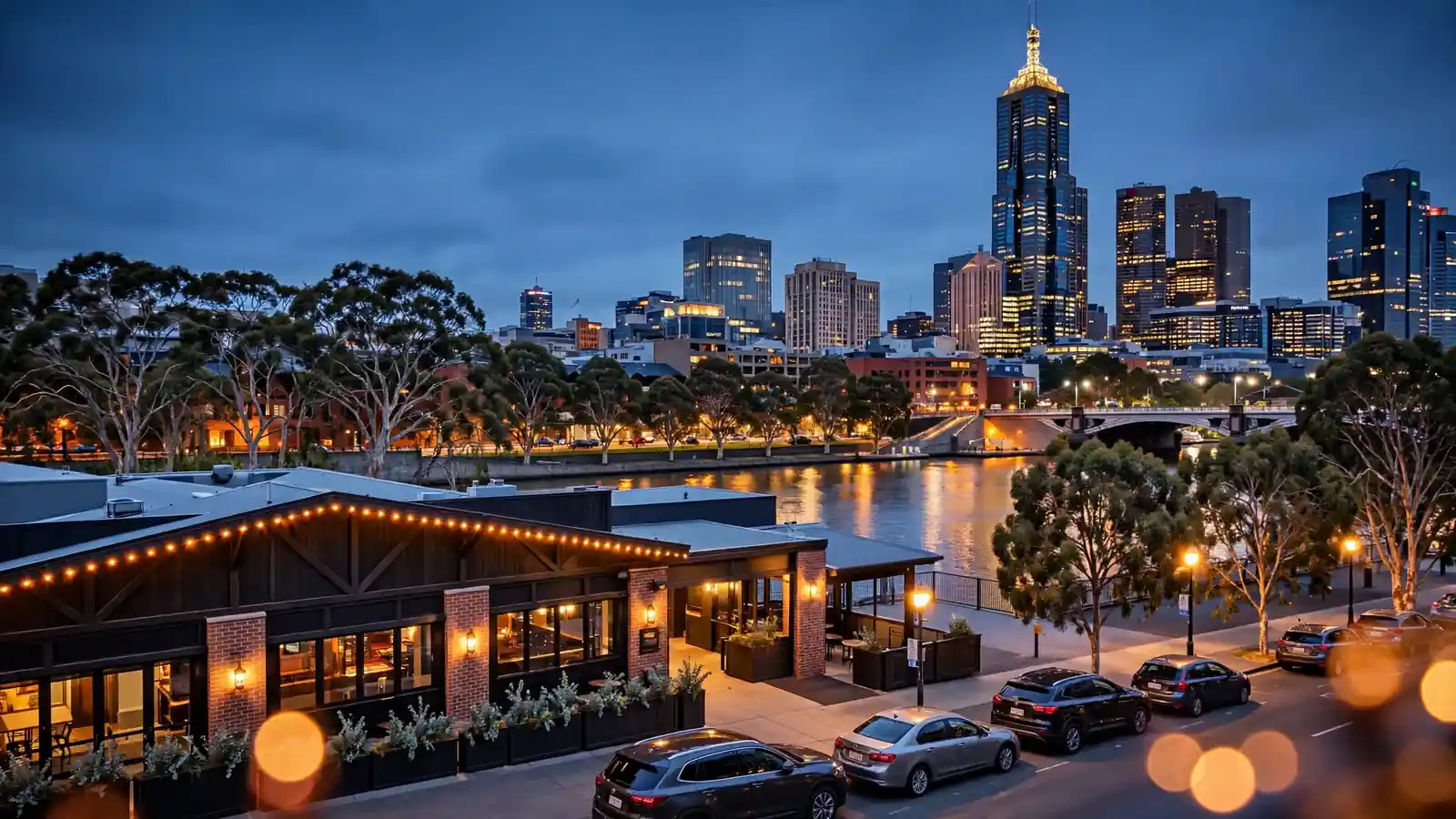
A search for pokies near Melbourne Airport is asking a geographic question, but the word “near” can carry more weight than the available information supports. It may mean within a short trip, somewhere on the way into Melbourne, or simply in the wider area associated with the airport. Those are different expectations. Without a confirmed venue listing and a reliable location, the phrase cannot establish how close a particular set of machines is.
I have seen this distinction get blurred in venue descriptions. A location label gives a reader a starting point; it does not prove that a venue is nearby in the practical sense, or that its gaming area is available at the time of travel. A result associated with Melbourne may still require a separate journey. The label alone tells little about the route, travel time or ease of getting there, so none of those should be inferred from it.
The same applies to searches that place Melbourne and the airport together. That wording can reflect a person’s intended destination rather than the precise boundary of an area. Melbourne Airport is a useful geographic reference, but it does not make every result carrying a Melbourne label an airport-area venue. A careful comparison begins by separating the place named in a listing from the place the venue actually occupies.
The distinction matters because maps and directory labels compress geography. They may group results under a broad city or regional heading, while a person is trying to make a decision based on a much narrower point. “Melbourne” can function as a general locator; it is not, by itself, a statement about distance from the airport. Nor does a result appearing near an airport label necessarily establish that the venue is inside the airport or immediately adjacent to it.
That is why I would treat wording such as “in Melbourne Airport” differently from “near Melbourne Airport.” The first suggests a venue within the airport setting; the second allows for a broader surrounding area. Neither phrase confirms a particular venue. The wording may reflect how someone describes a destination, not a verified address or an exact boundary. It should not be used as a substitute for checking the actual location.
Other place names can work as separate anchors. Melbourne Central points to a different location question from Port Melbourne, and neither label should be folded into an airport-area answer just because all are associated with Melbourne. A result tied to one of those places does not establish that it is close to another. The useful question is not whether the names belong to the same city, but whether the venue’s confirmed location matches the area being considered.
“Near the CBD” has a similar limitation. It is a broad description, not a measured distance, and it does not identify which side of the central area a venue is on. A listing may use the phrase as a convenient category. That can help sort a broad set of places, but it cannot replace a specific address when proximity matters. The same caution applies to a general request for pokies near Melbourne: the city name narrows the subject, but not necessarily the location enough to support a travel decision.
The phrase “near me” is even more dependent on context. Its meaning changes with the person’s current position, and a location label cannot tell whether a result is convenient from that point. It also cannot settle whether the result refers to a venue, a broader area, or a listing grouped under a city heading. Those are basic distinctions, but they are easy to lose when a short label is treated as a complete description.
A location check should therefore be treated as its own step. First establish where a venue is, rather than relying on a city or airport association. Then decide whether that position is relevant to the intended journey. These are ordinary checks, not signs that a listing is necessarily wrong. A label can be useful and still leave out the detail that matters.
There is a second distinction that often gets hidden by the same wording: a location and its present availability are not interchangeable. A venue can be geographically relevant without its gaming machines being accessible at the time someone plans to visit. Conversely, a statement about opening or access would not, on its own, prove that a venue is close to the airport. One question concerns where; the other concerns whether access is possible now. They need separate answers.
I would not treat a location-based description as confirmation of current access, nor read a broad Melbourne label as a promise of proximity. For airport-area planning, precision starts with the actual venue location. The word “near” is not a measurement.
A venue’s doors being open does not, by itself, establish that its pokies are available. I learned to separate those two details because they answer different questions: whether a business is operating, and whether its gaming area is accessible at that time. Treating them as one can turn a seemingly simple trip into a wasted one.
The distinction matters particularly when timing is tight. A venue may have activity elsewhere while its gaming area is closed or unavailable; access can depend on the venue’s operating arrangements, not just the hours shown in a general listing. The reverse assumption is no safer: a search result describing a venue as open does not confirm that machines are ready for play. “Open now” is a broad label, not a live confirmation of every service inside.
I would check the venue’s own current information first, then contact it if the gaming floor’s availability is not stated clearly. A phone call is more useful when it asks the precise question: are the pokies operating at the intended time? Asking only whether the venue is open can produce an accurate answer that still leaves the important detail unresolved. If the information cannot be confirmed, the sensible conclusion is that availability remains uncertain—not that the machines must be operating.
The same distinction applies to plans for an early start or a late visit. A venue’s broad opening information may not specify when its gaming area begins or stops operating. Nothing about a listing that says “open” establishes early-morning access, and a late closing time for another part of a venue does not automatically extend to the pokies.
I avoid reading a schedule as a promise beyond what it actually says. If the listed hours describe the venue generally, that is all they confirm. Where gaming access is not separately described, the gap is meaningful. It is not a reason to fill in an assumed start or finish time.
This is also why a past visit is a weak guide. A venue’s arrangements can change, and an experience on one day does not prove what will happen on another. Current confirmation is the useful detail. A stale directory entry or an old comment may explain what someone encountered previously, but neither settles present access.
For a useful answer, three things need to be kept apart: the venue’s operating status, access to its gaming area, and the availability of pokies within that area. A general opening notice may cover only the first. Even when the gaming area is accessible, a visitor should not treat that as a promise about a particular machine or outcome. Availability is a practical matter, not a prediction of play.
I have seen how wording can do more work than it appears to. “Open” sounds definitive because it is short; the conditions behind it are often narrower. That does not make the wording deceptive. It means the detail being advertised has to be read for what it says, rather than stretched to cover every service a visitor might expect.
A quick check also helps avoid confusing a venue’s normal pattern with an exception. Public holidays, temporary changes or operational decisions may affect access, but without current confirmation there is no sound basis for assuming what applies on a particular day. General descriptions are starting points, not guarantees.
Responsible-gambling controls belong in the same practical picture, though they do not establish opening hours. Deposit limits, loss limits and session time limits can help set boundaries around play; self-exclusion is another available tool for someone who needs to stop access altogether. These controls address how gambling is managed, not whether a venue or its gaming area is open.
The useful answer to “open” is therefore specific: open where, and with which service available? For pokies, only confirmation about the gaming area resolves the access question. The label alone does not.
Finding the right pokies for Melbourne play starts with checking the details that matter to you, such as licensing and payment terms. Use this list as a reference when considering your options for 2026.
Neospin
Neospin lists a Curacao Gaming Control Board licence, OGL/2023/176/0095, held by Hollycorn N.V.
Ricky Casino
Ricky Casino lists crypto payouts in under an hour and PayID payouts in 1–3 business days. Its minimum deposit is A$20, or A$30 to qualify for the bonus.
Roby Casino
Roby Casino is listed with a Curacao eGaming licence held by Roby Games Ltd.
Uptown Pokies
Uptown Pokies is listed as operating since 2017 under a Curacao licence. Its minimum deposit is A$20.
7Bit Casino
7Bit Casino is listed as Curacao-licensed and operated by Dama N.V.
SpinsUp
SpinsUp lists a Curacao Gaming Control Board licence, OGL/2023/174/0082, held by Dama N.V.
Lucky Dreams
Lucky Dreams lists a Curacao licence and a A$20 minimum deposit when using POLi.
LuckyVibe
LuckyVibe lists a Curacao Gaming Control Board licence, OGL/2023/176/0095, held by Hollycorn N.V.
Golden Pokies
Golden Pokies is listed with a Curacao licence.
Bizzo Casino
Bizzo Casino lists a Curacao Gaming Control Board licence held by TechSolutions Group N.V.
“Best-paying” sounds like a simple ranking: find the highest return percentage and expect a better result. I have seen that phrase do more work in advertising than the number underneath it can justify. A return percentage is a theoretical measure across play, not a forecast for an individual session and certainly not a promise that a particular spin will pay.
Each spin is an independent event determined by a Random Number Generator. A previous run of losses does not make a win due, and a recent win does not make another one less likely. The percentage does not describe the outcome of the next spin, or tell anyone how much a session will return. It is a long-run measure, not a personal payout schedule.
That distinction matters when comparing pokies in Melbourne. A figure attached to a game can look precise, but precision is not the same as certainty. It describes the game’s theoretical return under the relevant configuration; actual results over a short stretch can differ sharply. A player may receive less, more, or nothing during a session. No ranking can remove that randomness.
There is another complication: the title alone may not identify the return setting. A specialist game review reports that some providers allow casinos to choose between multiple RTP settings for the same pokie. On that account, one game could be configured with different return percentages at different casinos. The detail is conditional, not a universal rule, and it means a comparison based only on the game’s name may leave out the setting that matters.
I would treat “best-paying” as a claim to inspect, not a verdict. The useful comparison is between like and like: the same game, the stated RTP configuration, and a clear indication of where that figure applies. If the setting is not disclosed, a listed percentage elsewhere does not establish what applies to a particular machine. A familiar title is not enough.
Even when the setting is stated, it cannot identify which Melbourne casino pokies will pay during a visit. Nor can it establish that a particular venue carries a game or configuration. Those are separate questions from the mathematics of RTP. The number is about a theoretical model; it does not certify a venue, machine floor, or individual outcome.
This is where “best” becomes slippery. A high return percentage may be useful for comparing stated theoretical settings, but it does not turn a pokie into a reliable way to win. It does not say when a win will occur, how large it will be, or whether it will arrive during a particular session. Those are precisely the conclusions the number cannot support.
The same caution applies to searches for the best pokies in Melbourne or in the CBD. A list built around return figures can appear authoritative while comparing different settings—or presenting a game-level claim as if it settled the result at a specific machine. The wording may be confident. The underlying measure remains limited.
I have learned to separate the label from the mechanism. RTP can describe a theoretical return under a stated configuration; the RNG determines each spin independently. Neither offers a personal forecast. A percentage is information, not assurance.
A venue’s machine floor is not just a row of cabinets and a cashier. It is an operating area with responsibilities attached to how machines are supervised, how signs are placed and how incidents are recorded. I have found that the useful distinction is between what a venue calls its service and what its procedures require when play is under way.
One reported requirement concerns venues with more than 20 gaming machines: from 1 July, a dedicated responsible gambling officer (RGO) is to be present while those machines are operating. The report, published by regionriverina.com.au, also describes a one-month transition period for venues to remove signage and put the officer arrangements in place. That timing matters when reading a general description of a venue; a statement about a rule is not the same as confirmation that a particular floor has implemented it.
The RGO role is a practical point of accountability, not a promise that gambling harm will be prevented. A venue’s procedures still matter: how staff identify a patron whose behaviour may indicate risk, what happens next, and whether the concern is documented. The reported requirement for a gambling incident register addresses that last part. Venues are to record occurrences, including cases where a patron’s behaviour indicates they may be at risk of, or affected by, gambling harm. A register creates a record of an event; it does not, by itself, establish what response followed.
Signage is another part of machine-floor management. Directional signs pointing patrons towards gaming lounges should not be positioned within eyeshot of ATMs or EFTPOS terminals. Signs directing patrons to ATMs should not be within eyesight of gaming machines. These are not cosmetic details. In a venue, the placement of a sign can shape the route a patron takes at a moment when access to cash or a gaming area is relevant. A compliance check has to consider where the sign can be seen from, not only the words printed on it.
That is why I treat “best pokies venue” as a label that needs unpacking. It might describe atmosphere, food, access or the range of machines, but none of those claims confirms how the floor is supervised or how incidents are handled. A polished room can still leave basic questions unanswered. Process matters more than presentation.
For Melbourne venues, the same distinction applies whether the description refers to a club, hotel or another type of establishment. The name of a venue does not establish its machine count, its current procedures or whether a particular regulatory threshold applies. Where the threshold is relevant, the reported rule attaches to the number of machines and their operating period—not to a venue’s promotional description.
I would look for clear, consistent explanations of staff responsibilities and incident handling rather than treating signage or a responsible-gambling label as proof of good practice. The strongest evidence is operational: a venue can explain who is responsible on the floor and how a concern becomes a recorded incident. Without those details, claims about a “responsible” or “premium” experience remain claims.
The distinction is simple. A machine floor is an operation, not a slogan.
Crown Melbourne is a venue name; it is not, by itself, evidence of what is currently on a particular pokie floor. I would keep those claims separate. Without reliable, current confirmation, I would not name machines, describe a dedicated pokies room, give a machine count, or attach an offer to Crown. Specifics matter: a detail that was accurate at one point can become misleading when the floor or terms change.
That distinction also applies to descriptions such as “best pokies room”. “Best” is a judgement, not a feature that can be established by repeating a venue name. It might refer to room design, the range of machines, service, or an offer, but those are different claims and each needs its own evidence. A polished photograph or promotional label cannot settle them.
I have seen how venue copy gets stretched: a general statement about a property becomes a claim about its gaming area, then a claim about individual machines. The wording sounds precise while the underlying detail stays broad. I would not make that leap for Crown Melbourne. In particular, I cannot confirm the pokies available there, the layout or facilities of any pokies area, or current promotions.
A useful standard is to treat each statement as a separate check. A venue’s identity does not prove which games are installed. A description of a room does not establish that it remains unchanged. And an offer is not meaningful without its current terms, including who can use it and any conditions attached. Those distinctions are not pedantry; they are the difference between a description and an assumption.
The same care applies to claims about value. A prominent game name would not show that it is more likely to pay, and a venue label does not establish a machine’s settings. Pokie outcomes are random: each spin is generated separately, rather than being determined by what happened on earlier spins. That does not provide a basis for ranking Crown’s machines or predicting a result.
What can be said safely is narrower: Crown Melbourne is the subject of these venue-specific claims, but no particular machine, room feature, or offer should be presented as established without dependable confirmation of that detail. I prefer a restrained description to a confident one that blurs the line between the venue and what may be available inside it.
That is the useful boundary. A name is not a floor plan. A label is not proof.
A Melbourne address does not change the legal position of real-money online pokies. Under the Interactive Gambling Act 2001, companies cannot legally provide these services to people in Australia without a domestic licence. No Australian online casino licence has been issued, so there is no locally licensed online casino for real-money pokies.
The distinction is between the operator’s conduct and the player’s liability. The law targets companies offering prohibited services; it does not make an individual player criminally liable for using an offshore site. That is not the same as Australian approval, protection or a reliable way to recover money. If an offshore casino withholds winnings, an Australian player has no legal recourse in Australia through a local casino-licensing system.
Access can be another practical limit. The Australian Communications and Media Authority blocks illegal offshore gambling sites, and internet service providers must comply with its blocklist. A service appearing online, accepting a registration or processing a payment does not establish that it is lawful to offer its games here. Nor does it establish that the service will honour a withdrawal.
Cashless payment language can blur those separate issues. PayID is an alias layer on the New Payments Platform, allowing transfers through an email address, mobile number or ABN. Its role is to route a payment; it does not license a gambling operator, certify a pokie or demonstrate that a game is fair. Payment functionality is not regulatory approval.
I have seen payment options presented as shorthand for trust. That is the wrong inference. A transfer may work while the underlying service remains prohibited, and a successful deposit says nothing about what happens when a withdrawal is requested. Offshore operators may set identity checks as a condition of withdrawal. Identity and address documents should be verified before a first withdrawal is attempted; submitting them does not create Australian consumer protection.
BetStop has a narrow boundary too: it applies to Australian-licensed operators and does not bind offshore sites. Since no Australian online casino is licensed, it should not be treated as a control that will stop access to an offshore pokie account.
The practical meaning of “cashless” is simply that money moves electronically rather than as notes or coins. It does not turn online play into a lawful local service, and it does not make the operator accountable under an Australian casino licence. The payment rail and the gambling service are different things. Keep them separate.
A “24-hour” label sounds definitive. In practice, it is only useful if it describes the hours of the venue and the availability of its pokies—not merely a broad category or an old listing. I treat the label as a prompt to verify, not as confirmation that a gaming floor is operating through the night.
Opening hours can be presented in different ways. A venue may publish its general trading hours, while information about the gaming area may be separate or absent. Even where a venue remains open, that does not by itself establish that pokies are available at every hour. The distinction matters most when the plan depends on a late-night or early-morning visit.
The sensible check is direct and specific: confirm the venue’s current hours and ask whether its pokies are operating at the intended time. A listing that says “open now” answers only what that listing claims about the venue at the moment it was checked. It may not answer whether the machines are accessible, and online information can become stale.
I would also look for the date and scope of any hours shown. Does the schedule cover the whole venue, or a particular service? Are there different hours on different days? If the listing does not make that clear, the label cannot fill in the gap. No shortcut there.
There is a commercial reason these details are easy to blur. “Open all night” is a clean phrase; actual operating arrangements are more specific and less convenient to fit into a listing. That does not make the phrase false, but it does mean the wording should not be treated as a promise about every part of a venue.
For anyone comparing Melbourne venues on the expectation of round-the-clock pokies, the useful evidence is a current, venue-specific confirmation—not a search result’s headline. If that confirmation is unavailable, the honest answer is that the hours remain uncertain. A 24-hour label is not a timetable.
A suburb label can make a venue sound closer or more relevant than it is. “Eastern suburbs” and “western suburbs” are broad descriptions, not precise boundaries. The same applies to South-East Melbourne: it may describe a large area rather than a particular neighbourhood. In practice, a useful location check starts with the exact suburb and the trip involved, not a broad regional tag.
I have seen location copy do a lot of quiet work. A page may group several suburbs under one heading, while the actual venue details sit elsewhere—or are not current. That is why a regional label should not be read as confirmation that pokies are available at a particular address. Proximity and access are separate questions.
St Kilda is a distinct local area within Melbourne, but the name alone still says nothing about what a venue offers. The same logic applies to searches for pokies in East Melbourne or Melbourne’s western suburbs: an area name narrows the map, not the facts about a particular venue. A listing needs to be checked at address level, and details such as machine availability should not be inferred from its suburb or category.
One phrase needs a different kind of correction: “best pokies in Newcastle, Melbourne” combines two place names that do not describe one Melbourne suburb. Newcastle is a separate city. When place names are joined this way, the intended destination is unclear; treating the phrase as a reliable Melbourne location would send the comparison in the wrong direction.
“Max bet” is also not a geographic feature. It refers to a game setting, not a suburb or venue category. A venue’s location cannot establish the maximum stake on a particular pokie, and a general label does not tell how a specific game is configured.
I would keep these distinctions separate: the suburb identifies where to look; the venue’s own details establish what is offered; and a game’s settings answer questions about play. Blending them makes a broad location page look more definite than it is. That is poor navigation.
CBD and club searches often blur two different things: a venue category and the experience on its machine floor. “Best” is an advertising word, not a useful description of how a particular pokie behaves or whether it suits someone’s limits. A club label alone does not tell me what machines are available, how they are configured, or what support is in place. Those details should not be assumed from a name or a central address.
The practical distinction is between the venue and the decisions made while playing. Pokies are gambling, not a reliable way to make money. Each spin is random; a run of wins or losses does not make the next result predictable. I have seen how easy it is for a short session to become longer once attention shifts from the original plan to recovering losses. That is the point at which simple controls matter.
Deposit limits can restrict how much is put in, while loss limits set a boundary on losses. Session time limits interrupt play after a chosen period. Self-exclusion is a stronger option: it can prevent access to gambling at participating venues for a period chosen under the relevant process. These tools work best when treated as boundaries set in advance, not adjustments made in the middle of a session. The mechanics are plain. The hard part is keeping to them.
The legal age for gambling in Australia is 18, including for pokies. That applies in a club setting just as it does elsewhere. Age eligibility is a minimum legal condition, not evidence that gambling is suitable for every adult.
For a CBD visit, the sounder comparison is not a promise of “best” machines. It is whether the venue’s arrangements are clear and whether the available limits and exclusion options match the person’s own plan. If play is no longer controlled, stepping away and using a limit or exclusion tool is more useful than searching for a machine said to pay better.
A request for pokies in North Melbourne or South Melbourne is about a local destination, not a promise that a particular venue or machine floor sits within the area implied by the label. I have seen how easily a broad location tag can make a listing appear more precise than it is. The name attached to a result may describe a nearby area, a service area or simply the way a business has chosen to present itself.
That distinction matters when comparing the north and south sides. A map pin is a useful starting point, but it does not establish what facilities operate at the address. Venue details should be checked against the venue’s own current information before making a trip; directory entries can lag behind changes. No shortcut in the wording of a listing settles the question.
I would also keep location and machine choice separate. A venue’s address does not tell us how many pokies it has, what games are available or whether the floor suits a particular preference. Those are separate details, not something that can be inferred from “North Melbourne” or “South Melbourne”.
Responsible play belongs in the same practical picture. Deposit limits, loss limits, session time limits and self-exclusion are established tools for setting boundaries around machine play. They do not make a venue or a session risk-free. Each spin remains an independent random event.
Local wording can help narrow a destination, but it is not a venue inspection. Check the address and the details that matter before setting out, then make the decision on what the venue actually confirms—not on what a neighbourhood label seems to imply. The label is not the floor.
Yes, Australians can legally play on offshore sites that accept them, but companies cannot legally offer real-money online pokies to Australian residents without a domestic licence, and none have been issued. Players have no legal recourse in Australia if an offshore casino refuses to pay winnings.
Skrill and Neteller are popular e-wallets for their speed. Banks and card issuers may block gambling transactions, and card deposits can also incur cash-advance fees and interest.
It is the amount you must bet before bonus winnings can be withdrawn, expressed as a multiplier. For example, a $500 bonus with a 40x requirement means $20,000 in bets before you can withdraw winnings.
Yes, PayID is treated like any other qualifying deposit method at the recommended sites.