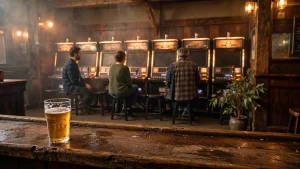
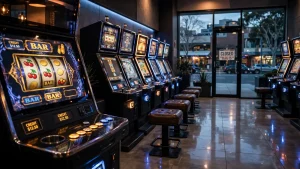
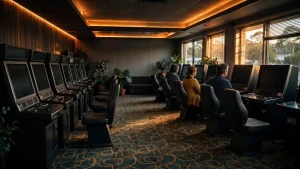
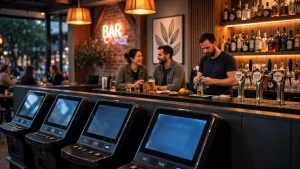
Pokies availability can differ from venue opening hours, while location, Western Australian rules and payment options each need separate checks.
A venue being open does not necessarily mean its pokies are available. That distinction matters when looking for a place to play early, late or at a particular moment. A hotel, club or casino may have its own public opening hours, while access to its gaming area can follow a different schedule.
I have seen this confusion arise from treating a venue as one uninterrupted service. It is not. Different areas can have different operating arrangements, and a business’s general trading hours do not, by themselves, confirm when its machines are operating. Nor does a venue’s late-night presence establish that the gaming area is open throughout the night. The practical answer depends on the particular venue and the information it has published or confirmed.
That is why broad claims about pokies being available around the clock in Perth should be treated cautiously. A search result, directory entry or old listing may describe a venue’s overall hours, rather than the hours for its gaming machines. Listings can also remain visible after details have changed. “Open” is not a precise enough description on its own.
Requests about early-morning access, including around 6am or 7am, are asking for a specific operating detail. The same applies to late-night access. Those times cannot be inferred from a venue’s name, its general opening hours or the fact that it has pokies. They need confirmation for the relevant venue and the relevant day.
A useful distinction is between three separate things: whether the venue is open, whether the gaming area is accessible, and whether its machines are operating. A listing that confirms only the first does not settle the other two. Even a page that mentions a gaming area may not spell out its operating schedule. The wording matters.
For a same-day visit, the most reliable approach is to check information issued by the venue itself and, where the schedule is unclear, contact the venue directly. The question should be about gaming-area or machine operating hours, not simply whether the venue is open. That keeps the answer tied to the detail that matters. It also avoids relying on an old directory entry as if it were a live operating notice.
I would not read “open now” as a promise of machine access unless the information clearly refers to the gaming area. This is a small wording difference with a practical consequence. A building can be open for one purpose while a particular area or service is not available. No broad Perth-wide timetable follows from the fact that several venues may operate in the same city.
There is also a separate question about responsible-gambling staffing. A report published by regionriverina.com.au describes a requirement beginning on 1 July: a venue operating more than 20 gaming machines is to have a dedicated responsible gambling officer (RGO) on duty while those machines are running. This is a staffing condition linked to machine operation. It does not state when any individual venue opens, closes or makes its machines available.
That distinction is important. A rule about what must be in place while machines operate is not evidence that they operate continuously, or that a particular venue has a particular schedule. The RGO requirement should not be turned into a shortcut for working out whether pokies are available at a given hour. It addresses responsible-gambling oversight during operation, not the hours a venue chooses to operate.
A dedicated officer on duty also describes a venue-level responsibility, not a public timetable. It does not tell someone whether the gaming area is accepting patrons at a particular time, and it does not replace venue-specific confirmation. The reported threshold concerns venues with more than 20 machines; it should not be casually restated as a rule applying to every venue regardless of machine count.
The report’s wording also makes the timing conditional: the officer is required while the machines are operating. That condition does not mean the officer’s presence determines the opening schedule. It means the operating arrangement carries a staffing obligation under the reported rule. Two questions remain separate: when machines are available, and what oversight must be in place when they are running.
Phrases such as “Perth pokies open” can sound like a city-level fact, but operating hours belong to individual venues. A broad answer that treats every location as having the same schedule would erase the difference between venues and between their gaming areas and other facilities. It would also risk presenting a venue’s general hours as proof of machine access.
The same caution applies to claims that pokies are open throughout the night or available at a particular early hour. Without a current schedule tied to the venue and gaming area, those claims are not dependable. A past visit, an old listing or a general description of the business cannot settle today’s hours. The responsible gambling officer requirement does not fill that gap.
The dependable standard is narrow: confirm the particular venue’s current information, and make sure it refers to the gaming area or machines rather than the premises generally. Where the venue does not make that distinction clear, direct confirmation is the sensible way to resolve it. This is less sweeping than a city-wide answer, but it avoids making an operating promise on the venue’s behalf.
Hours vary by venue.
Finding the right pokies for a Perth play session starts with checking what each casino actually discloses. Use these notes as a quick reference when deciding which options to explore further.
Neospin
Neospin lists a Curacao Gaming Control Board license, OGL/2023/176/0095, held by Hollycorn N.V.
Ricky Casino
Ricky Casino lists crypto payouts in under an hour and PayID payouts in 1–3 business days. Its minimum deposit is A$20, or A$30 to qualify for the bonus.
Roby Casino
Roby Casino is licensed by Curacao eGaming, with Roby Games Ltd named as the operator.
Uptown Pokies
Uptown Pokies is listed as operating since 2017 under a Curacao license. Its minimum deposit is A$20.
7Bit Casino
7Bit Casino is licensed in Curacao and operated by Dama N.V.
SpinsUp
SpinsUp lists a Curacao Gaming Control Board license, OGL/2023/174/0082, held by Dama N.V.
Lucky Dreams
Lucky Dreams lists a Curacao license and a A$20 minimum deposit when using POLi.
LuckyVibe
LuckyVibe lists a Curacao Gaming Control Board license, OGL/2023/176/0095, held by Hollycorn N.V.
Golden Pokies
Golden Pokies is listed with a Curacao license.
Bizzo Casino
Bizzo Casino lists a Curacao Gaming Control Board license, with TechSolutions Group N.V. named as the operator.
“Best paying” sounds like a ranking of pokies by what they will return. In practice, a return-to-player figure (RTP) is a theoretical measure, not a forecast of what a particular person will win. It cannot tell anyone whether the next spin will pay, how much a session will return, or whether a game will produce a profit.
RTP describes the proportion of stakes a game is designed to return over a very large number of plays. That long-run framing matters. A figure attached to a pokie does not mean that the same proportion comes back during an individual visit, or that returns arrive evenly. A short run can look very different from the theoretical rate. That is not a contradiction; it is the difference between a modelled measure and the outcome of a particular series of spins.
I have seen “high RTP” treated in promotional copy as if it settles the question of which pokie pays best. It does not. The label compresses several separate issues into one attractive phrase: the published setting, the way a game behaves, and the result of a player’s actual spins. Only the first is represented by the RTP figure. The rest remain uncertain.
There is also a practical complication: the same pokie may not have the same RTP setting everywhere it is offered. A specialist review reports that some game providers give casinos a choice of settings for a particular game, so its return percentage can differ between casinos. That means a game title alone does not establish its setting. A figure seen in one context should not automatically be carried over to another.
This is why “best paying pokies Perth” is not a simple catalogue question. A list of familiar titles, even if one existed, would not prove which setting applies at a particular venue or tell how a session will turn out. The name of a game is not the same thing as its operating configuration. The distinction is easy to lose when a page presents an RTP number beside a bright game image and leaves the impression that the number describes an immediate payout.
The outcome of each spin is determined independently by a Random Number Generator. One spin does not remember the previous one. A sequence of losses does not make a win due, and a recent win does not mean the next result is less likely to pay. The machine’s recent history may feel persuasive to someone watching, but it does not change the random determination of the next spin.
That independence also explains why a return percentage cannot be used as a session target. It is not a schedule of repayments. There is no point at which the game must “catch up” with a player, and no guarantee that a longer session will produce the theoretical return for that individual. More spins create more outcomes; they do not turn an estimate into a promise.
I would read an RTP claim narrowly: as information about a stated theoretical setting, where that setting is clearly tied to the game being considered. It is not a measure of entertainment value, a prediction of a jackpot, or evidence that one venue will deliver a better personal result than another. If the setting is unclear, the claim has limited practical use.
The useful distinction is simple. RTP describes a theoretical return; the RNG determines each individual spin. Neither tells anyone what the next result will be. No certainty there.
Venue names carry more weight than they can bear. A large sign, a familiar brand or a long list of machines may help identify a place, but none of those details establishes which venue offers the best pokies. “Best” is often made to sound like a simple comparison. In practice, it can refer to different things: the setting, the range of machines, the service around the gaming floor or a player’s own experience. Those are not interchangeable measures.
Crown Perth is an obvious name in searches about gaming in the city. Its prominence as a venue does not, by itself, substantiate claims about particular machines, their settings or a superior chance of winning. Nor does the venue’s name turn a general claim about pokies into a specific, checkable fact. A confident label is not evidence. That distinction matters whenever promotional language presents a venue as the “best” without explaining the measure behind the word.
I have seen how a venue description can blur the difference between what is visible and what is being promised. A busy floor can look like proof of popularity; a polished room can suggest quality; a machine’s familiar theme can feel like a reason to choose it. Those impressions describe the experience around play, not the outcome of a spin. Venue-level claims and machine-level claims need to be kept separate.
How a venue manages its gaming area and how staff respond to concerns.
Whether the venue's operating procedures are clear and transparent.
The implementation of responsible-gambling procedures and oversight.
A useful comparison starts with information that belongs to the venue itself: how it manages its gaming area, how staff respond to concerns and whether its operating procedures are clear. Those details tell a different story from a list of games. They do not establish that one machine pays more, and they should not be dressed up as a prediction of results.
Responsible-gambling procedures are part of that picture. From 1 July, venues with more than 20 gaming machines must have a dedicated Responsible gambling officer (RGO) on duty while the machines are operating. This requirement is about oversight during machine operation, not a promise that gambling harm can be prevented or that every patron’s circumstances will be identified. It puts a named responsibility on the venue while its machines are in use.
A report by regionriverina.com.au described a one-month grace period for venues to remove signage and introduce responsible gambling officers. That transition detail should be understood as a reported implementation arrangement, rather than as a standing feature of every venue’s day-to-day service. The practical point is narrower: staffing and signage requirements concern how the gaming environment is managed. They do not amount to a rating of the venue’s pokies.
The same report described a requirement for venues to keep a gambling incident register. It is intended to record occurrences that may indicate a patron is at risk of, or affected by, gambling harm. An incident record is not a public scorecard, nor a measure of how well a venue performs against another. It is a formal way of documenting relevant events, so that concerns do not have to remain informal observations passed between staff.
That distinction is easy to miss. A register does not mean every sign of harm will be obvious, and a recorded incident does not tell an outsider everything about how it was handled. It does show that venue responsibilities are not limited to offering machines and processing transactions. There is an operational duty to notice and record certain situations. Less visible than the machines.
The phrase “Crown Perth pokies” can refer simply to an interest in the venue’s gaming floor. It can also lead to much stronger claims: that particular machines are available, that one pays better, or that the venue has a better range than others in Perth. Those claims need specific support. A venue’s reputation cannot stand in for machine-by-machine information.
It is also important not to treat a venue’s responsible-gambling arrangements as evidence about payout performance. An RGO on duty and an incident register concern the conduct of the venue and the response to potential harm. They do not certify a machine’s return, guarantee fair results or make one set of machines more favourable than another. Different kinds of information answer different questions.
The same caution applies to descriptions such as “premium”, “popular” or “high-paying”. “Popular” may describe attention or demand, if that is measured and explained; it does not establish that a machine returns more. “Premium” can describe presentation or placement, but it says nothing by itself about the terms of play. “High-paying” is the most consequential phrase because it can sound like a practical forecast. Without a clearly stated basis, it is advertising language, not a usable comparison.
I have learned to read venue claims by asking what they actually describe. Is the statement about the room, the service, a responsible-gambling procedure or a specific machine characteristic? If those categories are blended, the sentence can sound more informative than it is. A venue may have a recognisable name and a prominent gaming floor; neither fact settles the question of which pokies are “best”.
For Perth venues, the clearest distinction is between operational information and claims about play. The RGO requirement and incident-register arrangements describe responsibilities at venue level. They are concrete features of how a gaming environment is overseen. They do not rank venues, identify a winning machine or provide a basis for calling one location the best.
That leaves room to assess a venue without making unsupported claims about its machines. The atmosphere and facilities may matter to someone choosing where to spend time, but those preferences remain personal. A venue’s safety procedures can also be relevant, though they should be described on their own terms rather than converted into a promise of safety or a sales pitch.
Crown Perth can be discussed as a named venue, but its name alone cannot support a verdict about the quality or payout behaviour of its machines. The same standard applies to any other Perth venue. A polished claim should not be mistaken for a measured comparison. In this market, the most useful venue-level information is often less dramatic: who is responsible on the floor, what conduct must be recorded and how clearly a venue explains its own procedures.
That is the difference between a venue description and a gaming claim. One can describe how a place is managed. The other needs evidence about the machines themselves. A name is not a result.
A location can sound precise and still leave the main question unresolved. “Near Perth Airport” might mean inside an airport terminal, on airport grounds, or somewhere in the surrounding area. “Near the CBD” can mean the city centre itself or a broader trip from a nearby suburb. Those are different searches, even when the wording makes them look interchangeable.
I have learned not to treat proximity as proof. A place appearing near an airport or central Perth on a map does not, by itself, confirm that it has pokies, that they are available to the public, or that a particular listing is current. The same applies to references to clubs or other venues: the category tells little about whether pokies are present. A pin on a map is a starting point, not a reliable answer.
The distinction between “at the airport” and “near the airport” matters. A search for pokies in an airport may be intended to find machines inside a terminal, while a search for nearby pokies may mean a venue reachable from the airport. Those interpretations should not be collapsed into one claim.
Searching for pokies "at the airport" typically means looking for machines inside a terminal, whereas "near the airport" refers to venues reachable from the airport area.
For a physical venue, the useful details are specific: its exact address, whether it identifies pokies among its facilities, and whether that information comes from the venue itself. A general directory entry may establish that a business exists without establishing what it offers. A map may show distance without confirming the facility. When those details do not line up, the result is uncertain rather than a confirmed airport option.
That distinction also prevents a common mix-up: a page about online play is not evidence of a physical venue near the airport. The two involve different settings. A physical search concerns a place and its facilities; online gambling concerns a service accessed over the internet. Similar wording can bring them together in a list, but one does not verify the other.
The same care applies to searches for pokies in central Perth. “CBD” and “Perth central” are broad descriptions, not a guarantee that a result is within a particular boundary. A venue described as nearby may require a trip outside the centre. Searches mentioning North Perth or a club add another layer: the suburb or venue type may be clear, but neither confirms that pokies are available at a particular address.
I would separate the checks rather than relying on a label. First, establish the venue’s precise location. Then check whether the venue itself lists pokies as a facility. Finally, confirm the information directly with the venue before travelling. This is not a ranking method; it is a way to avoid treating proximity, category and machine availability as if they were the same fact.
A search result can also outlast the information it presents. An old directory page, a copied description or an undated listing may remain visible after details have changed. If the venue’s own current information does not support the claim, the safer reading is that the listing has not confirmed it. That is a practical distinction, not a claim about any named Perth venue.
“Best” is especially slippery in a location search. It may refer to distance, convenience, transport, the type of venue, or the presence of pokies. Without knowing which measure is being used, a ranked list can look more authoritative than its underlying information warrants. A venue cannot be called the best option on location alone when the relevant facilities and the basis for comparison have not been established.
For a physical visit, location and availability are separate questions. A map can help with the former. Venue information is needed for the latter. Neither establishes the quality of the pokies, and a location label cannot establish what any machine will return. The practical value of a result is therefore limited to the details it can actually support.
The same principle applies to searches that combine Perth with another place name. A phrase may point to a suburb, a venue name, or a different location altogether. The wording alone does not settle which one is intended. Confirming the address first is more useful than assuming that every result belongs to the Perth area being considered.
A search for pokies “near me” usually suggests a nearby physical place, but the phrase can also surface online services. Those results should not be read as alternatives of the same kind. A local venue has an address and operates in a physical setting. An online service does not become a Perth venue simply because it appears in a location-based result.
Australia’s rules treat online real-money pokies separately from visiting a physical venue. The Interactive Gambling Act 2001 makes it illegal for companies to provide real-money online casino games to people in Australia without a domestic licence, and no such licences have been issued. This is an operator restriction; it does not turn an online listing into evidence of a local venue. ACMA is the national regulator responsible for enforcing that law.
For physical gambling, the minimum legal age is 18. That applies across gambling forms in Australia, including online pokies. It is a threshold, not an endorsement of a particular venue or service.
For Perth Airport and the CBD, the sound approach is modest: distinguish “inside” from “near,” check the exact address, and look for direct confirmation that pokies are offered. A location result can guide a journey. It cannot do the checking.
Perth is in Western Australia, so references to South Australian venues or rules do not describe the Perth market. The two states sit within the same national framework for online gambling, but they are not the same place, and a South Australian venue listing cannot establish what is available in Perth.
For online gambling, the relevant national regulator is the Australian Communications and Media Authority (ACMA). It enforces the Interactive Gambling Act 2001, which prohibits operators from providing real-money online casino games, including pokies, to people in Australia. This is separate from the rules governing physical venues.
ACMA also blocks access to illegal offshore gambling sites. Australian internet service providers must comply with its blocklist. A site being mentioned online, or appearing in a search result, does not mean it is lawful or reliably reachable from Australia. Blocking is an enforcement measure, not a recommendation to look for alternate routes around it.
I have seen state names used loosely in gambling copy, as if a venue or rule could be carried across a border without consequence. It cannot. Perth belongs to Western Australia; South Australia is a different jurisdiction, and neither label changes the national restrictions on online casino services.
One point is easy to miss: BetStop applies only to Australian-licensed operators and does not bind offshore sites. That distinction matters when considering protections tied to domestic services. No workaround.
An online offer can look like a Perth casino experience, but its location on a screen does not make it a locally licensed service. The Interactive Gambling Act 2001 prohibits companies from offering real-money online pokies to people in Australia without a domestic licence. No Australian online casino licences have been issued, so there is no Australian-licensed online casino.
That distinction matters when a site advertises real-money play, a “no-deposit” bonus or access from Perth. The offer’s wording, deposit conditions and apparent local availability do not change the legal position of the operator. A bonus is a promotion attached to an account; it is not a licence, and it does not make the underlying service Australian-authorised. The same applies to claims about high stakes or maximum bets. Those are account or game conditions, not evidence of legal status.
The practical risk is clearest when a withdrawal is disputed. If an offshore casino refuses to pay, Australian players have no legal recourse in Australia to compel payment. The service may present formal terms and a customer-support process, but neither is a substitute for an Australian remedy. That is the part promotional language tends to leave in the background. A displayed balance is not the same thing as money successfully received.
“No deposit” can also obscure what is being offered. It may refer to a bonus rather than unrestricted cash, and conditions can determine whether winnings are withdrawable. Those conditions vary by operator, so there is no universal rule to apply across sites. The broader point is simpler: a bonus does not remove the legal and payment risks of an online casino service aimed at Australian residents. Attractive wording does not alter the framework.
Identity checks are another part of the withdrawal process. Specialist casino reviews describe operators asking for a photo of identity documents and proof of address, with some also asking for a selfie holding an identity document. The exact procedure depends on the operator. Identity and address documents should be verified before a first withdrawal; leaving that step until money is requested can create delay or a dispute about whether the account has met the operator’s requirements.
This is separate from whether the site has a domestic licence. A completed identity check does not turn an offshore casino into an Australian-licensed one, nor does it guarantee that a withdrawal will be honoured. It only addresses the operator’s account-verification process. That distinction is easy to miss when registration and deposit screens give the impression that the transaction is routine.
I have seen how the sequence works from the business side: the deposit is immediate, while the meaningful conditions often appear later, when a withdrawal is requested. The payment flow can feel ordinary. The legal protection is not.
Cashless payment questions around Perth often get treated as a shortcut to judging a pokie venue or online service. They are not. PayID describes how a transfer is addressed; it does not establish that a gambling service is lawful, fair or transparent about its terms.
PayID is an alias layer on the New Payments Platform (NPP). It lets a transfer be directed using an email address, mobile number or ABN instead of entering bank account details. For real-money online play, PayID must first be linked to a bank account. That is a payment setup requirement, not an approval of the service receiving the money.
The distinction matters. Australia has no licensed online casino, and a payment method does not change the legal position of an online gambling operator. Nor does seeing PayID offered prove anything about a pokie’s return settings or how its outcomes are determined. Payment rails move funds. They do not certify the product.
A specialist review has reported that some Australian banks may block PayID transfers to known gambling merchants. That is a bank-side decision, and availability can depend on the bank and transaction. A failed transfer is not evidence that another payment route is safer or that the recipient is legitimate.
For in-person cashless play, the payment label alone likewise says little about the venue or its machines. The practical question is how the venue handles funds and what its own rules say; a payment option cannot answer that.
BetStop applies only to Australian-licensed operators and does not bind offshore sites. Since there are no Australian-licensed online casinos, it should not be mistaken for a safeguard against offshore gambling. Mechanics, not endorsement.
Yes, Australians can play on offshore sites that accept them, and the law targets operators rather than players. However, no Australian-licensed online casino exists, and players have no legal recourse in Australia if an offshore casino refuses to pay.
It is the turnover multiplier that tells you how much you must bet before bonus-related winnings can be withdrawn. For example, a $500 bonus with a 40x requirement means $20,000 in bets.
Yes. Some game providers let casinos choose from multiple RTP settings, so the same pokie can have different theoretical return percentages at different casinos.