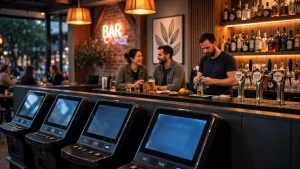
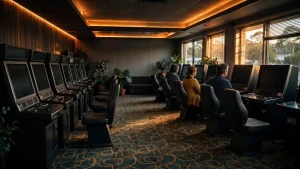
Venue hours, machine availability, local searches and payment details each have limits when assessing Brisbane pokies.

A venue’s opening hours and the hours when its pokies are operating are not automatically the same thing. A listing that says a club or hotel is open establishes, at most, that the venue is presented as open during those hours. It does not, by itself, confirm that the gaming area is open, that machines are available to play, or that the information has been checked recently.
That distinction matters when someone is trying to establish whether pokies are open in Brisbane now, rather than simply whether a venue has opened its doors. Hospitality businesses can have different areas, services and operating schedules. A restaurant, bar or reception area may be open while another part of the venue follows a different schedule. A general opening-hours panel rarely explains those distinctions. It is a starting point, not confirmation of machine availability.
I learned to be wary of treating a neat timetable as a complete answer. The business may display one set of hours because that is what customers need for its main service; a map listing may reproduce those hours without saying which part of the premises they refer to. Neither format necessarily answers a narrow question about pokies. “Open” is a broad label. It can conceal the practical detail that matters.
Choosing pokies in Brisbane for 2026 means finding an online option that suits your preferences and checking the details that matter to you. Use these short verdicts as a starting point, then verify the terms before signing up.
Neospin
Neospin is listed with a Curacao Gaming Control Board licence, OGL/2023/176/0095, held by Hollycorn N.V.
Ricky Casino
Ricky Casino lists crypto payouts in under an hour and PayID payouts in 1–3 business days. Its minimum deposit is A$20, or A$30 to qualify for the bonus.
Roby Casino
Roby Casino is listed under a Curacao eGaming licence held by Roby Games Ltd.
Uptown Pokies
Uptown Pokies operates under a Curacao licence and has been operating since 2017. Its minimum deposit is A$20.
7Bit Casino
7Bit Casino operates under a Curacao licence and is operated by Dama N.V.
SpinsUp
SpinsUp is listed with a Curacao Gaming Control Board licence, OGL/2023/174/0082, held by Dama N.V.
Lucky Dreams
Lucky Dreams accepts POLi deposits with a minimum of A$20 and is listed under a Curacao licence.
LuckyVibe
LuckyVibe is listed with a Curacao Gaming Control Board licence, OGL/2023/176/0095, held by Hollycorn N.V.
Golden Pokies
Golden Pokies is listed under a Curacao licence.
Bizzo Casino
Bizzo Casino operates under a Curacao Gaming Control Board licence held by TechSolutions Group N.V.
Early and late hours make the gap more obvious. A listing may suggest that a venue is open in the morning or remains open late, but that alone cannot establish when its gaming machines are operating. Nor does a general description such as “open all day” settle the question. The wording may refer to the venue as a whole, not to every service within it. A six o’clock or seven o’clock start should not be inferred from an all-day label unless the venue itself confirms that the relevant area is operating then.
The same caution applies to a result that appears current. Opening information can be copied between services, and a page can remain visible after the underlying schedule has changed. A search result may be useful for identifying a published timetable, but it does not show when that timetable was last checked unless the listing provides that detail. Even a venue’s own page can be out of step with a temporary change if an update has not been posted. Current confirmation is what turns a published schedule into a useful answer.
When I check a timetable, I separate three questions. Is the venue open? Is the area containing the pokies open? Are the machines operating during the period in question? Those are related, but they are not interchangeable. A broad opening-hours page may answer the first and leave the other two unresolved. A dedicated gaming-hours notice or a direct confirmation from the venue is more relevant to the specific point, provided it is current and refers to the right area.
The wording on a listing deserves attention too. “Trading hours” may describe the business generally; “bar hours” or “dining hours” plainly refer to particular services. A label that mentions gaming or the gaming area is more specific, but it still needs a date or a reliable way to confirm that the schedule remains in force. An old photograph of a notice is weaker evidence than a current page, and a third-party listing may not explain where its information came from. Small distinctions in wording can prevent a confident but mistaken assumption.
A public holiday, private function, maintenance issue or other temporary change may affect a venue’s usual schedule. That does not mean every venue changes its hours for those reasons; it means a routine timetable cannot rule out an exception on a particular day. The closer the question is to “open now,” the more valuable a direct, current check becomes. A timetable prepared for ordinary trading is not necessarily a live status update.
There is also a difference between a venue being open and a machine being usable at the moment of arrival. A door may be open while a particular area is closed, or an area may be open while an individual machine is unavailable. Opening-hour information is not a live inventory of machines. It should not be read as a promise that every machine is running or free to use.
One reported rule illustrates why jurisdiction and wording matter. Regionriverina.com.au reported that, from 1 July, venues with more than 20 gaming machines would need a dedicated responsible gambling officer on duty during machine operating hours. That report concerns an operational requirement; it is not a Brisbane opening timetable. Its relevance here is narrower: rules and notices may refer specifically to the period when machines are operating, rather than to the time a venue is generally open. The distinction is useful, but the report should not be treated as proof of a particular Brisbane venue’s hours.
A practical check therefore starts with the venue’s own current information and looks for hours attached specifically to the gaming area, rather than relying on the headline hours for the whole business. If those details are not stated, a direct call is the clearest way to ask whether the gaming area and machines are operating at the intended time. The answer should be treated as time-specific: confirmation for one visit does not establish a permanent schedule.
There is no reliable shortcut in the words “open now.” They describe what a listing or venue says at the time it is viewed; they do not establish that the information has just been verified. A map pin, directory entry or search snippet can be convenient, but convenience is not the same as a current operational check. I have seen how easily the broad label can be mistaken for a precise one. It is not.
For someone comparing early or late options, the distinction is simple but important: published venue hours can identify when the business says it is open; confirmation of gaming hours establishes whether the relevant area is expected to be operating. If the second piece is missing, the first should not be stretched to fill the gap. That is the difference between a useful lead and a confirmed answer.
The phrase “open” does too much work. Separate the venue’s schedule from the machines’ schedule, and check the latter directly when timing matters. A current confirmation is more useful than a polished listing.
“Best” sounds like a ranking, but it can mean several different things: a preferred theme, a feature someone enjoys, or a higher theoretical return to player (RTP). Those are not interchangeable measures. A game that looks appealing is not necessarily the one with the highest RTP, and a higher stated RTP does not predict what will happen in a particular session.
For Brisbane players, labels such as “best paying” need a specific basis. A payout claim should identify the game and the RTP setting being discussed, rather than treating a title as though it has one universal return wherever it appears. A specialist review reports that some providers allow casinos to choose between multiple RTP settings for the same pokie. On that account, one version of a game may have a different theoretical return from another version elsewhere.
That distinction matters because a game name alone does not settle the comparison. Nor does a broad claim about a casino’s pokies establish the setting used for each title. The label “high RTP” can sound like a simple quality mark; in practice, it is meaningful only when the figure relates to the particular game configuration in question. Otherwise, it leaves out the detail that makes the comparison useful.
A theoretical proportion of stakes returned over a very large number of plays, which does not predict the outcome of an individual session.
RTP describes a theoretical proportion of stakes returned over a very large number of plays. It is not a promise that an individual will receive that proportion back, or a timetable for when a payout will occur. Short sessions can end far above or below a theoretical rate. That is not a contradiction: the calculation concerns long-run play, while each session is only a small part of it.
This is where “best paying” can mislead. A higher RTP, where it is genuinely established for the relevant version, does not mean that a particular spin is more likely to win, that a win will be larger, or that losses will be avoided. It also does not turn a game into a dependable way to make money. A measure of theoretical return is not a personal result.
I have seen promotional language flatten these differences into a single promise. “Better value” may be used as if it meant a player should expect a better outcome. It does not. The underlying setting, the game’s rules and the randomness of the play all remain relevant; a slogan cannot replace those details.
Each pokie spin is an independent random event determined by a Random Number Generator (RNG). A previous loss does not make a win due, and a previous win does not make the next result less random. Patterns in a short run can feel persuasive, especially when play is fast, but they do not provide a reliable forecast of the next spin.
That independence also explains why a list of “best pokies” cannot sensibly promise a winning sequence. A title may be popular or distinctive without offering any special ability to predict results. A session’s outcome is not evidence that the machine has warmed up, gone cold or started paying on a schedule.
For someone comparing pokies in Brisbane, the useful distinction is between a verifiable description and a prediction. A stated RTP setting, if tied to the specific version, describes a theoretical return. A claim that a game is “hot” or certain to pay soon is not supported by the independent-spin mechanism.
A preference for a particular theme or style is personal. RTP is a technical comparison that depends on the precise setting. Neither makes a game a reliable source of winnings, and neither can establish how a future session will unfold. The same care applies when a venue is described broadly as having “the best pokies”: that phrase does not, by itself, say which titles or settings are meant.
The sensible reading is narrow. “Best” may express taste, or it may refer to a stated technical measure that can be checked against the actual game version. It cannot mean guaranteed payouts. No machine can remove the randomness of the next spin.
A request for online pokies in Brisbane can sound like a local service search. Legally, the relevant line is not the city named in the search but whether an operator is allowed to provide real-money online casino games to people in Australia. The Interactive Gambling Act 2001 prohibits companies from offering those services to Australians without a domestic licence. No such licences have been issued, so there is no Australian-licensed online casino.
That distinction matters when an offshore site accepts Australian customers. The law targets the operator, not the individual player: Australians can legally play on offshore sites that accept them. But the operator is not thereby authorised to provide the service here. An offshore site’s willingness to take a customer, display a balance or state a maximum bet does not turn it into a locally licensed casino.
I have seen “available in Australia” used as if it meant “regulated in Australia.” It means no such thing. Availability is a site’s decision; licensing is a legal status.
A maximum bet is a condition set by the operator for its own games or accounts. It is not, by itself, evidence of Australian oversight, a local consumer guarantee or a reliable measure of how much can be won. A high-limit label may describe a permitted stake, but it cannot answer what happens when a withdrawal is disputed or the operator changes its terms.
The same caution applies to phrases such as “best paying.” Those words do not establish a dependable payout or create a right to receive winnings. In the Australian online-casino market, there is no domestic licence behind an operator’s bet limits or promotional language. The number on a screen is a site condition, not a local protection.
Searches for cashless play do not alter that boundary either. A payment method, account interface or digital balance does not determine whether the underlying online casino service is licensed in Australia. The legal question remains who is providing real-money play and under what authority. Payment mechanics are a separate matter.
The practical weakness becomes clearest when a payment is refused. If an offshore casino withholds winnings, Australian players have no legal recourse in Australia against it. That is not the same as saying every offshore site will refuse a payout. It means that a player cannot rely on Australian legal remedies to resolve that dispute.
In my experience, the wording around a maximum bet can make an arrangement look more settled than it is. A site may set limits and procedures, but those are its own terms. If a disagreement arises, the existence of a published rule does not supply Australian regulatory protection where no domestic online-casino licence exists.
This is why a Brisbane location in a phrase such as “online pokies near Brisbane” can mislead. It may describe the intended customer, not a Brisbane-based or Australian-licensed service. Likewise, naming Brisbane does not make an offshore operator local. The legal framework follows the service and the customer’s location, not the wording on a webpage.
There is a clear difference between the player’s position and the operator’s. The law places the prohibition on companies providing the service without a domestic licence; it does not make the individual player criminally liable for using an offshore site that accepts them. Yet that does not make the arrangement equivalent to a locally licensed product. If the operator fails to honour its own terms, Australian recourse is absent.
That is the boundary behind searches for online play or high maximum bets in Brisbane: a stated limit may explain what an offshore site permits, but it cannot establish local licensing or provide a domestic route to recover disputed winnings. A label is not a remedy.
A venue’s reputation and its operating duties are separate questions. In my experience, promotional language such as “best” tends to blur that distinction: it describes an impression, not what staff are required to do when a gambling-related concern arises. Responsible-gambling requirements are operational. They do not establish which Brisbane venue has the strongest game selection, nor do they amount to a ranking of venues.
A report by regionriverina.com.au says that, from 1 July, venues operating more than 20 gaming machines are required to have a dedicated responsible gambling officer (RGO) on duty while those machines are running. The threshold and the condition matter. The obligation described is tied to the number of machines and their operation, not simply to a venue being labelled a club, hotel or gaming venue.
The same report describes a one-month grace period for venues to remove signage and put the RGO arrangements in place. That is a transition allowance, not a permanent exemption. It also reports a requirement for venues to maintain a gambling incident register. The register is intended to capture details of incidents, including cases where a patron’s behaviour indicates possible exposure to gambling harm.
Those duties create a record as well as a point of responsibility. An RGO on duty gives the venue a designated role during machine operation; an incident register documents relevant occurrences rather than leaving them as informal recollections. The report’s description does not establish how any particular Brisbane venue has implemented these measures, so the existence of a general requirement should not be mistaken for confirmation about an individual premises.
That distinction is useful when assessing claims about Brisbane pokies venues. A polished venue profile may speak about atmosphere or facilities, but those descriptions do not verify whether a particular site falls within the machine-count threshold, has an RGO on duty when required, or keeps the reported register. Nor does a venue’s compliance with these operational duties make it “best” in any broader sense. Different questions need different evidence.
In practical terms, venue-level oversight is about procedures and accountability, not a promise of a particular gambling experience. The responsibilities described here apply to the operation of gaming machines and the handling of incidents. They do not identify specific venues, prove their current status, or settle comparisons between locations. Operational detail, not a league table.
PayID is not a separate bank account or a measure of an operator’s standing. It is an alias attached to Australia’s New Payments Platform (NPP): a transfer can be addressed using an email address, mobile number or ABN rather than bank details. The NPP is supported by all major banks and uses end-to-end encryption. Those features describe the payment infrastructure, not the business receiving a payment.
That distinction matters when a payment page presents PayID as a reassuring badge. A bank may support the service, and a transfer may go through, without that confirming that an online gambling operator is licensed in Australia, that a pokie’s return-to-player setting is disclosed, or that the game is fair. The payment rail carries funds; it does not certify the recipient. A completed transfer proves only that the transaction was processed.
For real-money play, using PayID at an online casino would involve linking it to a bank account first. But the payment setup does not change the legal position: the Interactive Gambling Act 2001 prohibits operators from providing real-money online casino games to people in Australia, and no Australian online-casino licences have been issued. PayID availability cannot turn a prohibited service into a locally licensed one.
Bank support is not the same as approval of every payment. A specialist gambling review has reported that some Australian banks, including members of the Big Four, sometimes block PayID transfers to gambling merchants they identify. That is a qualified account of changing bank practice, not a guarantee that a transfer will be accepted or declined. A blocked transaction says something about the bank’s controls; a successful one says nothing about an operator’s licence or its games.
I have seen payment language do a lot of work in a small space. “Instant” describes the intended transfer experience, not the protection available if a gambling business disputes a payment or fails to pay. The underlying NPP’s encryption protects the transfer in transit; it does not settle a dispute between a customer and a recipient. Different questions.
The same applies to offers attached to searches for Brisbane pokies, including claims of play without a deposit. An offer is not evidence that the service is authorised in Australia, and PayID has no role in establishing its terms. Nor does a deposit method reveal a pokie’s RTP: that figure concerns the game configuration, not the route money takes into an account. Payment convenience and game information are separate matters.
So PayID can explain how a transfer is addressed and carried. It cannot establish that an online casino is lawful in Australia, that a particular game has a stated return, or that money will be recoverable if a dispute arises. Those are not payment functions.
“Near Brisbane Airport” sounds precise, but it combines two different questions: which venues are close to the airport, and which of those venues have pokies. A location result can help with the first only when it supplies a usable address and a clear basis for distance. It cannot answer the second by itself.
I learned to separate those checks before treating a map pin as a recommendation. A business listing may identify a venue without describing its facilities. A page that mentions pokies may refer to a different venue, an old description or a broader area. Neither establishes that machines are available at a particular address. The distinction is small on screen and decisive in practice.
Airport wording adds another layer. “At the airport” can mean inside an airport building, on airport property, or somewhere in the surrounding district. “Near the airport” is looser still: without a starting point and a stated measure of distance, it can describe very different places. A result’s position in a list does not settle that ambiguity.
The same caution applies to “near me” results. Their order can reflect a device’s location, the search settings and the information attached to each listing. A high position does not certify that the business is open, that it has gaming facilities or that its listing is current. Convenient, perhaps. Verified, no.
For a sound location check, the useful details are the venue’s exact address, the distance from the chosen airport point, and a current statement from the venue about whether it has pokies. Those details need to refer to the same place. A venue name on one page and a machine claim on another do not become a confirmed match simply because both mention Brisbane.
I would also keep airport-area results separate from CBD results. A search centred on the airport does not establish that a venue is in the city centre, and a CBD listing does not answer a proximity question about the airport. The wording can look interchangeable; the map is not.
The awkward phrases people type—whether they mean Brisbane, a place in Victoria, the airport itself or nearby suburbs—are not reliable location definitions. The location has to be resolved before any venue claim can be assessed. Until then, naming a place would turn a search phrase into an unsupported fact.
That is the practical limit of proximity information: it can point toward a place, but it cannot do the checking on the venue’s behalf. Pin first. Confirm the address and facilities separately.
South Brisbane and South Bank are often used as overlapping locality labels, but a result attached to one phrase should not automatically be treated as a result for the other. A listing may use a suburb, a precinct name or a broader Brisbane label. That difference matters: a place appearing in a South Bank search has not necessarily been confirmed as being in South Brisbane, and a broad result does not establish where its gaming facilities are.
The same problem appears on the north side. “Northside” is a loose regional description, not a precise address. Results grouped under north Brisbane may cover different localities, while a venue’s own description may use a narrower label. I would compare the actual street address and the venue’s current information, rather than treating a map pin or category tag as proof that a particular place has pokies.
Search wording is a starting point, not confirmation. A directory can identify a venue while saying nothing reliable about its facilities; a venue page can describe facilities without clarifying whether they are operating at the time of a visit. Those are separate checks. No neighbourhood label, on its own, establishes machine availability.
The phrase “maximum cash payout” needs the same discipline. It can refer to a question about a particular machine, a venue’s payment process or the amount a patron can receive in cash at a given time. Those are not interchangeable. Without a current, venue-specific statement explaining what the figure covers, a number in a search result can create a false impression of a universal Brisbane limit. I would not treat one venue’s answer as applying across South Brisbane, South Bank and the north side.
That is how wording works behind a counter: “maximum” sounds definitive, but the condition attached to it does the real work. The relevant detail is what is being capped, under which circumstances, and whether the information comes from the venue responsible for the transaction. A short snippet rarely carries that context.
Locality first. Facility second. Payment terms separately. Keeping those questions apart prevents a result for one suburb—or a payout claim with no clear scope—from being mistaken for a citywide answer.
A club in Brisbane’s central business district is not automatically a gaming venue. The word “club” describes the type of place, not the facilities available there. I would treat a claim about pokies as a venue-specific detail to confirm, rather than infer machine availability from a club’s name, location or general description.
That distinction matters when comparing CBD options. A listing can establish that a venue exists without confirming whether it has pokies, how many machines it operates or whether its information is current. A “best” label adds no evidence by itself. The useful check is whether the venue’s own current information explicitly covers gaming facilities; if it does not, the detail remains unresolved.
There is also a difference between a venue-level duty and proof that a particular club meets it. A report published by regionriverina.com.au says venues operating more than 20 gaming machines will need a dedicated responsible gambling officer (RGO) present whenever those machines are running, from 1 July. The report also describes a requirement for venues to maintain a gambling incident register, including records of occasions when a patron’s behaviour suggests gambling harm may be affecting them. These are operational safeguards, not a directory of CBD clubs or evidence that any named venue has machines.
I have seen compliance language do a lot of work in promotional material. “Responsible” can sound like a quality rating; in this context, it is more useful to read it as a set of duties. It does not establish that a venue is suitable for every patron, nor does it settle whether a particular club offers pokies. A register is a record-keeping obligation, not a public scorecard.
For anyone weighing a decision around gambling, self-exclusion is a separate practical consideration from venue research. Deposit, loss and session limits, along with self-exclusion, are recognised responsible-gambling tools. BetStop, however, applies only to Australian-licensed operators and does not bind offshore sites. That distinction matters if self-exclusion is being considered beyond a physical venue.
The careful conclusion is narrow: CBD club searches can identify places to investigate, but a club label or compliance statement cannot substitute for a current, venue-specific confirmation of gaming facilities. No ranking follows from the label. Verify the detail itself.
 Pokies & Games: Slots, Online Casinos and KenoExplore Australian casino topics spanning reel slots, bonus buys, live dealer games, keno, payout styles and searches by city or state.
 Best Pokie Machines to Play in Australia: Legal GuideLearn how Australian law treats online pokies, what demos and RTP can—and cannot—show, and why an offshore licence is not local authorisation.
A name that includes “Crown” can point to several different ideas: a physical venue, its gaming facilities, or an online service using similar branding. Those are not interchangeable. Mentioning Crown alongside Brisbane and pokies does not, by itself, establish that a particular Brisbane venue exists, that it has pokies, or that an online casino operates under that name.
I have seen how a familiar brand can do work that the underlying facts have not done. It creates an impression of recognition and continuity. But branding is not proof of a venue’s location, machine availability or online status. Those questions require evidence about the specific service being described, not an assumption drawn from a name.
The online position is especially important. There is no Australian-licensed online casino. A website that presents itself as a Brisbane casino, or uses a well-known casino name, should not therefore be treated as an Australian-licensed online operator. The name cannot supply a licence that does not exist.
That distinction matters when a phrase such as “Crown Brisbane pokies” is read as though it identifies an online destination. It may simply combine a brand, a city and a type of gambling in one label. That wording does not establish who operates a website, where it is authorised, or whether the service is lawful for people in Australia. The same caution applies to claims about a “best” pokies room: an attractive label is not a verified venue description.
I separate the claim from the setting. A reference to a Brisbane venue concerns a physical place; an online casino is a remote gambling service. One does not confirm the other. And where branding blurs that line, the safest reading is the literal one: the name alone proves nothing about the operator’s status.
For Australian players, the absence of a locally licensed online casino is the point that should anchor any interpretation of online branding. A polished site or a familiar name does not change that position. Nor does it establish that an online service is connected to a particular Brisbane venue.
Recognition is not verification. A brand can suggest a setting; it cannot establish one.
Yes, Australians can play on offshore sites that accept them, but no Australian-licensed online casino exists. Offering real-money online pokies to Australians without a domestic licence is illegal for operators, and players have no legal recourse in Australia if an offshore casino withholds winnings.
You must be at least 18 years old to gamble online in Australia.
Yes, PayID deposits are treated like other qualifying deposit methods at the sites described. Check the bonus terms for wagering requirements and any withdrawal caps.
There is no strategy that can predict or control a spin: each one is an independent random event. Set deposit, loss and session-time limits, and check bonus wagering terms before accepting an offer.
Yes. Some game providers let casinos choose between multiple RTP settings for the same pokie, so the game’s return percentage can vary by casino.
E-wallets such as Skrill and Neteller are popular for their speed. Withdrawal timing can still vary, and most casinos require identity verification before a first withdrawal.