A casino-wide status may not show whether its gaming floor, dining venues, hotel services or entrances are available.
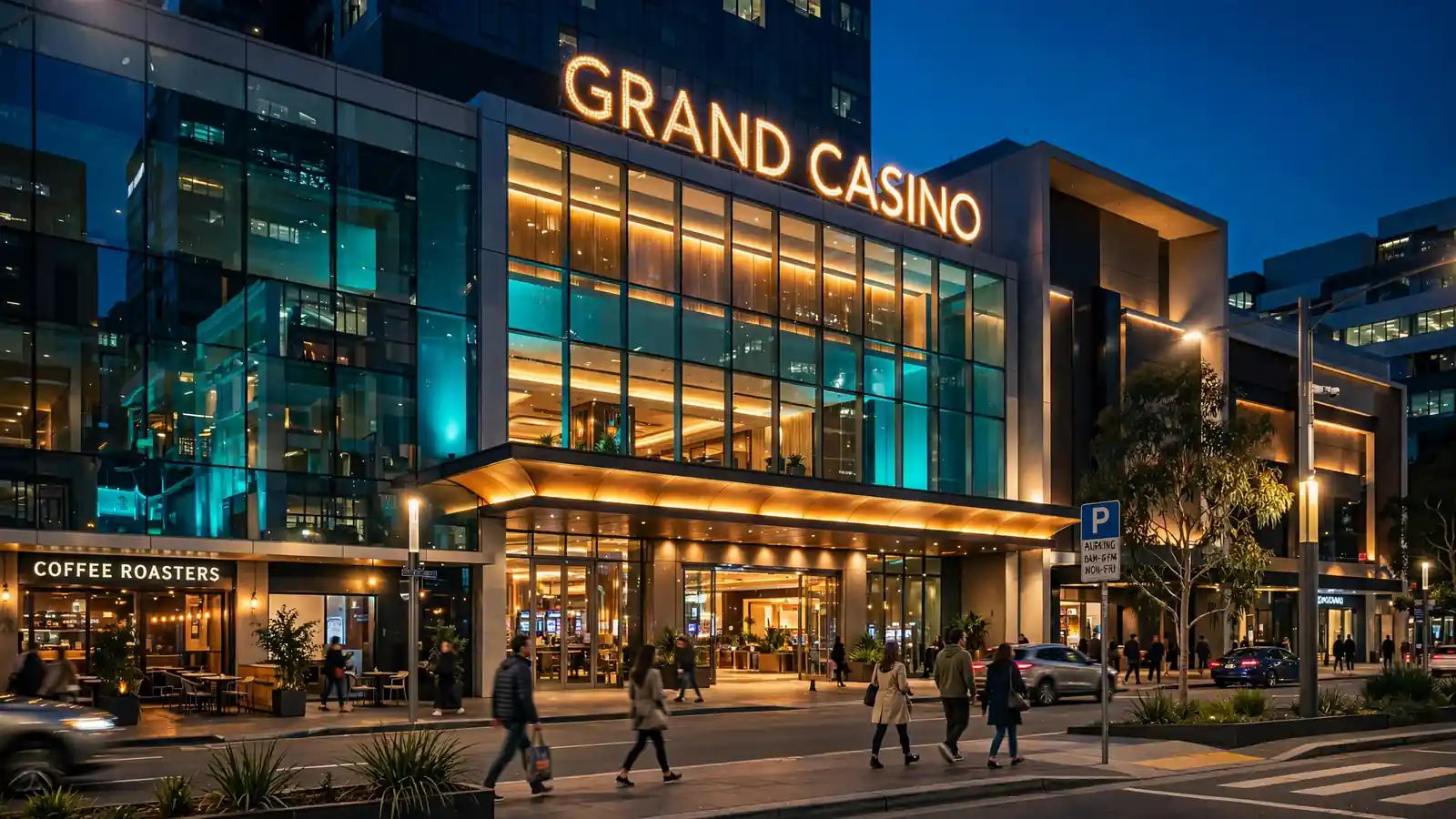
“Open now” sounds like a single status: doors open or doors shut. In practice, it can describe only part of a venue’s operation. A casino may be operating while a restaurant, bar, hotel service or other facility within the same complex is unavailable. The distinction matters because a map result or venue listing often compresses a large property into one label.
All major Australian casinos operate around the clock. That describes the operation of the casino as a whole; it does not mean every service on the premises runs continuously, or that every entrance and facility is available at every hour. When I dealt with operating schedules, the useful question was never simply whether the building was open. It was which part of it was open, and for what purpose.
That is the practical meaning behind an immediate-hours check. Someone looking for a nearby casino may mean the gaming floor, a place to eat, a hotel reception or simply an open entrance. Those are different requests, even when a venue’s name appears beside one “open” label. A broad status can be accurate and still leave the detail that matters unresolved.
Finding pokies that are open when you want to play can take more than a quick search, especially when you are looking online. Use this list as a starting point and check each operator’s current availability and terms before signing up.
Neospin
Neospin is listed with a Curacao Gaming Control Board licence, OGL/2023/176/0095, held by Hollycorn N.V.
Ricky Casino
Ricky Casino lists crypto payouts in under an hour and PayID payouts in 1–3 business days. Its minimum deposit is A$20, or A$30 to qualify for the bonus.
Roby Casino
Roby Casino is listed as licensed by Curacao eGaming, with Roby Games Ltd as the company.
Uptown Pokies
Uptown Pokies is listed as operating since 2017 under a Curacao licence. Its minimum deposit is A$20.
7Bit Casino
7Bit Casino is listed as operating under a Curacao licence, with Dama N.V. as its operator.
SpinsUp
SpinsUp is listed with a Curacao Gaming Control Board licence, OGL/2023/174/0082, held by Dama N.V.
Lucky Dreams
Lucky Dreams lists a Curacao licence and a A$20 minimum deposit for POLi.
LuckyVibe
LuckyVibe is listed with a Curacao Gaming Control Board licence, OGL/2023/176/0095, held by Hollycorn N.V.
Golden Pokies
Golden Pokies is listed as operating under a Curacao licence.
Bizzo Casino
Bizzo Casino is listed with a Curacao Gaming Control Board licence, with TechSolutions Group N.V. named as the company.
The same applies to access. A casino is not necessarily a single public space with one set of doors and one set of conditions. Different areas may have separate entry arrangements, and a facility inside the complex may not share the casino’s operating pattern. I treat “open” as a starting point, not as a promise that every amenity is available.
The wording on a listing also has limits. It may report the operating status of the main venue rather than confirm what is happening in each restaurant, bar or other area. A map pin can identify a property, but it cannot, by itself, settle which facilities are operating at that moment. That is why two people can see the same listing and have different answers to what “open” means: one is asking about the casino operation, the other about a particular service.
There is also a difference between finding a venue and confirming that a particular part of it is available. A casino’s around-the-clock operation does not establish current restaurant service, event access or accommodation availability. Nor does it establish that a particular entrance is in use. Those details belong to the relevant facility, not to the general label attached to the property.
This is where the word “near” can mislead. A result may be geographically close and marked open, yet still not match the intended destination inside the venue. In operational terms, proximity and availability are separate checks. The first identifies a place; the second identifies the part of that place that is actually relevant. A little less neat than one map pin. More accurate.
The distinction becomes even more important when a result points to a website rather than a physical venue. A page loading successfully is not proof that it represents an Australian-licensed online casino. The Interactive Gambling Act 2001 prohibits operators from providing real-money online casino games to people in Australia. “Open now” on a website is not the same thing as a lawful, open physical casino.
The Australian Communications and Media Authority enforces that federal law and monitors compliance. It can ask Australian internet providers to block websites offering prohibited interactive gambling services or advertising them. ACMA has blocked more than 1,455 illegal gambling and affiliate websites since November 2019. Reports also differ on the number of illegal services that have left Australia since enforcement began in 2017: one account says more than 210, while another says more than 190. The figures should not be collapsed into a single precise count.
That regulatory context does not change the meaning of a physical casino’s operating status. It does explain why an online result should not be treated as a substitute for a land-based venue. The visible page, the domain name and the words “open now” do not establish local authorisation.
For a physical property, the clearest reading is modest: the casino operation may be running, while individual facilities and access arrangements remain separate. The main status answers one question. It does not answer every question about the premises.
That is the distinction worth keeping. “Open” is not the same as “everything is available.”
A request for a casino at 6am or 7am is more specific than a general check on whether a venue is operating. It points to the awkward edge of the night shift: the hour when one part of a property may still be running while another is changing over, closed, or operating under a separate schedule. The reliable national statement is narrower. All major Australian casinos operate 24 hours a day.
I learned to treat that as a statement about the operation of major casinos, not as a timetable for every room, service or gaming area within them. “Open 24 hours” sounds comprehensive in promotional copy. In practice, the phrase does not, by itself, establish which facilities are available at a particular moment. The wording matters.
Someone looking for a nearby venue at 6am may be trying to settle a simple question: is there a major casino operating at that hour? The national 24-hour claim supports that broad point. It does not identify a particular venue, confirm its current operating status, or establish that every part of its premises is accessible at dawn.
The same distinction applies at 7am. A casino’s continuous operation is not the same thing as a promise that every gaming area or service has identical hours. I have seen how easily a broad description gets read as a room-by-room guarantee. It is not one.
The hour itself can also make a search result look more definite than it is. A result that says a casino operates around the clock does not necessarily provide a current schedule for a specific facility inside it. For an early-morning decision, the useful detail is the venue’s own current information about the relevant area, rather than a general label that describes the property as a whole.
That is the difference between an answer about a category and an answer about a particular place. The first is available: all major Australian casinos operate 24 hours. The second needs venue-specific confirmation. No shortcut around that distinction.
A search for a casino open until 5am or 6am can sound like a request for a closing time, but the wording may reflect something else: the person wants to know whether the venue remains available through that part of the night. For major casinos, the verified 24-hour operation means the property is not described as shutting for the day at those hours.
That still should not be turned into a claim about a particular gaming room or amenity. A broad operating pattern does not supply a separate opening and closing schedule for each part of a venue. Nor does “open until 6am” establish what happens after that hour. The phrasing in a listing may be brief; the operational detail behind it may not be.
At the counter, that distinction mattered because people often treated a short label as a complete account. It rarely was. The accurate reading is modest: major Australian casinos operate continuously, while the label alone cannot settle the hours of every facility within them. Short answer. Separate schedules.
An 8am search follows the same logic, even though it may feel less like a night-time question. A major casino’s 24-hour operation covers the broad issue of whether the property operates at that time. It does not automatically answer whether a particular service is available or whether the same access arrangements apply throughout the building.
The practical mistake is to take a property-wide description and apply it to every component. That can create false certainty in either direction: assuming a whole venue is unavailable because a particular service has hours, or assuming every facility is open because the casino operates continuously. Neither conclusion follows from the 24-hour claim alone.
For a named casino, current venue information is the relevant check for specific facilities and access. The national statement remains useful, but only at its proper scale. It describes major casinos’ operating pattern; it is not a detailed schedule for each individual venue.
That is why an early-morning answer needs two levels of precision. First, whether the question concerns a major casino operating at that hour; the broad answer is yes, major Australian casinos operate 24 hours. Second, whether a particular part of a particular property is available then; that cannot be inferred from the general claim alone. A clear distinction, not a bigger promise.
A Good Friday timetable cannot be inferred from an ordinary weekday schedule. The same is true of other public holidays: a venue’s usual operating pattern does not, by itself, establish what will happen on a particular holiday. “Open today” is a date-specific question, not a conclusion that follows from seeing a familiar schedule.
The reason is structural. Australia does not have one national casino licence that sets a single holiday timetable for every property. Casino businesses operate under licences issued by their state or territory jurisdiction. That local framework matters when interpreting a holiday notice; a rule or announcement associated with one venue cannot automatically be carried across the country.
I have seen operating language read too broadly. A statement that a casino operates continuously describes the general operation of a major casino, not necessarily a binding promise about every public holiday, every entrance or every part of its premises. Conversely, a holiday restriction associated with one property is not evidence that all Australian casinos follow it. The wording may look national when repeated online. It isn’t.
Good Friday is a particularly easy day on which to mistake assumption for confirmation. People may expect either ordinary hours or a universal closure, but neither expectation establishes a specific casino’s arrangements. A date on the public calendar does not supply the missing venue-level detail. The relevant question is what applies to the particular licensed property in its jurisdiction, and whether the information is current for that date.
That distinction also matters when a general listing says a venue is open. A listing may describe its regular operation rather than a holiday exception. A notice can refer to the property as a whole while leaving details about particular areas unclear. Those are different claims, and treating them as interchangeable can turn a technically accurate general statement into a misleading answer about the holiday.
I would read a public-holiday notice narrowly: which property it identifies, which date it covers, and what it actually says about access or operation. A venue’s own dated notice is more useful for that purpose than a generic hours panel that makes no reference to the holiday. If the notice is silent, silence is not proof of either normal hours or closure.
There is no sound national shortcut for searches about casinos open on Good Friday. The licensing arrangement is jurisdictional, so the answer belongs to the relevant property and its local context. That does not mean every venue has a different rule; it means a national assumption cannot establish a particular venue’s schedule. The distinction is practical, not technical.
The same reading applies when the question concerns tonight or another public holiday. The calendar date and the ordinary schedule are clues, not confirmation. Holiday hours require holiday-specific information, and any claim should be tied to the named venue rather than extended to a whole state or Australia. Short version: check the exact notice.
A location search can point towards a gaming venue, but the national picture is broader than a list of major capitals. A specialist casino review reports more than 20 full-scale casinos across Australia’s eight states. The same review counts gambling activity in 147 Australian cities. Those figures describe different things: the first concerns casinos, while the second covers cities where gambling facilities are found. They should not be read as a claim that every city has a casino.
Sydney, New South Wales, is identified in that review as the country’s largest gambling city, with 11 gambling facilities. The count gives a sense of concentration, but it does not mean that all 11 are casinos or that they sit close together. A city-level total is a broad map marker, not a street-level guide.
That distinction matters when comparing a nearby venue with one in another part of the country. A result for a large city may refer to a facility across town rather than around the corner; a smaller place may have a different mix of venues altogether. “Nearest” is a geographic relationship, not a promise that a particular type of venue is present at the closest address.
The wording on a map can blur those categories. A result for pokies may lead to a club, hotel or other gaming venue rather than a full-scale casino. The label alone does not establish the kind of property. I learned to check the venue identity before treating a map pin as a casino: the address and the property’s own description settle more than a broad category label.
Australia’s distribution also makes capital-city assumptions unreliable. Full-scale casinos are reported across all eight states, while gambling facilities appear in a much wider set of cities. A place can therefore have gambling activity without being a casino destination. The reverse problem occurs in a large urban area: several facilities may appear under a broad location result, but their names and physical addresses still need to be distinguished.
A search framed around a suburb such as Redcliffe illustrates the point. A place name narrows the geography, but it does not, by itself, establish that the closest result is a casino, that it is open, or that the listing describes the right premises. Those are separate checks. The location label is only the starting point.
For a national overview, the review’s figures are useful as orientation rather than a live directory. Its count of cities with gambling indicates how widely facilities are distributed; its casino total describes a narrower category. Neither figure tells where a specific venue sits relative to a particular address. Counts can also change as venues open, close or are classified differently. Keep the categories separate. That is the useful part.
The practical geographic picture is therefore uneven: a broad spread of casinos across the states, gambling facilities in many cities, and a notably high city-level count in Sydney. A “nearby” result becomes meaningful only when the named property and its address match the place being considered. City totals can orient a search, but they cannot substitute for checking the actual venue.
Yes. Major Australian casinos operate around the clock. That is the direct answer for anyone asking whether a major casino can be open at any hour, rather than closing for the night and reopening the next day.
The important word is “major”. The statement describes the operating pattern of major casinos as a group; it is not a promise that every gaming venue in Australia stays open continuously. Nor does it identify a particular property or establish its current operating status. A broad national answer and a confirmed answer about one venue are different things.
I read “24 hours” as a description of continuous casino operation, not as shorthand for every service being available without interruption. A venue can be operating while access to particular areas, services or facilities is subject to separate arrangements. The round-the-clock claim should not be stretched beyond what it says.
That distinction matters because “open” can sound more comprehensive than it is. In ordinary use, it may mean that a venue is operating; it does not, by itself, describe every part of the premises or every activity taking place there. The 24-hour answer is useful at the level of major casinos, but it cannot settle every detail attached to a specific visit.
I would also avoid turning the national statement into a claim about every casino in every circumstance. “All major Australian casinos operate 24 hours a day” is a defined claim. “Every casino near a particular person is open right now” is a different one: it requires a venue-specific answer, not an inference from the national pattern. The wording may look like a small difference. Operationally, it is not.
For a general question about continuous operation, the answer is yes for major Australian casinos. For an individual property, its current status needs to be understood as a separate matter. That is the practical boundary of the claim: broad enough to answer whether major casinos operate around the clock, not broad enough to certify every venue or every part of it.
A phrase such as “open 24 hours” can also be mistaken for a guarantee of uninterrupted access to everything a venue offers. I would not read it that way. It describes the operating day, not a detailed schedule for each facility. Those are separate questions, and the broad statement does not resolve them.
So the concise answer is yes, when the question concerns major Australian casinos. The more careful answer keeps that scope intact: continuous operation is the general pattern for major casinos, while a claim about a particular gaming venue needs to remain specific to that venue. No wider promise is implied.
A location result is a starting point, not a description of what a venue is licensed to do. In Australia, casino regulation sits with state and territory jurisdictions, and each casino operates under a licence issued by its local jurisdiction. That makes the state or territory part of the identification, not a detail to leave until later.
The national market is spread across the country rather than gathered in one central area. A specialist casino review reports more than 20 full-scale casinos across all eight states. That is a snapshot from a third-party review, not a permanent count or a live directory. It gives scale, but it cannot establish which physical venue is closest to a particular location or what that venue offers.
I have seen how easily a name can do too much work in a listing. A result may refer to a casino, a wider resort or entertainment complex, or a business with a similar name. Those are not interchangeable when the question concerns a licensed casino. The physical address helps distinguish them; the jurisdiction identifies which licensing authority applies.
“Near me” sounds precise, but it depends on the location being used and on what the listing actually represents. A venue shown nearby is not necessarily the nearest casino, and proximity alone says nothing about its licence. A result that names a city without identifying a specific property leaves the essential point unresolved.
The practical check is simple in principle: match the venue name to a physical address, then place that address in its state or territory. This is not a promise that every listing is current. It is a way to avoid treating a broad map label or a similar business name as proof of a casino’s identity or regulatory status.
A national figure can set expectations, but it cannot replace local identification. Australia has casinos in every state, yet licensing remains jurisdictional rather than national. The result only becomes useful when its named property, physical location and relevant jurisdiction line up. Otherwise, it is just a pin on a map.
A casino described as open late can sound like a promise about the whole venue. In practice, the useful distinction is narrower: all major Australian casinos operate around the clock, but that does not mean every part of a property offers the same access or service throughout the night.
I learned to separate the gaming operation from everything built around it. A late-night restaurant, bar, hotel reception or entertainment space is a separate facility with its own operating arrangements. The casino’s continuous operation does not establish that each of those areas is open, serving guests or admitting visitors at the same time. “Open late” is therefore a broad description, not a timetable for every door.
The wording also matters. “Until late” can suggest a venue that closes after an evening session; a major casino’s 24-hour operation is different. It means the casino does not have a nightly closing time in the ordinary sense. It does not, by itself, settle which gaming areas are operating at a given moment, what other services are available, or whether access conditions have changed.
Entry is another practical point. Major Australian casinos require valid photo identification, and the minimum age for casino entry nationwide is 18. Continuous operation is not unrestricted admission. The hours answer and the entry conditions answer different questions.
I would treat a late-night description as a starting point, then look for information tied to the particular property and the specific facility being considered. A general claim about a casino’s hours cannot reliably stand in for a restaurant schedule or other venue access. Nor does a phrase such as “open till late” necessarily say whether the casino itself closes overnight; for major casinos, the established pattern is continuous operation.
That is the distinction worth keeping: late-night access may describe the casino, a single part of the complex, or merely a broad impression. The 24-hour claim applies to major Australian casinos as operating venues. It should not be stretched into a claim that every service, entrance or area is available all night. Short version: operation is not every amenity.
Christmas Day does not support a single national answer about casino access. Australia’s casino industry is regulated by state and territory jurisdictions, and each property operates under a licence issued by its local jurisdiction. That means the relevant authority and the rules applying to a venue depend on where it is located.
I treat a holiday listing as a property-specific detail, not something that can be inferred from the word “casino”. A venue’s ordinary operating pattern does not, by itself, establish its Christmas Day arrangements. Nor does a general statement about the national industry settle whether a particular entrance, gaming floor or other part of a property is available on that date.
That distinction matters because “open” can be used loosely in venue information. It may describe the property as a whole, while access to a particular area or service could be addressed separately. A Christmas Day notice needs to be read for the venue and the date it actually covers. A routine-hours panel is not the same thing as a holiday-specific confirmation.
The state-level licensing structure is the reason not to transfer an answer from one city to another. Even when two venues appear comparable, their licences sit within different local jurisdictions. A claim about one property cannot be treated as a rule for every Australian casino.
I have found that the safest reading is a narrow one: a Christmas Day opening claim applies only where the venue’s own current information clearly makes that date and the relevant facility part of the statement. If the wording is general, it does not establish a holiday schedule. If the information is unclear, the status remains unclear; a national assumption does not fill the gap.
Verify Holiday Opening
Identify the property
Determine which specific casino the listing refers to.
Check the jurisdiction
Identify the state or territory that licences the venue.
Confirm the notice
Read the venue's own current information for that specific date and facility.
For searches about pokies being available nearby on Christmas Day, location and date have to match the venue information. The phrase “open Christmas Day” can sound definitive, but without that match it is only a broad label. The licence explains why the answer is local. It does not create one uniform holiday timetable.
No national shortcut.
Anzac Day brings a specific uncertainty to searches for nearby casino gaming venues: a venue’s ordinary operating pattern does not, by itself, settle what applies on that date. I learned to separate the question of whether a casino exists nearby from whether its doors, gaming areas or other facilities are available under the conditions in force for the day. Those are different checks.
Australia does not have one national casino licence that sets a single operating rule for every property. Each casino operates under a licence issued by its state or territory, and that local jurisdiction is responsible for its regulatory framework. The name of a city on a map is therefore only a starting point; it does not establish the terms applying to a particular venue on Anzac Day.
That distinction matters when a result simply labels a venue “open.” The word can flatten several details into one. A property may be operating, while access to a particular area or service follows a separate arrangement. Without a current statement from the venue or the relevant jurisdiction, an ordinary-hours listing should not be treated as confirmation of Anzac Day access.
I would also keep the location check grounded in a physical casino rather than an online result. In Australia, online casino-style services are prohibited for operators to provide to people in the country, and a website loading successfully does not change that status. The nearby-venue question concerns a land-based property and its local licence.
The useful sequence is simple: establish which physical casino the listing refers to, identify the state or territory that licences it, then confirm the venue’s own Anzac Day arrangements. A broad “near me” label cannot answer the last part. Local rules matter.
A search combining cash, cheques and nearby gaming venues can sound like a request for a specific payment arrangement. It does not establish that a venue accepts cheques, cash advances or any particular method. Those are separate operating conditions, not something that can be inferred from a broad location result or a rating label.
The national count gives a more solid measure of the land-based sector: 3,308 gaming machines are endorsed on venue licences and installed in Australian casinos. That figure describes the licensed casino machine base; it does not tell how many are available at a particular property, what payment arrangements apply, or whether a venue is open at a given moment. Concrete, but limited.
“Top rated” is another compressed label. A rating may reflect a reviewer’s chosen criteria, customer opinions or editorial judgement; without knowing the method, it is not a reliable statement about cash services or suitability. In my experience, the wording on a listing often carries less operational weight than the conditions set by the venue itself.
For a cash-related decision, the relevant distinction is between a facility’s published information and an assumption attached to its reputation. A high score does not verify cheque acceptance. Nor does the presence of gaming machines establish a particular cash facility. Those details need to be confirmed directly with the venue before making plans.
There is also a difference between a physical casino and an online service presented with similar language. Australian law prohibits operators from providing real-money online casino games to people in Australia. A website’s availability or branding does not turn it into a local, licensed casino. Keep the categories separate.