A careful look at what can be established about poker and which other Hobart Casino services still need confirmation.
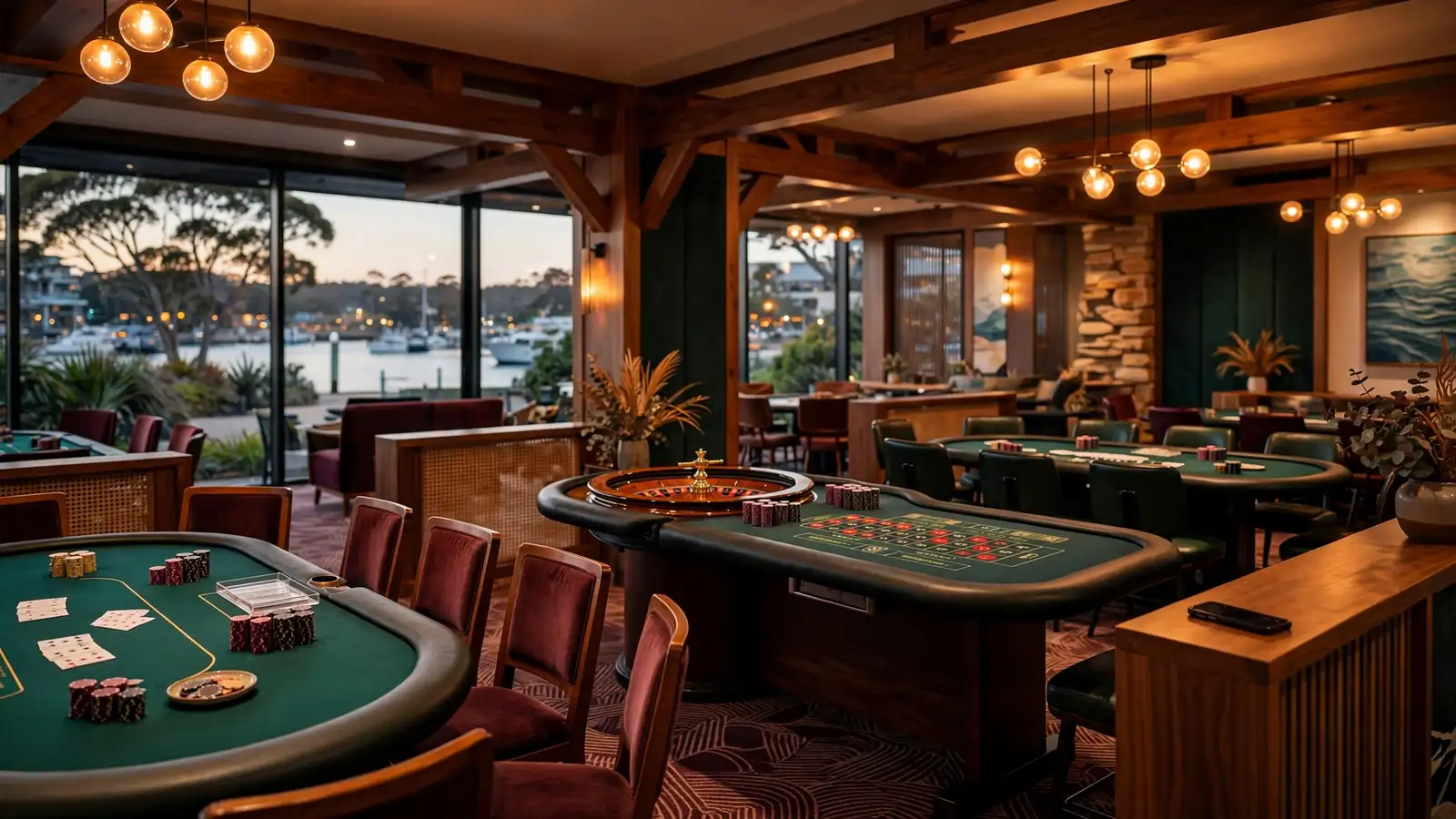
A poker room is a specific venue service, not a synonym for a casino floor. The phrase implies a place where poker is organised and played, potentially with its own tables, operating hours and entry conditions. A tournament is more specific still: it requires a format, registration arrangements and a schedule. None of those details follows simply from a venue being described as a casino.
That distinction matters when assessing claims about poker at the Hobart casino. A general venue listing, an old photograph or a passing mention of gaming cannot establish that a dedicated poker room is operating now. Nor does a reference to poker, without context, establish whether it means live play, an event held on a particular date or an online game. Each is a different claim.
I have seen promotional language blur those categories. “Poker available” can sound definitive while leaving the practical question unanswered: what is available, where, and when? A useful confirmation would come from current information issued by the venue or a clearly identified event organiser. It should say whether the activity is a regular offering or a one-off event, and give the relevant date and arrangements. If those particulars are absent, the wording is not enough to plan around.
Choosing a casino to play at in Hobart means checking the details that matter to you before signing up. This list offers a starting point for reviewing the available options.
Neospin
Neospin is listed with a Curacao Gaming Control Board licence, OGL/2023/176/0095, held by Hollycorn N.V.
Ricky Casino
Ricky Casino lists crypto payouts in under an hour and PayID payouts in 1–3 business days. The minimum deposit is A$20, or A$30 to qualify for the bonus.
Roby Casino
Roby Casino is listed with a Curacao eGaming licence held by Roby Games Ltd.
Uptown Pokies
Uptown Pokies is listed as operating since 2017 under a Curacao licence. Its minimum deposit is A$20.
7Bit Casino
7Bit Casino is listed as Curacao-licensed and operated by Dama N.V.
SpinsUp
SpinsUp is listed with a Curacao Gaming Control Board licence, OGL/2023/174/0082, held by Dama N.V.
Lucky Dreams
Lucky Dreams is listed with a Curacao licence. Its minimum deposit is A$20 when using POLi.
LuckyVibe
LuckyVibe is listed with a Curacao Gaming Control Board licence, OGL/2023/176/0095, held by Hollycorn N.V.
Golden Pokies
Golden Pokies is listed with a Curacao licence.
Bizzo Casino
Bizzo Casino is listed with a Curacao Gaming Control Board licence held by TechSolutions Group N.V.
Tournament listings need especially careful reading. A tournament title or an old event notice does not establish a current series. Dates can pass, schedules can change, and a result from a past event says nothing about the next one. The operational details matter: registration status, format, entry conditions and whether the event is actually taking place at the venue. Without them, a search result may describe history rather than an upcoming game.
The word “room” can also mislead. In this context, it may mean a dedicated poker area, but it can be used loosely for a gaming space or a room in a building. The poker-specific question is whether organised poker is offered there—not whether the venue has other gaming facilities or accommodation. Those are separate matters and do not prove anything about poker.
For the same reason, a sports bar listing would not confirm a poker room or tournament. A bar is a different venue feature; proximity or shared branding does not make it evidence of poker activity. Likewise, a general statement that a casino is open does not establish that poker is running at that time. Venue access and the schedule for a particular game are separate operational questions.
There is another distinction worth keeping clear: live poker at a physical venue is not the same as online poker. Under the Interactive Gambling Act 2001, online casino-style games, including poker, are prohibited when provided as real-money services to people in Australia. That rule concerns online services; it does not, by itself, establish whether a particular physical venue offers live poker. One should not use a statement about online gambling to infer a land-based poker schedule, or the reverse.
In practice, the strongest confirmation is specific and current: a venue-issued poker page, a current event notice, or direct confirmation that identifies the session and its conditions. A generic casino directory entry is weaker. Search snippets can preserve stale information after an event ends, while third-party listings may omit changes. The distinction is ordinary, but important. Dates expire.
For anyone comparing claims, the useful questions are factual rather than promotional: does the notice refer to live poker, is it for this venue, is it current, and does it state how the event operates? If the wording leaves those points unresolved, it should be treated as an unconfirmed lead rather than a booking basis. That is not a judgement on the venue; it is simply how event information works.
Poker searches can therefore be answered only as far as the detail supports. A claim about a room needs evidence of a dedicated poker offering. A claim about tournaments needs current event particulars. Neither follows from the casino label alone, and neither should be filled in by assuming that a past listing remains valid. For practical planning, the distinction between a documented event and an inference is the whole point.
Accommodation near a casino can mean several different things: a place promoted by the venue, a privately operated property in the surrounding area, or simply somewhere that suits a visit. Those are not interchangeable. A booking option appearing in a general travel search does not, by itself, show that the casino operates it, recommends it or has negotiated a rate with it.
I keep that distinction clear because “casino accommodation deal” is advertising language with a specific implication: that a stay and a venue benefit are connected under stated conditions. Without a named provider and terms that can be checked, it would be misleading to describe any lodging as an official package or to suggest a saving. No deal should be assumed from a property’s proximity or from wording that groups a stay with a casino visit.
The same caution applies to claims about what counts as “near” the venue. The phrase can refer to walking distance, a short drive or a broader area, depending on the person making the claim. Without a confirmed starting point and a clear measure, it says little about travel time or convenience. I would treat location wording as a prompt to check the actual address and route, not as a reliable description of either.
That distinction matters when comparing accommodation. A property may be independent of the casino even if its listing mentions the venue as a local point of interest. Conversely, a promotional page may describe a partnership, but the wording needs to identify what is included and who provides it. A room rate, transport arrangement, dining credit or casino promotion should never be inferred from a broad label such as “stay and play”. Conditions do the real work. The headline sells the idea; the terms define the offer.
Searches for opening or trading times can also become tangled with stay planning. Venue hours and accommodation arrangements are separate details. Knowing when a casino is open would not establish whether a lodging package exists, what it covers or whether it is available on a particular date. Promotions are similarly distinct: a casino promotion is not automatically a lodging discount, and a travel discount does not necessarily include a casino benefit.
For a practical comparison, the useful checks are the identity of the accommodation provider, the exact location, the booking dates, the total price and the cancellation conditions. If an offer claims a connection to the casino, its terms should state which benefit is included, who supplies it and what restrictions apply. If those details are not stated plainly, the safer interpretation is that the listing is describing nearby accommodation rather than a confirmed casino arrangement.
This is not a claim that no suitable places to stay exist in Hobart. That leaves ordinary accommodation decisions to be assessed on their own terms, without treating proximity as endorsement or promotional language as proof of a bundled offer.
The distinction is modest, but useful. A place to stay, a casino promotion and a venue location are three separate pieces of information. Keep them separate until the provider and conditions connect them. No implied package.
A search for a hotel attached to a casino can blur two different things: a casino venue and a hotel that may or may not share its name, ownership or premises. I keep those claims separate. A matching name is not proof that rooms are on site, that a booking is handled by the casino, or that a hotel stay includes venue access.
For Hobart casino hotel rooms, the useful details are specific and changeable: whether rooms are currently offered, which room categories are available, what the quoted rate includes, and what cancellation and check-in conditions apply. None can be safely inferred from the phrase “casino hotel”. Nor does a photograph or a third-party listing, by itself, establish that the room shown is part of the casino property.
That distinction matters at booking. “Stay and play” can sound like a package, but the words do not explain what is included. A room rate might be separate from food, entertainment or other venue services; any claimed inclusion needs to appear in the actual booking terms. I would also treat availability, prices and policies as date-specific, not as permanent features of a hotel. Small print. The commercial wording often does less work than it appears to.
The same standard applies to searches for hotels in Hobart associated with the casino. A nearby hotel is not automatically a casino hotel, and proximity does not establish a partnership or a shared booking arrangement. Before relying on a listing, the key check is whether the accommodation provider itself identifies the property and states the room terms. If the connection to the casino is important, that relationship should be stated plainly rather than inferred from a map pin or marketing label.
Hotel hours are another point that can be misunderstood. A hotel’s reception or check-in arrangements are not the casino’s operating hours, and one cannot be used to answer the other. The phrase “casino opening hours” calls for current venue information; it does not establish when a hotel desk is staffed or when rooms can be accessed. Those conditions belong to the property’s booking information.
Likewise, a search for shows at a casino hotel does not confirm that performances are part of a room package, held at the hotel, or scheduled on a particular date. Entertainment listings and accommodation terms are separate records. If a booking is being considered around an event, both should be checked independently, including the event date and any stated entry conditions. A room reservation is not evidence of a show booking.
I avoid describing any Hobart property as the casino’s hotel, naming room types, or quoting rates without current property-level information to support it. That restraint is not a technicality: hotel descriptions can be copied across booking pages long after terms have changed, while the guest remains bound by the conditions attached to the actual reservation. The dependable answer is the one tied to the property and dates in question. Anything broader is a label, not a room confirmation.
Parking, bingo and dining belong to the physical venue; online casino games belong to a different legal category. I keep those questions apart because a result about one does not establish anything about the others. A parking arrangement says nothing about bingo sessions, and a dining listing cannot confirm whether a particular activity is operating.
For parking in Hobart, the useful details are practical ones: whether spaces are available to venue visitors, whether valet service is offered, any conditions on access, and whether parking is free or paid. Those points can change, and wording such as “free parking” is not enough on its own to establish who qualifies or when it applies. A claim about valet parking needs the same care: the service, operating hours and any eligibility conditions should be confirmed with the venue before travel. Small print matters.
Bingo is another separate venue question. A search for bingo at the casino does not establish that sessions are scheduled, open to the public or currently running. Those are operational details, not assumptions that can be drawn from the venue’s name. The same applies to dining. Whether food is served, what options are available and when they operate need current confirmation; a general reference to dining is not a menu or a promise of service.
The phrase “online casino” changes the issue entirely. It is not simply the Hobart venue viewed through a screen. Under the Interactive Gambling Act, an operator based in Australia cannot provide online casino games to people in Australia. The restriction covers casino-style games such as pokies, blackjack and roulette.
Offshore platforms sit outside Australian regulation. Their position is often described as a grey area for players, but that does not make them Australian-regulated services or turn them into an online extension of a local casino. The operator’s location and the player’s location are distinct parts of the legal picture. A website using a local city name does not establish that it is operated locally, approved in Australia or connected to a land-based venue.
That distinction is easy to lose in a broad search for the best casino in Hobart in 2026. The phrase may point to a physical venue, a request for local facilities, or an online service using Hobart in its marketing. Those are not interchangeable. A local venue enquiry can be resolved through current venue information; online casino claims require a separate check against Australian law.
I would treat each item as its own decision: confirm parking terms with the venue, confirm whether bingo or dining is actually available, and do not infer online authorisation from a local name. The legal line is clear for Australian operators, even when a website’s presentation is not.
Contact information is useful only when it connects to the right department. A general venue number may route enquiries about reservations, accessibility, parking or events differently, and an old directory entry can remain visible after details change. I treat a number or email repeated across third-party listings as a lead, not confirmation. Before relying on it, check that it appears on a current, official venue channel and that the page identifies what the contact point handles.
The same standard applies to a map. A pin can help locate a venue, but it does not establish the correct entrance, accessible route, drop-off point or car-park access. Map listings may also combine nearby businesses or use labels that do not distinguish public access from staff or service access. For a planned visit, the useful detail is not merely a dot on a screen; it is current guidance for arriving and entering.
A bar listing needs more than a name. Hours, service arrangements and whether a space is open to the public can change, so an old photo or directory description is not enough to establish what is available on a particular visit. I would look for a current venue notice before treating any bar information as settled. “Open late” is promotional shorthand unless the actual hours and any access conditions are stated.
Baccarat and craps are separate venue questions. A game appearing in a general description does not establish that it is offered at a particular location, at a particular time, or under particular table conditions. Listings can lag behind operational changes. A specific claim should therefore be tied to a current venue source, rather than inferred from what casinos elsewhere may offer. Familiarity is not confirmation.
Car-park information has practical details that broad listings often leave out: whether spaces are available to visitors, where the entrance is, and whether any restrictions or charges apply. Those conditions should be checked against current venue guidance before setting off. A map symbol alone cannot answer them, and nearby parking should not be presented as venue parking without evidence.
Concert information also needs a date and a source. A past event page, cached listing or social post shared without context may describe something that has already happened. A current event notice should make clear what is scheduled and where to find updates if arrangements change. I would not treat a general entertainment reference as a confirmed concert programme.
For all of these details, the distinction is simple: a search result can point toward information, but it cannot certify that the information is current. Venue details are operational, and operational details move. Confirm the relevant item through an official channel close to the planned visit; if the listing does not state the condition clearly, do not fill the gap with an assumption. Better to pause than arrive with the wrong number, entrance or expectation.
Breakfast and buffet searches often blur together, but they describe different service questions. Breakfast may mean a meal available at a particular time; a buffet suggests a particular style of service. Neither phrase alone establishes that a service is offered, what it includes, or when it operates. I have seen how a broad label can sound like a promise when it is only a category. The detail matters.
The same care applies to the phrase “casino resort”. It can describe a broad kind of destination, but it does not confirm what services or facilities a specific venue provides. A search result using that wording is not a substitute for a current venue listing. Menus, service periods and booking arrangements need to be tied to a named operation and an up-to-date notice before they can be treated as reliable.
Buffet descriptions deserve particular scrutiny. The word “buffet” says something about service style, not the dishes available, dietary options, price or whether a service is running on a particular day. Those details can change, and a general label cannot fill in the gaps. No assumptions should be made about breakfast being included with another service, either.
Rewards searches raise a different issue. A programme name, if one appears, would not by itself explain who can join, what earns benefits, how points or offers work, or whether conditions apply. Promotional language such as “exclusive” is only useful when the qualifying rules are clear. I would look for the programme’s own current terms rather than infer benefits from a banner or an old listing.
Employment searches also need to be separated from general descriptions of casino work. A jobs page is meaningful when it identifies an employer, a live vacancy, its duties and application process. Search listings can remain visible after a role closes, while a general careers page may describe possibilities rather than open positions. I would not treat either as proof that a particular job is available.
For a genuine vacancy, the practical checks are straightforward: confirm the employer named on the listing, read the role requirements and location, and follow the application instructions on the employer’s current recruitment channel. Job titles alone do not establish pay, shifts, eligibility or hiring status. Those are terms of employment, not details to infer from the venue name.
The useful distinction is between a category and a confirmed offer. “Breakfast”, “buffet”, “rewards” and “careers” can point toward the right kind of information, but none supplies the operating details or conditions by itself. Clear terms first. Everything else is a label.
Whether the Hobart casino is open, reopening or undergoing development are separate questions, and each depends on current operational information. I would not treat an old announcement, a past event listing or a general venue description as proof of today’s status. Opening arrangements can change; development plans can be revised; entertainment schedules are time-sensitive. A confident-sounding summary is not a substitute for a dated confirmation.
The same distinction matters when people look for a reopening date. “Reopening” may refer to a particular area, a temporary closure or the venue as a whole. Without a current statement that identifies what is reopening and when, repeating a date risks turning an old or partial update into a claim about the entire casino. The useful detail is the scope of the announcement, not just the word itself.
Development is another term that can cover very different stages: a proposal, an approval, building work or a completed change. Those stages are not interchangeable. In my experience, promotional wording tends to make a project sound settled before every practical detail is settled. A meaningful update should make clear what has actually changed, rather than inviting readers to infer that a planned improvement is already available.
Entertainment and events require the same care. A past concert or event does not establish a continuing programme, and a general promise of entertainment does not identify a specific performance. Dates, performers, access conditions and cancellations belong to an individual listing. Without a current listing, there is no sound basis for describing what is scheduled. That is less exciting. It is also more accurate.
A review of the venue should be read with its date and subject in mind. A review focused on gaming, for instance, cannot automatically establish current opening arrangements, development progress or entertainment plans. Nor does a favourable description from an earlier visit prove that the same experience is available now. “Open” is a status; “good” is an assessment. They answer different questions.
Menu searches can also blur those categories. A menu is a specific, changeable piece of information, not evidence that a venue is open or that a particular service is operating. I would avoid treating an old menu image or a passing mention of food as a current offer. The details that matter are the menu’s date and the service it applies to. No assumption should be built around them.
For a practical decision, the order is straightforward: establish current operating status first, then look for a dated update on development or a specific event. Keep historical announcements separate from present-tense claims. Until those distinctions are clear, claims about reopening, entertainment, events or menus should be treated as unconfirmed—not filled in with plausible-sounding detail.
A spa, a bar and a casino can appear together in a search result without belonging to the same venue. I have seen that distinction get lost in copy: a nearby business becomes a supposed casino amenity, and a broad label starts to sound like a confirmed facility. For Hobart, those details need to be tied to the venue itself before they are treated as facts.
The same care applies to the casino’s address. A usable address should come from an official venue listing or a current map entry that clearly identifies the casino, not from a directory page that may combine several businesses. That matters for directions and bookings; a nearby address can look convincing while leading somewhere else. “Central” is not an address. Neither is a pin whose label is unclear.
Spa searches need the same separation. A day spa in the surrounding area would not, by itself, establish that the casino has a spa on site or provides access to one. I would look for a venue-published description before treating spa facilities, treatments or bookings as part of a casino visit. The wording matters. “Spa nearby” and “casino spa” describe different arrangements.
Bars are another detail that can be overstated. A venue may have bars, but names, locations, opening times and entry conditions are particulars that need current confirmation. A general listing is not enough to support a promise about what is open on a given evening. I would avoid planning around a bar until the venue’s own information confirms it.
Dress codes also depend on the particular space and occasion. A policy for a gaming area, bar or special event may not apply uniformly across the property. Without a published rule tied to the intended area, claims such as “smart casual” are guesswork dressed as guidance. Check the venue’s current wording before setting expectations.
Careers information is separate from these visitor details. Job availability and application instructions can change, so an old vacancy listing should not be mistaken for an active opening. The same principle applies to games: a general reference to casino games does not establish which products are available at a particular venue or when.
I treat each item as a separate check: address, facilities, access rules and employment notices. That is less tidy than a promotional list, but more useful. Details first. Assumptions last.
A restaurant listing can look definitive while leaving the practical questions unanswered. A name alone does not establish what is served, when the kitchen operates, whether a booking is needed or whether a listing is current. I treat those as separate claims, not details that can be inferred from the word “restaurant”.
That distinction matters for searches about restaurants at a Hobart casino. Search results may combine venue pages, old directories and third-party listings. A page that mentions dining does not, by itself, confirm a particular restaurant or its present arrangements. Nor does a photograph establish that a dining room is open to the public or operating at the time of a planned visit.
I would look for information tied directly to the venue and check that it addresses the specific point in question. A menu should be identifiable as current, not merely displayed somewhere online. Opening information should relate to the restaurant itself, rather than the casino’s general operating status. Booking instructions should come from a source that actually handles reservations. If those pieces do not line up, the sensible conclusion is that the detail remains unconfirmed.
“Fine dining” is an advertising description, not a menu, price or service standard. “On-site dining” is broader still: it does not tell a guest whether the offer is a restaurant, a bar serving food or another kind of food service. Those labels can help locate a venue, but they cannot substitute for operating details. A useful listing says what can be established; it does not invite assumptions.
The same care applies to searches that connect a rooftop bar with casino dining. A bar and a restaurant are not interchangeable categories. The word “rooftop” also does not establish that a venue exists, that it serves meals, or that it is open at a particular time. I would keep those claims separate and avoid treating a bar reference as proof of a restaurant option.
This is a narrow but useful way to assess casino dining information: confirm the venue, the service being described and whether the details are current. Without that match, a polished listing can create a stronger impression than its contents support. No menu inferred. No hours guessed.
For anyone comparing casino restaurants with other places to eat in Hobart, the same standard applies: rely on details that can be attributed to the restaurant, not assumptions drawn from the casino setting. That keeps a dining decision grounded in what is actually stated, rather than in a name or promotional phrase.
Food-service searches around the Hobart casino can mean very different things: a meal on site, a quick counter-service option or a dedicated food court. Those are not interchangeable. A broad reference to food does not establish that a particular service exists, what it offers, or when it operates.
I separate the question into the facility and its current details. A food court, if available, would be a distinct service from other dining; the label alone cannot establish its location, vendors, menu or trading hours. Nor does a general reference to food confirm that meals are served throughout the day. These details can change, so any practical plan should be based on current information from the venue rather than an assumption built into a listing or an old description.
The same distinction applies to searches about a pool. A pool is a specific facility, not a general feature that can be inferred from the word “casino” or from the presence of other leisure amenities. I would not treat a search result, image or passing mention as confirmation of access, facilities or operating arrangements. Those are separate points that require current venue information.
There is a small but important difference between “food available” and a useful answer about food. The first leaves the service type and practical details unresolved; the second identifies what is operating and under what conditions. Search wording cannot fill that gap.
For anyone comparing a casino in Hobart with other venues, food options and pool access should therefore be checked as independent details. Neither should be assumed from the venue name, a broad description or an old page. No promise implied.